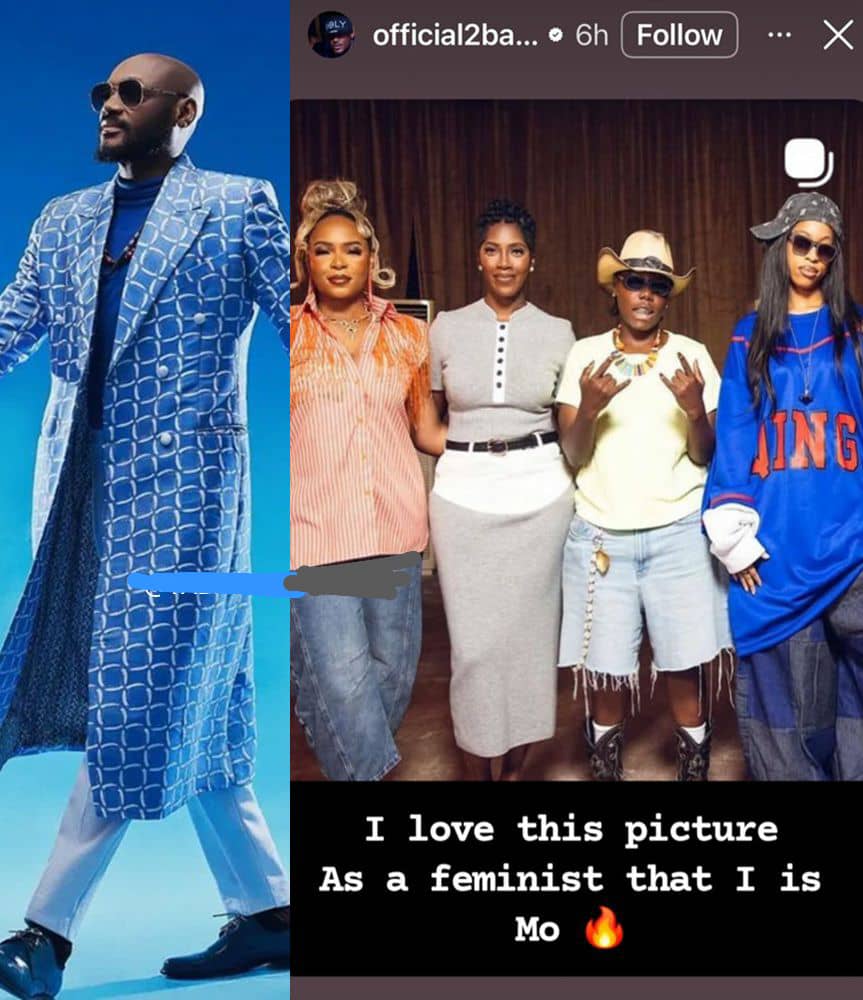
2Baba Declares Himself a Feminist as He Celebrates Women in Music, Sparks Nationwide Conversation
Nigerian music legend Innocent Idibia, popularly known as 2Baba, has once again set social media buzzing after openly declaring himself a feminist while celebrating female artists in the music industry. The iconic singer, whose influence spans over two decades, made the statement during a recent interaction that quickly gained momentum
Nigerian music legend Innocent Idibia, popularly known as 2Baba, has once again set social media buzzing after openly declaring himself a feminist while celebrating female artists in the music industry. The iconic singer, whose influence spans over two decades, made the statement during a recent interaction that quickly gained momentum online, drawing praise, debate, and reflection from fans, industry insiders, and fellow artists.
2Baba, widely respected as one of the pioneers who shaped the modern Afrobeats landscape, expressed deep admiration for the resilience, talent, and creativity of women in the industry. According to him, women are not only matching their male counterparts in brilliance and consistency but are also breaking boundaries in ways that demand more recognition, respect, and support. In a rare but powerful declaration, he stated that he considers himself a feminist because he believes in fairness, equity, and the dismantling of the barriers that limit women from achieving their full potential.
The singer highlighted the struggles that female musicians often face, from gender bias to unfair scrutiny and the constant pressure to prove themselves in an industry that has historically placed men at the forefront. He noted that despite these obstacles, women continue to shine with extraordinary talent—something he believes the world should acknowledge more loudly and unapologetically. His message was both a celebration and a call to action, urging fans, colleagues, and industry stakeholders to do better in supporting and elevating women.
2Baba’s comments immediately resonated across social media platforms, where fans praised him for using his influence to amplify a conversation many believe is long overdue. Observers pointed out that it is rare for male artists, especially those with legendary status, to openly identify as feminists in an environment that often misconstrues or criticizes the term. Many hailed him for showing leadership and lending his voice to the movement for gender equality in entertainment.
In the wake of his statement, conversations erupted about the contributions of female artists in Nigeria and across Africa. Names like Tiwa Savage, Yemi Alade, Ayra Starr, Tems, Simi, and Asa dominated the discourse as fans highlighted how each of these women has pushed boundaries globally. Tems breaking Grammy records, Tiwa Savage becoming a global icon, Ayra Starr dominating charts, Simi revolutionizing songwriting, Asa redefining alternative sound, and Yemi Alade touring continents were just some of the milestones fans revisited as testaments to the strength and excellence of women in music.
Beyond music, some Nigerians expanded the conversation to include the challenges faced by women in everyday life. Many argued that 2Baba’s declaration could inspire deeper societal reflection, considering his influence among millions both within and outside the entertainment space. “When men with such visibility speak up, the message hits differently,” one fan wrote. “It forces others to reflect.”
However, as with most viral conversations in Nigeria, there were also dissenting voices. Some critics questioned whether the term “feminist” was being used correctly or if the singer fully understood the nuances that come with it. Others argued that actions matter more than declarations, urging the industry to adopt policies that ensure equal pay, fair representation in award categories, and more opportunities for female producers, sound engineers, and managers. These opposing takes added another layer of engagement to the already trending conversation.
Still, many believe that 2Baba’s statement, even if symbolic, carries weight. It opens a cultural doorway for more male artists to confront biases within the industry and encourages broader public conversations about inequality. Analysts suggest that this is particularly important in a country where conversations about feminism often trigger controversy or misconceptions. In this sense, 2Baba’s openness serves as an invitation for education, empathy, and unlearning.
Industry colleagues also joined the conversation, with some applauding the singer for recognizing women’s impact. A few notable female artists responded positively, appreciating the acknowledgment and calling for continued support beyond words. According to them, while moral support and public praise are necessary, tangible industry changes would create a more level playing field for the next generation of female stars.
The conversation also extended to the singer’s personal brand. 2Baba, known for his humility, socially conscious messages, and consistent support for young artists, was celebrated for yet another moment of leadership. Fans recalled how he has always collaborated with rising female stars, encouraged upcoming female voices, and used his platform to champion causes affecting women and marginalized groups. Many argued that his latest declaration was a natural extension of his long-standing commitment to fairness.
As the story continued to trend, media commentators suggested that the ripple effect could push entertainment bodies, labels, and award organizers to rethink how they engage and represent women. They highlighted the urgent need for more women in decision-making roles, more support for female-led projects, and the dismantling of stereotypes that often limit how women are perceived in creative spaces.
For many young girls aspiring to build careers in music, 2Baba’s message was inspiring. Social media timelines filled with posts from teenagers and young women who expressed joy at seeing one of the most respected male figures in African music openly champion equality. They noted that such validation not only uplifts female artists but also gives them hope that the industry can become more welcoming, inclusive, and supportive of their dreams.
In the broader cultural sense, 2Baba’s declaration has sparked conversations about what feminism means in modern Nigerian society. Some used the opportunity to redefine it as a movement rooted in fairness and equal rights, not hostility or rivalry between genders. Others argued that more men need to speak up instead of viewing gender equality as a “women’s issue.”
While the debate continues, one thing is clear: 2Baba’s voice has once again cut through noise and sparked meaningful dialogue. Whether one agrees with the term he chose or not, the impact of his message is undeniable. By boldly identifying as a feminist and celebrating the women in his industry, he has not only honored their contributions but also challenged the status quo in a way that only a legend can.
As discussions continue to unfold across the country, it is evident that 2Baba’s statement is more than just a passing viral moment. It has become a cultural spark—one that may influence shifts in mindset, inspire deeper reflection, and empower the women whose talents continue to shape the heartbeat of Nigerian music.
Share this post
Related Posts

“My First Birthday Gift Has Landed”: Blessing CEO Gushes as She Picks Up Lover IVD from the Airport in Grand Style
Controversial relationship therapist and social media personality, Blessing Okoro, popularly known as Blessing CEO, has...
PAYE Revolution: Taiwo Oyedele Reveals Massive Tax Relief for Workers and Small Businesses
In a development that could redefine Nigeria’s taxation landscape, Taiwo Oyedele, a prominent tax expert...
“If It’s Paining You, Go and Take Panadol” — Pastor Kingsley Okonkwo Fires Back at Critics Over Tattoos and Dreadlocks
Popular relationship coach and clergyman, Pastor Kingsley Okonkwo, has stirred fresh conversation online after boldly...