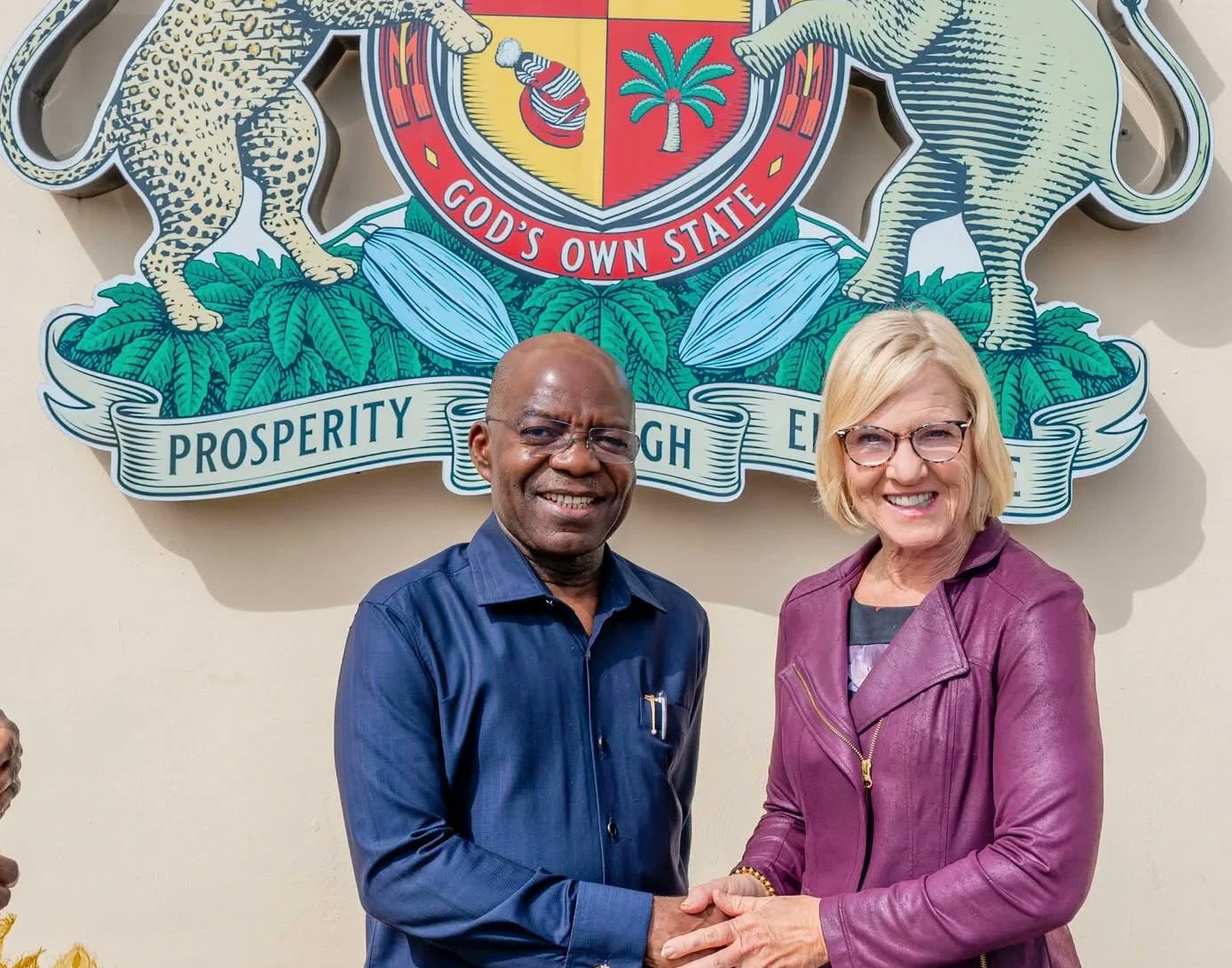
Abia State Governor, Alex Otti, has expressed readiness to partner with the Governor of Delaware in the United States, Bethany Hall-Long, in a move that signals a growing ambition by the Abia State government to tap into global networks for economic growth, innovation, and sustainable development. The declaration marks another step in the Otti administration’s broader vision of repositioning Abia as a competitive subnational economy capable of attracting international partnerships, investment, and technical expertise.
The proposed collaboration, which would focus on key sectors of the economy, reflects a pragmatic approach to governance that looks beyond borders for solutions, ideas, and opportunities. Governor Otti’s statement underscores the belief that modern development is no longer confined to local or national boundaries, but thrives on shared knowledge, strategic alliances, and mutually beneficial cooperation. By seeking a partnership with Delaware, a U.S. state known for its business-friendly environment, strong institutions, and innovation-driven economy, Abia is positioning itself as a state open to global engagement.
Delaware occupies a unique place in the American economic landscape. Often described as the corporate capital of the United States, it is home to a significant percentage of Fortune 500 companies, thanks to its efficient legal framework, investor-friendly policies, and robust corporate governance systems. Beyond corporate registrations, Delaware also boasts strengths in education, healthcare, technology, agriculture, and clean energy. These are sectors that align closely with Abia State’s development priorities under Governor Otti’s leadership.
Governor Otti’s readiness to collaborate with Governor Bethany Hall-Long suggests that discussions could span areas such as investment promotion, small and medium enterprise development, education exchange, healthcare systems strengthening, digital economy growth, and public sector reforms. For Abia, which has long been recognized for its entrepreneurial spirit, particularly in commerce, manufacturing, and informal enterprise, such a partnership could help formalize and scale local industries while creating jobs and improving productivity.
Since assuming office, Governor Otti has consistently emphasized transparency, fiscal discipline, and economic restructuring as pillars of his administration. His government has prioritized rebuilding public confidence in governance, improving infrastructure, and creating an enabling environment for private sector participation. Partnering with a U.S. state like Delaware fits into this narrative, offering a pathway to technical cooperation, policy learning, and access to global best practices that could accelerate reform efforts in Abia.
The proposed partnership also carries symbolic significance. It highlights a shift from traditional aid-based international relations toward collaboration built on shared interests and value creation. Rather than positioning Abia as a passive recipient, the engagement frames the state as an active partner with assets to offer, including a young and dynamic population, a strategic location in southeastern Nigeria, and a strong culture of enterprise. This balance is crucial in forging sustainable international relationships that deliver tangible outcomes.
For Delaware, a partnership with Abia could open doors to engagement with one of Nigeria’s most commercially active regions, offering opportunities for American businesses, educational institutions, and healthcare providers to explore new markets and collaborations. Nigeria remains Africa’s largest economy and most populous nation, and Abia’s central role in trade and manufacturing in the Southeast makes it an attractive entry point for international investors seeking regional expansion.
Governor Bethany Hall-Long, known for her background in healthcare and public service, leads a state that places strong emphasis on education, innovation, and inclusive growth. These values resonate with the development agenda being pursued in Abia, particularly in areas such as human capital development, primary healthcare reform, and skills acquisition. A partnership anchored on these shared priorities could result in exchange programs, joint initiatives, and institutional linkages that benefit both states.
Beyond economics, the collaboration could also deepen people-to-people ties, especially considering the large Nigerian diaspora in the United States, including many from the Southeast. Such connections often play a critical role in facilitating investment, cultural exchange, and knowledge transfer. By institutionalizing cooperation at the state level, Abia could leverage its diaspora networks more effectively, creating structured channels for engagement rather than ad-hoc interactions.
Observers note that subnational diplomacy, where states and regions engage directly with international counterparts, is becoming an increasingly important tool for development. In Nigeria, where states face diverse challenges and opportunities, proactive international engagement can help bridge capacity gaps and unlock new sources of growth. Governor Otti’s outreach to Delaware places Abia among a growing number of Nigerian states exploring this route as part of a broader development strategy.
The success of such a partnership, however, will depend on clear frameworks, defined objectives, and sustained commitment from both sides. Experts emphasize the importance of translating high-level declarations into actionable plans with measurable outcomes. Memoranda of understanding, joint working groups, and pilot projects are often critical in ensuring that partnerships move beyond symbolism to deliver real benefits to citizens.
For residents of Abia State, the announcement raises expectations of improved economic opportunities, better public services, and increased global visibility for the state. If effectively implemented, collaboration with Delaware could support job creation, enhance skills development, and attract foreign direct investment, contributing to long-term prosperity.
Governor Otti’s expression of readiness to partner with Governor Hall-Long comes at a time when Nigerian states are under increasing pressure to innovate in governance and revenue generation amid economic uncertainties. By looking outward and embracing strategic partnerships, the Abia State government is signaling confidence, ambition, and a willingness to learn and adapt in pursuit of development.
As discussions progress, attention will be focused on how the proposed partnership is structured and the specific sectors it prioritizes. Whether in education, healthcare, technology, or enterprise development, the potential impact of a well-executed Abia–Delaware collaboration could extend beyond the two states, serving as a model for subnational cooperation between Nigeria and the United States.
In an interconnected world, the announcement represents more than a diplomatic gesture; it reflects a vision of growth driven by collaboration, innovation, and shared prosperity. For Abia State, the prospect of building an economic bridge across the Atlantic may well mark a defining chapter in its journey toward sustainable development and global relevance.
Popular Posts

“Rent a Home, Prove Your Love”: Nons Miraj’s Relationship Take Ignites Heated Debate Online
13 Dec, 2025
“Best Christmas Ride Ever”: Kunle Remi Sparks Laughter and Admiration as Wife Gifts Him a Roller skate
13 Dec, 2025
“You’ll Have to Beg Me to Come Back”: Cardi B’s Saudi Sojourn, a Viral JD Vance Comment, and the Internet Meltdown That Followed
13 Dec, 2025Scroll to Top