Alliance of Sahel States condemns Nigerian aircraft’s emergency landing in Burkina Faso
A fresh wave of diplomatic tension is rippling across West Africa after the military governments of Mali, Niger, and Burkina Faso, operating under the Alliance of Sahel States, publicly condemned the emergency landing of a Nigerian military aircraft in Burkina Faso, describing the incident as a dangerous violation of their
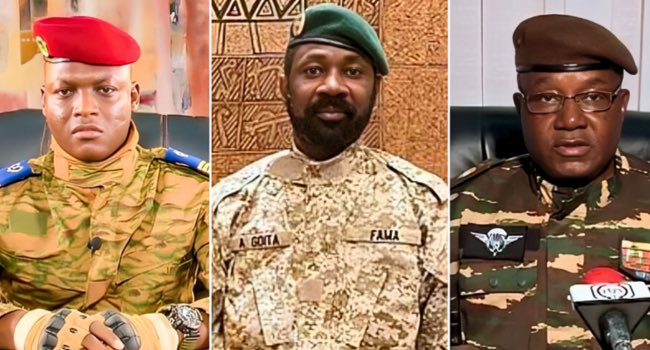
A fresh wave of diplomatic tension is rippling across West Africa after the military governments of Mali, Niger, and Burkina Faso, operating under the Alliance of Sahel States, publicly condemned the emergency landing of a Nigerian military aircraft in Burkina Faso, describing the incident as a dangerous violation of their shared airspace sovereignty.
The strongly worded reaction, issued in a joint statement on Monday, has reopened deep geopolitical fractures between Nigeria and the increasingly defiant Sahel alliance that emerged after a series of coups reshaped the region’s power structure.
According to the statement, the Nigerian aircraft, which was reportedly carrying 11 military personnel, entered Burkinabe airspace without prior authorization before making what Nigerian officials later described as an emergency landing.
The Alliance of Sahel States warned that any further breaches of their airspace, intentional or otherwise, would be treated as a serious security threat, signaling a sharp escalation in rhetoric that reflects the fragile nature of regional cooperation in the post-coup Sahel.
While Abuja has yet to issue a detailed public account beyond confirming that the aircraft experienced operational difficulties, the reaction from the alliance was swift and unforgiving. The three military-led governments framed the incident not as a technical mishap but as a violation of their territorial integrity at a time when distrust toward Nigeria and the Economic Community of West African States remains dangerously high.
Since the coups in Mali, Burkina Faso, and Niger, relations between the Sahel bloc and ECOWAS—where Nigeria holds enormous influence—have steadily deteriorated. Sanctions, border closures, and military threats following Niger’s coup in 2023 hardened divisions and eventually led to the formal withdrawal of the three states from ECOWAS, replacing regional cooperation with the Alliance of Sahel States as a counterweight to what they perceive as Western-backed pressure.
The emergency landing incident has now dropped directly into that volatile environment. In their joint communiqué, the alliance leaders accused Nigeria of failing to respect newly asserted sovereign boundaries, claiming that unauthorized military movement in their airspace poses a direct threat to regional stability. Though no hostile encounter was reported on the ground after the aircraft landed, the diplomatic message was unmistakable: patience is wearing thin.
Security experts say the outrage is less about the aircraft itself and more about symbolism. Nigeria has long been seen as West Africa’s dominant military and political force, often leading peacekeeping missions and counterterrorism efforts across the Sahel. For the new military regimes, any unauthorized movement by Nigerian forces—no matter the circumstances—risks being interpreted as intimidation or covert surveillance.
The aircraft was said to be on a routine military mission before encountering technical trouble that forced the emergency descent. However, the alliance insists that no notification was made to Burkinabe authorities prior to the incursion, a procedural lapse that, under international aviation and military protocol, constitutes a serious violation. For governments already operating in siege mentality due to ongoing insurgency threats and strained diplomatic relations, the timing could not have been worse.
Behind the scenes, the fallout is raising difficult questions about intelligence operations, cross-border security coordination, and the breakdown of trust in West Africa’s counterterrorism architecture. The Sahel remains a hotspot for Islamist insurgency, arms trafficking, and organized crime, threats that do not respect national borders. Yet cooperation between Nigeria and the Sahel states has steadily collapsed, leaving dangerous gaps in intelligence-sharing and joint operations.
The condemnation also carries broader geopolitical weight. Since turning away from Western military partnerships, the Sahel alliance has increasingly leaned toward non-Western security relationships, particularly with Russia. Any confrontation with Nigeria, which maintains strong ties with Western governments, risks further polarizing the region into opposing geopolitical camps.
Diplomatic sources warn that if the situation is not carefully managed, the emergency landing could trigger retaliatory measures such as airspace restrictions, military posturing, or further diplomatic isolation. Already, the alliance’s language suggests that future Nigerian military flights near their borders will face heightened scrutiny or outright denial.
Inside Nigeria, the incident is sparking unease within security circles. Analysts caution that losing operational access to Sahel airspace could cripple Nigeria’s ability to respond effectively to cross-border terrorism, especially along the porous northern frontier where insurgent networks exploit governance vacuums. Nigeria’s counterterrorism strategy has historically relied on regional cooperation, and the steady erosion of these ties now leaves Abuja increasingly boxed in.
Public reaction across social media has been divided. Some Nigerians view the alliance’s response as an overreaction driven by political paranoia, while others argue that the federal government must urgently rebuild trust with its northern neighbors to avoid accidental conflict. Across the Sahel states, however, nationalist sentiment appears to be on the rise, with supporters of the military regimes celebrating the firm stance as proof that their governments will no longer bow to external pressure.
What makes the episode even more sensitive is the broader atmosphere of insecurity across the region. From mass kidnappings in Nigeria to jihadist violence in Mali and Burkina Faso, the entire Sahel belt is under strain. In such an environment, even a technical emergency can morph into a diplomatic flashpoint with dangerous consequences.
As of this report, no Nigerian personnel were harmed during or after the emergency landing, and there has been no indication of any detentions. However, the silence from Abuja regarding the alliance’s accusation is being interpreted as strategic caution rather than denial. Diplomats familiar with backchannel negotiations say quiet engagements may already be underway to prevent the dispute from spiraling.
Still, the warning issued by the Alliance of Sahel States stands as one of their most direct confrontations with Nigeria since cutting formal ties with ECOWAS. It underlines how rapidly alliances are shifting in West Africa and how fragile regional security cooperation has become.
For now, what began as a technical aviation incident has evolved into a symbolic confrontation over sovereignty, power, and influence in a region where the balance of authority is being aggressively renegotiated. Whether this moment becomes a brief diplomatic irritation or the start of a deeper security rift will depend on how swiftly cooler heads prevail behind closed doors.
One thing is certain: the skies over the Sahel are no longer neutral ground. In today’s West Africa, even an emergency landing can ignite a geopolitical firestorm.
Share this post
Related Posts

Former Inspector General of Police Solomon Arase Passes Away, Nation Mourns Loss of a Distinguished Security Icon
Nigeria has been thrown into mourning following the sudden death of former Inspector General of...

“Don’t Use Me for Cheap Clout” – Gilmore Fires Back After X User Falsely Lists His Car for Sale
The Nigerian social media space was thrown into mild chaos this week after a content...

“I Spent $10 Million on Cardi B”: Offset’s Shocking Confession Reignites Divorce Drama
In a revelation that has reignited buzz around one of hip-hop’s most talked-about marriages, American...