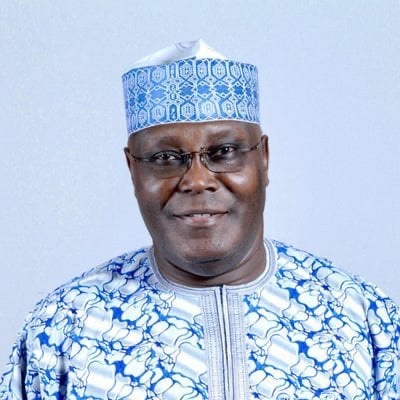
Atiku Slams Tinubu Over Alleged N17.5 Trillion Pipeline Security Spend, Calls It Nigeria’s Biggest Financial Scandal Yet
Former Vice President Atiku Abubakar under Olusegun Obasanjo democratic administration ignited a political firestorm on Friday after accusing President Bola Ahmed Tinubu’s administration of spending an astonishing N17.5 trillion on pipeline security and related expenditures within one year. The figure, which Atiku described as not only “a financial scandal of
Former Vice President Atiku Abubakar under Olusegun Obasanjo democratic administration ignited a political firestorm on Friday after accusing President Bola Ahmed Tinubu’s administration of spending an astonishing N17.5 trillion on pipeline security and related expenditures within one year.
The figure, which Atiku described as not only “a financial scandal of unimaginable scale” but also “a moral indictment on the Tinubu administration,” has quickly become the most heated topic in Nigeria’s political space, stirring outrage, disbelief, and demands for accountability.
Atiku’s criticism came after new budgetary disclosures and expenditure patterns surfaced online, prompting suspicion that Nigeria’s already strained finances are being overwhelmed by unexplained security-related costs.
The former Vice President, who has repeatedly positioned himself as a watchdog of Nigeria’s fiscal integrity since leaving office, said the number “defies logic, defies transparency, and insults the intelligence of every Nigerian trying to survive under an economy in free fall.”
His statement gained immediate momentum across social media platforms, especially X (formerly Twitter), where Nigerians questioned how a nation battling record inflation, currency collapse, and rising unemployment could commit such an astronomical sum to pipeline protection alone.
Many said the figure dwarfs the national budget of several African countries combined, fueling the suspicion that something deeper is happening beneath the surface.
Atiku argued that the Tinubu government’s expenditure lacks any traceable breakdown, structure, or justification in the public domain, calling it “yet another example of the opaque governance model that has defined this administration.”
He warned that Nigeria cannot afford to continue operating in secrecy while citizens are pushed deeper into hardship, asserting that “every naira spent must be accounted for, especially at a time when the government is asking the nation to tighten its belt.”
The controversy struck a nerve because pipeline security contracts have historically been a sensitive issue in Nigeria. Over the years, they have been awarded to private security outfits, ex-militant groups, and politically connected contractors, with billions spent annually without measurable improvement in oil theft prevention. Still, never has any administration been accused of spending anything close to N17.5 trillion in a single year—an amount higher than the entire 2024 national budget.
This discrepancy has fueled calls for an immediate probe, with Atiku insisting that the National Assembly cannot remain silent.
He stated that the legislature has a constitutional responsibility to interrogate public spending, warning that failure to do so would confirm suspicions that certain powerful interests are feeding fat off Nigeria’s resources while citizens suffer.
Political observers note that Atiku’s challenge is not merely opposition rhetoric but a direct attempt to force transparency on an administration that has faced constant backlash over its economic policies.
Public reactions remained divided, with some defending the government and insisting that Atiku’s claims must be verified through official documentation. Others, however, said the government must immediately provide clarity, especially given the staggering scale of the alleged expenditure.
Civil society groups began amplifying the call for an independent investigation, arguing that the credibility of Nigeria’s financial future depends on eliminating what they described as “the endless black hole of security spending.”
Inside government circles, aides loyal to President Tinubu dismissed Atiku’s statement as “political mischief,” insisting that the administration remains committed to transparency and national security. But the pushback did little to calm the storm, as critics continued to point out that the government has still not published a detailed breakdown of pipeline security expenses despite earlier promises.
The timing of Atiku’s accusation also added fuel to the debate. Nigerians are currently grappling with worsening living conditions—skyrocketing food prices, fuel scarcity, and a naira that seems incapable of stabilizing. Many citizens argued that if trillions of naira can be allocated to pipeline security, then the same urgency should be applied to stabilizing essential sectors such as education, healthcare, and power.
As the controversy deepens, the question now is whether an official investigation will be launched or whether this will become another scandal swept aside by political noise. Atiku maintains that silence is not an option and insists that “a government that cannot explain how N17.5 trillion was spent has already failed the moral test of leadership.”
For now, the nation watches closely, waiting to see whether the Tinubu administration will defend the figures, disown them, or open the books for public scrutiny. But one thing is certain: this allegation has struck at the heart of Nigeria’s fragile trust in its leaders, at a time when the people can no longer afford financial mysteries.
The storm Atiku has kicked up is far from over, and in a country where pipelines run beneath the ground, it’s the silence around them that now threatens to explode.
Share this post
Related Posts

Cuppy Declares Marriage the Most Powerful Partnership as She Reflects on Temi Ajibade’s Wedding
Florence Ifeoluwa Otedola, better known to millions as DJ Cuppy, has once again stirred conversations...
Nigeria Mourns Legal Titan: Former Chief Justice Mohammed Uwais Dies at 88
Nigeria has lost one of its most distinguished legal minds. Mohammed Lawal Uwais, the former...

“Not in Our Game”: Super Eagles Star Tolu Arokodare Condemns Racist Abuse After Penalty Miss Sparks Online Outrage
The storm that followed a missed penalty by Nigerian striker Tolu Arokodare has once again...