news
“Black Stars to the World Cup Final?” Prophet Nigel Gaisie’s Bold 2026 Prediction Sparks Hope and Debate
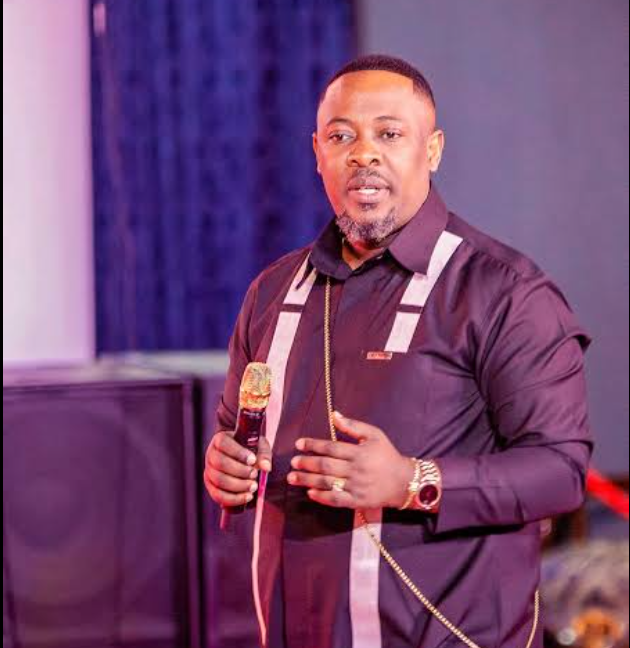
A bold prophecy has once again thrust Ghana’s national football team into the center of continental and global conversation after renowned Ghanaian cleric, Prophet Nigel Gaisie, declared that the Black Stars will reach the final of the 2026 FIFA World Cup. The prophecy, delivered during the 31st Service at his Prophetic Hill Church, has ignited excitement among fans while also stirring debate across football and religious circles in Ghana and beyond.
Prophet Gaisie, known for his high-profile prophecies that often intersect sports, politics, and national affairs, spoke with strong conviction as he addressed his congregation. According to him, Ghana’s football journey at the next World Cup will be historic, culminating in a place in the final match of the world’s most prestigious football tournament. His statement, “The Black Stars will reach the final of the 2026 World Cup,” was met with cheers from worshippers and quickly made its way onto social media platforms, where it has continued to trend.
The 2026 FIFA World Cup will be a landmark edition of the tournament, not only because it will be co-hosted by the United States, Canada, and Mexico, but also because it will feature an expanded 48-team format for the first time. This expansion has increased opportunities for African teams, including Ghana, to progress deeper into the competition. For the Black Stars, it represents both a chance at redemption and an opportunity to finally fulfill long-held dreams of global football glory.
Ghana, four-time African champions, will be making their fifth appearance at the World Cup. Despite their rich football history and reputation as one of Africa’s most competitive teams, their World Cup journey has often been a mixture of brilliance and heartbreak. Their most memorable campaign came in 2010, when they reached the quarterfinals in South Africa and came agonizingly close to becoming the first African nation to reach a World Cup semifinal. That dream was shattered in dramatic fashion, a moment that still lingers painfully in the memories of Ghanaian football fans.
In more recent years, however, the Black Stars have struggled to replicate that level of success on the global stage. Ghana exited the 2014 World Cup in Brazil at the group stage amid internal issues and on-field disappointments. A similar fate followed in the 2022 World Cup in Qatar, where flashes of promise were overshadowed by inconsistency and defensive lapses, resulting in another early exit. These setbacks have intensified calls for structural reforms, better player management, and a clearer long-term vision for the national team.
Against this backdrop, Prophet Gaisie’s prophecy has landed at a time when Ghanaian football supporters are desperate for renewed hope. Many fans see his declaration as a spiritual boost that could inspire belief within the squad and among supporters, while others view it with cautious skepticism, emphasizing the need for tangible preparation rather than prophetic assurances.
The task ahead for Ghana will not be an easy one. The Black Stars have been drawn into Group L, where they will face Panama, England, and Croatia in the group stage. On paper, the group presents a significant challenge. England and Croatia are both established football nations with deep tournament experience and squads filled with world-class talent. Panama, while considered underdogs, have proven in past tournaments that they cannot be taken lightly.
Ghana will open their group-stage campaign against Panama on June 17 in Toronto, a match that could set the tone for their entire tournament. A positive result in that opener would be crucial for building momentum and confidence. They will then face England on June 23 in Boston, a fixture likely to attract massive global attention given the Premier League connections of many Ghanaian players and the historical ties between the two nations. The group stage will conclude with a clash against Croatia on June 27 in Philadelphia, a match that could potentially decide qualification to the knockout rounds.
Beyond the group stage, the expanded tournament format means more knockout games, increased physical demands, and the need for squad depth and tactical flexibility. For Ghana to reach the final, as Prophet Gaisie predicts, they would need not only individual brilliance but also exceptional team cohesion, disciplined defending, clinical finishing, and strong leadership both on and off the pitch.
Preparations for the World Cup are already underway, with the Ghana Football Association placing emphasis on international exposure and tactical refinement. As part of these preparations, the Black Stars are scheduled to face Germany in an international friendly on March 30 in Stuttgart. The match is expected to provide a valuable test against elite opposition and offer the technical team an opportunity to assess player combinations, fitness levels, and tactical setups ahead of the tournament.
The friendly against Germany carries symbolic significance as well, given the painful memories of Ghana’s defeat to the European giants at the 2014 World Cup. For many players and fans, it represents a chance to measure progress and rewrite part of that narrative.
Public reaction to Prophet Gaisie’s prophecy has been mixed. While some supporters have embraced it with enthusiasm, sharing messages of faith and optimism online, others have urged caution, pointing out that football success depends on planning, investment, and execution rather than predictions alone. Critics argue that prophecies should not distract from the hard work required to compete at the highest level, especially in a tournament as unforgiving as the World Cup.
Still, it is undeniable that such declarations have a powerful psychological impact in a football-loving nation like Ghana. Faith and football are deeply intertwined in the country’s cultural fabric, and moments like these often galvanize national conversations and collective belief. Whether viewed as spiritual insight or motivational rhetoric, Prophet Gaisie’s words have added an extra layer of intrigue to Ghana’s 2026 World Cup journey.
As the countdown to the tournament continues, all eyes will be on the Black Stars to see whether they can rise to the occasion, overcome their group-stage challenges, and push beyond previous limitations. Reaching the final would not only validate the prophecy but also mark a historic achievement for Ghanaian and African football as a whole.
For now, the prophecy stands as a bold vision of what could be, fueling hope, debate, and anticipation. Whether destiny, preparation, or pure footballing excellence will ultimately define Ghana’s World Cup story in 2026 remains to be seen, but one thing is certain: the Black Stars will head into the tournament carrying the weight of expectation, belief, and the dreams of millions.
Popular Posts

“Kabush Kabash” Season Declared: Odumeje’s Fiery 2026 Prophecy Sparks Debate, Devotion and Online Frenzy
02 Jan, 2026
Court Order Halts Tinted Glass Crackdown Again, Leaving Motorists and Police in a Familiar Standoff
02 Jan, 2026
New Year Turns to Nightmare as Deadly Bar Fire Rocks Swiss Alps, Leaving About 40 Dead and Dozens Fighting for Life
02 Jan, 2026Scroll to Top