Entertainment
Celebration Turns Sour as Craze Clown Exposes the Dark Side of Social Media After Daughter’s 5th Birthday Post
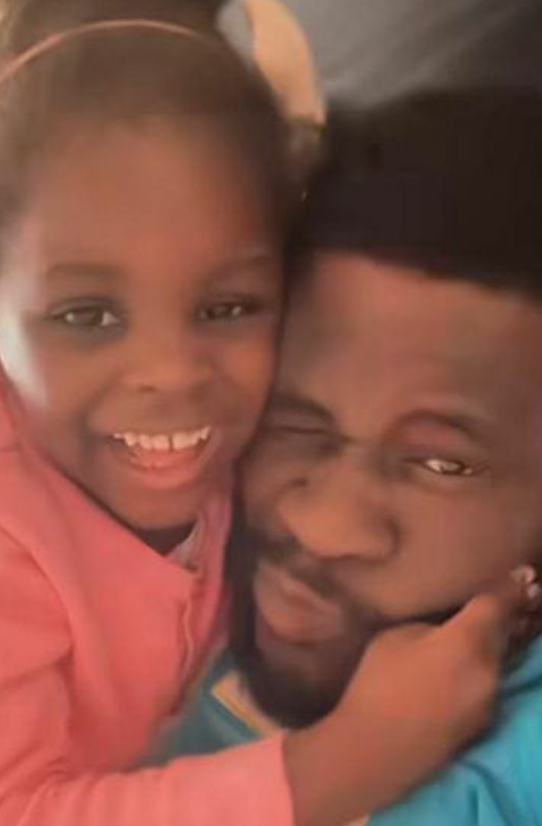
What was meant to be a simple, heartfelt celebration of fatherhood quickly became a sobering reminder of how cruel the internet can be. Popular Nigerian content creator and comedian Craze Clown, known off-screen as Emmanuel Iwueke, recently shared a wholesome video to mark his daughter’s fifth birthday. The clip, filled with warmth, pride, and the quiet joy of a father celebrating his child, was supposed to be one of those rare moments on social media where smiles outweigh sarcasm. Instead, it opened the floodgates to a barrage of vile, disturbing, and deeply personal comments that shocked many of his followers and reignited conversations about online toxicity, entitlement, and the boundaries people feel free to cross behind screens.
Craze Clown, who has built a massive following through family-friendly skits and relatable humor, took to X to share screenshots of some of the comments left under the post. Alongside them, he wrote a short but heavy caption: “Cuoay times ahead.” The misspelt phrase carried more weight than a long rant ever could. It was a quiet expression of disbelief, disappointment, and concern at the state of online discourse, especially when a child is involved.
Among the comments were messages that went far beyond criticism and straight into cruelty. One commenter mocked the creator’s family life in crude terms, suggesting that a “careless boy” ruined his life with drugs and questioning how such a person could “give her belle.” Another comment, written partly in Nigerian Pidgin, attacked Craze Clown for being over 35 years old and “proud of only one pikin,” accusing him of refusing to have more children despite his wealth and even implying spiritual manipulation. The comment went as far as telling him to ignore his wife’s feelings and questioning the paternity of his child, all under a video celebrating a five-year-old girl.
For many observers, the comments were not just offensive but disturbing in how casually they targeted a child and weaponized cultural expectations around marriage, fertility, and masculinity. The idea that a man’s worth should be measured by the number of children he has, or that celebrating one child is somehow a failure, struck a nerve in a society already grappling with intense social pressure and intrusive opinions.
Social media users were quick to rally around Craze Clown, condemning the comments and expressing disbelief at how far people are willing to go online. Many pointed out the irony of attacking a man known for promoting positive family values and involving his daughter in age-appropriate, joyful content. Others highlighted how normalized it has become for strangers to dictate how celebrities should live their personal lives, from how many children they should have to how they should raise them.
The incident also exposed a darker layer of online behavior where anonymity emboldens people to say things they would likely never utter face-to-face. In this case, the lack of restraint wasn’t just about trolling a public figure; it involved dragging an innocent child into adult bitterness and unresolved frustrations. For critics, it raised urgent questions about where society draws the line and whether platforms are doing enough to protect users, especially children, from verbal abuse.
Craze Clown himself did not respond with insults or counterattacks. Instead, by simply reposting the comments, he allowed the words to speak for themselves. That decision was widely praised by fans who felt it forced people to confront the ugliness that often hides in comment sections. Rather than fueling a back-and-forth, he turned the spotlight on a problem that extends far beyond him.
This is not the first time a Nigerian celebrity has faced harsh commentary over family choices. From public pressure on women to marry or have children, to scrutiny of men over fertility and lineage, personal decisions are often treated as public property. What made this case particularly unsettling was the context: a child’s birthday. A moment that should have been protected by basic human decency instead became a platform for projecting personal frustrations and societal biases.
Mental health advocates have also weighed in, noting how such comments can affect not just the public figure but their family in the long run. Children grow up, they read things, they ask questions. The digital footprint left by cruel strangers does not simply disappear. In a country where conversations about mental health are still evolving, incidents like this highlight the emotional cost of unchecked online hostility.
There is also a broader cultural conversation embedded in the backlash. The fixation on the number of children a man should have, the casual dismissal of a wife’s feelings, and the suspicion cast on women all reflect deep-rooted patriarchal attitudes. Critics argue that these beliefs, when amplified online, reinforce harmful norms and create an environment where empathy is replaced by entitlement.
Despite the negativity, the overwhelming response to Craze Clown’s post eventually tilted toward support. Fans flooded his page with messages celebrating his daughter, praising his parenting, and reminding him that one loving, well-cared-for child is more than enough reason to celebrate. Some shared their own experiences of being shamed for personal life choices, turning the moment into a collective reflection on how words can wound.
The episode serves as a stark reminder that while social media offers connection and visibility, it also exposes people to unfiltered cruelty. It challenges both users and platforms to rethink how engagement is measured and at what cost. Is virality worth the emotional toll? Should every opinion be given a stage, especially when it targets children?
For Craze Clown, the birthday celebration may have been overshadowed by unexpected negativity, but it also sparked an important conversation. By choosing not to retaliate and instead letting the public see the comments for what they were, he highlighted a problem many face but few call out. In doing so, he reminded everyone that behind every post is a human being, and sometimes, a child who deserves nothing but kindness.

In the end, the story is not just about a comedian and his daughter. It is about the state of online culture, the ease with which cruelty is typed and shared, and the urgent need for empathy in digital spaces. As social media continues to blur the line between public and private, incidents like this force a simple but powerful question into the spotlight: when did celebrating a child become an invitation for hate?
Popular Posts
Wedding Bells Amid the Storm: Pastor Chris Okafor Marries as Online Allegations Ignite Debate
17 Dec, 2025
“Confidence Is Not Noise”: Ayra Starr Opens Up on Working With Wizkid and Learning From a Legend
17 Dec, 2025
“I Met Her as Just Priscilla” — Juma Jux Opens Up on Love, Fame, and Why He Rates Her Impact on His Career 7/10
17 Dec, 2025Scroll to Top