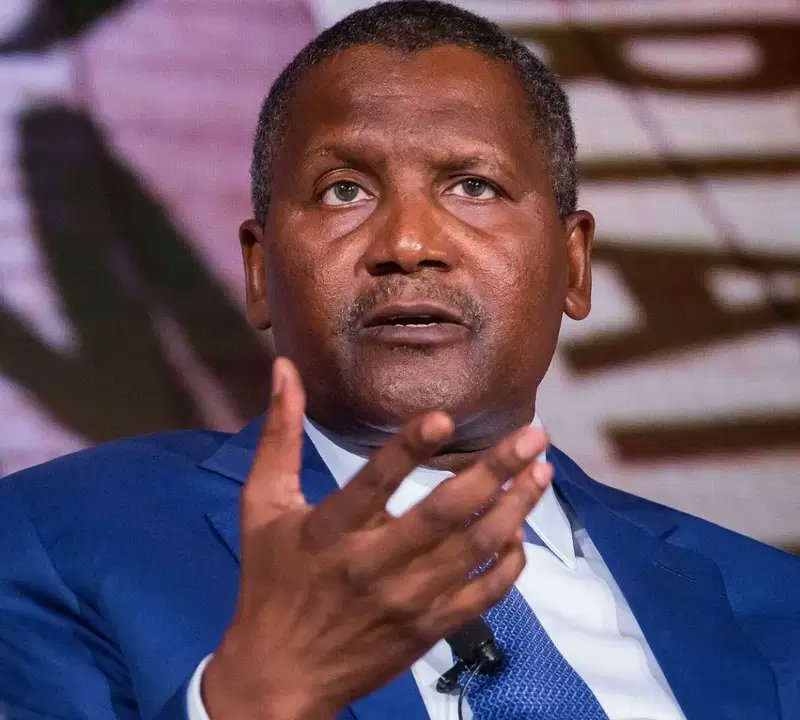
Dangote Unveils Groundbreaking N100 Billion Education Lifeline for Nigeria’s Most Vulnerable Students
In a bold move that is already being hailed as one of the most significant private-sector interventions in Nigeria’s educational history, Africa’s richest man, Aliko Dangote, has announced a N100 billion annual education support programme designed to keep financially vulnerable students in school. The announcement has ignited nationwide conversations, with
In a bold move that is already being hailed as one of the most significant private-sector interventions in Nigeria’s educational history, Africa’s richest man, Aliko Dangote, has announced a N100 billion annual education support programme designed to keep financially vulnerable students in school. The announcement has ignited nationwide conversations, with many praising the billionaire industrialist for directly addressing one of the country’s most pressing crises—rising school dropouts due to economic hardship.
The initiative, which Dangote described as a “commitment to Nigeria’s future,” comes at a time when families across the country are grappling with soaring living costs, shrinking incomes, and the inability to afford basic educational requirements. From primary school pupils whose parents can no longer keep up with levies, to university students struggling to pay skyrocketing fees, the education sector has witnessed an alarming wave of dropouts in recent years. Dangote’s intervention, therefore, offers a timely ray of hope for millions who fear education may soon become a luxury rather than a right.
During his announcement, Dangote stated that the N100 billion annual fund would be strategically deployed to support tuition, educational materials, technical training, and direct scholarships for students across all levels. He emphasized that education remains “the bedrock upon which nations rise,” stressing that Nigeria cannot afford to lose a generation of young minds to financial barriers. The programme, according to him, will operate through a transparent structure driven by the Dangote Foundation, with strict oversight to ensure the funds reach those who need them most.
Reactions to the initiative were swift and overwhelmingly positive. Parents, teachers, students, and policymakers took to social media and other platforms to express gratitude and relief. For many Nigerians, Dangote\'s announcement feels like a rescue mission for thousands of children whose dreams were slowly fading under the weight of economic hardship. The billionaire’s move has also sparked discussions about corporate responsibility, with many calling on other business leaders to follow suit and commit to long-term social investments that address systemic issues.
Education experts have particularly highlighted the transformative potential of the programme. With many schools lacking basic infrastructure, and tertiary institutions struggling under underfunding, the infusion of a recurring N100 billion could make a significant impact—if well managed. Analysts predict that beyond scholarships, the programme may stimulate improvements in school facilities, boost teacher training, and support technological advancements in learning. Others believe it could help reduce the country’s staggering out-of-school children statistics, currently one of the highest globally.
For students, the announcement has inspired renewed optimism. On various campuses, undergraduates who had been contemplating dropping out due to increased fees expressed joy and hope. Some shared stories of working multiple jobs just to keep up with their education expenses, while others spoke of siblings who were already out of school because their families couldn’t afford tuition. To many of them, Dangote’s intervention represents not just financial aid but a reinforcement of their belief that education remains a path to a better future.
Beyond the immediate impact, the initiative also signals a broader vision for Nigeria’s development. Dangote has long advocated for human capital development as the foundation for sustainable economic growth. His investments in industries such as cement, sugar, and oil refining have created thousands of jobs, but he insists that without educated citizens who can innovate and drive productivity, the nation will struggle to reach its full potential. This N100 billion annual pledge, therefore, aligns with his long-standing philosophy that economic success must be tied to societal progress.
Government officials have also weighed in, applauding the initiative and acknowledging the critical role of private-sector partnerships in national development. Some governors described Dangote’s announcement as a “game-changer,” noting that with dwindling state revenues, many governments struggle to fund education adequately. They expressed hope that the collaboration between the Dangote Foundation and public institutions would lead to more efficient, targeted support for communities where dropout rates are highest.
However, this monumental pledge has also raised important conversations about sustainability and accountability. As Nigeria continues to face economic uncertainties, some observers are curious about how the programme will be funded annually and whether it will remain consistent over the years. Others have urged for robust monitoring systems to prevent corruption, mismanagement, or the diversion of funds—issues that have historically plagued many well-intentioned social programmes in the country. Despite these concerns, confidence remains high, particularly because the Dangote Foundation has a long track record of running large-scale philanthropic initiatives across Africa.
In rural communities—where the burden of educational costs hits hardest—the news has been met with deep appreciation. Community leaders have expressed hope that the programme will not only keep children in school but will also motivate parents who had given up hope to prioritize education once more. For girls especially, who often face early marriage due to financial constraints, the support initiative could be a powerful tool in keeping them in classrooms longer, thereby improving literacy, economic prospects, and overall wellbeing.
Economists have also weighed in on the secondary effects of such a massive investment. Beyond the direct beneficiaries, the ripple effects could extend to reducing poverty levels, improving workforce competence, and encouraging innovation. A more educated population is likely to attract foreign investments, improve governance, and stimulate entrepreneurship—areas that Nigeria urgently needs to strengthen. Over time, the programme could contribute to a more competitive national economy grounded in knowledge and skill.
As conversations continue across the country, one thing is clear: Dangote’s N100 billion annual education support programme is more than a philanthropic gesture. It is a national statement—one that prioritizes the dreams and futures of Nigerian children at a time when many feel their opportunities are slipping away. It is a challenge to other wealthy individuals and institutions to think beyond profit and consider their role in shaping the nation’s destiny. And most importantly, it is a lifeline to millions of vulnerable students who now have a renewed chance to stay in school, pursue their ambitions, and build a future they once feared they could never afford.
For now, Nigerians are watching closely as the programme prepares to roll out. With hope, gratitude, and cautious optimism, the nation looks toward this new chapter—one that could redefine the country’s educational landscape for generations to come.
Share this post
Related Posts

They Hate Me Because I Supported Tinubu — Seyi Law Opens Up on Backlash from Nigerians
Popular Nigerian comedian, Seyi Law, has revealed that some Nigerians have turned against him and...

FRSC launches investigation after officers caught assaulting driver in Edo State
The Federal Road Safety Corps (FRSC) has opened an urgent investigation following a viral video...

‘If You No Broke, Make I Bend’: Lord Lamba Calls Out Content Creators Over U.S. Hustle
Nigerian skit maker and social media sensation, Lord Lamba, has stirred up a storm online...