news
“Do Not Test Trump’s Resolve” — U.S. Lawmaker Issues Stark Warning to Nigerian Government Over Christian Killings
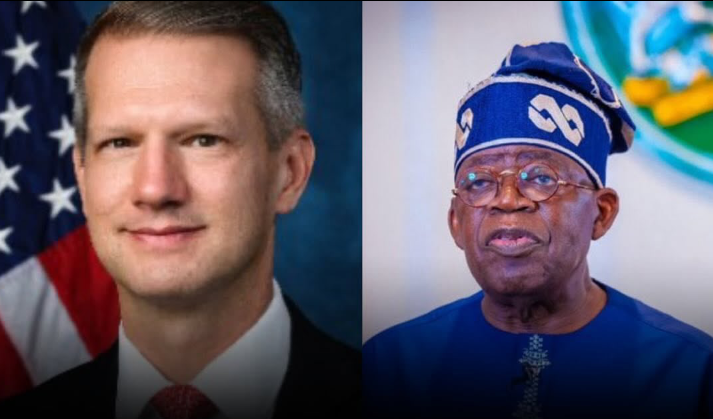
In a strong and unambiguous statement, U.S. Representative Riley M. Moore has issued a stern warning to the Nigerian government and its leadership, urging immediate action to address the escalating violence against Christians in the country. Through his official social media accounts, Moore highlighted what he described as a “forewarning” from President Donald J. Trump, emphasizing that the era of the United States ignoring atrocities against Christians in Nigeria is over.
Rep. Moore’s message, which has since gone viral, underscores a growing concern in the international community over the safety of Christians in Nigeria, where violent attacks and killings have continued with alarming frequency. In his post, Moore directly addressed the Nigerian authorities and the Office of the Abubakar Administration Taskforce (@officialABAT), calling on them to take decisive measures to halt what he termed the “killing of our brothers and sisters in Christ.” He made it clear that the United States expects cooperation from Nigeria to prevent further atrocities that, according to him, worsen every day.
“The days of the U.S. looking the other way are over — it will never happen on President Trump’s watch,” Moore wrote, signaling a shift in U.S. foreign policy toward more assertive intervention when it comes to protecting persecuted Christians abroad. His statement reflects mounting frustration within certain sectors of the U.S. Congress over what they perceive as inadequate responses from the Nigerian government in curbing the violence targeting religious communities.
Moore’s remarks come in the wake of President Trump’s recent designation of Nigeria as a “Country of Particular Concern” due to alleged persecution of Christians—a designation that carries significant diplomatic weight and reflects growing international scrutiny over human rights conditions in the country. The move has elicited responses from both Nigerian authorities and local religious organizations, with some defending the government’s record while others acknowledge gaps in security measures and call for urgent reforms.
In his message, Rep. Moore went further than merely highlighting U.S. concern. He issued a pointed warning: “The President has been clear. I would not test his resolve. Many have tried and all have failed. We will not allow the gates of hell to prevail against the faithful.” This evocative language underscores the intensity with which some U.S. lawmakers view the ongoing attacks on Christian communities and the moral imperative they feel to intervene diplomatically and politically.
The response from Nigerian observers has been mixed. Some analysts see Moore’s warning as a reflection of increased U.S. pressure on Nigeria to protect vulnerable populations, while others caution that aggressive rhetoric could strain diplomatic relations. For many, however, the statement is a reminder of the international spotlight that Nigeria faces amid reports of kidnappings, killings, and attacks on churches across the country.
Statistics from human rights organizations paint a sobering picture. Over the past several years, hundreds of Christians have reportedly been killed in coordinated attacks by armed groups, with entire communities being displaced and forced to flee for safety. Religious leaders in Nigeria have repeatedly called for more decisive government action to prevent these attacks, emphasizing that the country’s unity and social stability depend on protecting all citizens regardless of faith.
Rep. Moore’s warning also resonates with broader debates in the U.S. about religious freedom and the responsibility of the American government to act in defense of persecuted communities abroad. For some lawmakers, the designation of Nigeria as a “Country of Particular Concern” is not merely symbolic; it is intended to pressure the Nigerian government to take immediate steps to safeguard human life and enforce accountability for perpetrators.
International reactions to Moore’s statement have varied, with some human rights advocates praising the strong stance as necessary and overdue, while others question whether such warnings will translate into concrete actions on the ground. The concern, many argue, is that rhetoric alone cannot stop the violence without sustained engagement, strategic policy measures, and support for local security forces tasked with protecting vulnerable populations.
In Nigeria, the government faces a delicate balancing act. On one hand, authorities must respond to the international community’s concerns and address mounting pressure from U.S. lawmakers and human rights organizations. On the other hand, the Nigerian leadership is wary of foreign interference and keen to assert national sovereignty in the management of internal security challenges. Rep. Moore’s public admonition may further complicate this dynamic, prompting both caution and urgency in the government’s response strategy.
Observers note that Moore’s message also serves a domestic purpose in the United States. By framing Nigeria’s inaction as a moral and humanitarian crisis, U.S. lawmakers can rally public support for a more proactive stance on international religious freedom. This aligns with broader trends in U.S. foreign policy circles, where lawmakers increasingly advocate for targeted diplomatic pressure and, in some cases, sanctions to compel governments to protect vulnerable communities.
Social media has amplified the reach of Moore’s warning, with millions of views and thousands of engagements within hours of the post. The viral nature of the statement highlights the power of online platforms to shape international discourse and underscores the growing expectation that governments will be held accountable in real time for the protection of human rights.
As the situation continues to evolve, all eyes are on Nigeria to see how it responds to both domestic and international calls for action. The pressure from U.S. lawmakers, combined with global media attention, is creating an urgent backdrop for the Nigerian government to demonstrate tangible measures that safeguard Christian communities and prevent further loss of life.
Ultimately, Rep. Riley M. Moore’s warning is more than just a statement on social media; it represents a convergence of moral concern, diplomatic leverage, and political resolve. The message is clear: inaction is no longer acceptable, and the international community, led by the United States under President Trump’s guidance, is watching closely.
Whether Nigeria heeds this warning or risks further diplomatic fallout will be a defining test of the country’s commitment to protecting its citizens, upholding human rights, and maintaining international credibility. For now, the stark admonition from Rep. Moore serves as a reminder that the stakes are high and that the global spotlight on Nigeria’s handling of religious violence shows no signs of dimming.
With tensions mounting and public scrutiny intensifying, the Nigerian government faces a pivotal moment that could shape both domestic stability and its standing on the international stage. How it responds to Rep. Moore’s challenge—and whether it acts decisively to prevent further killings—remains to be seen.
Popular Posts

Korra Obidi Sets Social Media on Fire After Twerking Inside Seun Kuti’s Unfinished Lagos Mansion
07 Dec, 2025
“My Journey Toward Peace Began With You” — Regina Daniels’ Heartfelt Birthday Tribute to Brother Sammy West Melts Fans Across Nigeria
07 Dec, 2025
Tears in the Ashes: Elderly Benue Farmer Weeps as Fulani Herdsmen Attack Claims His Family and Livelihood
07 Dec, 2025Scroll to Top