news
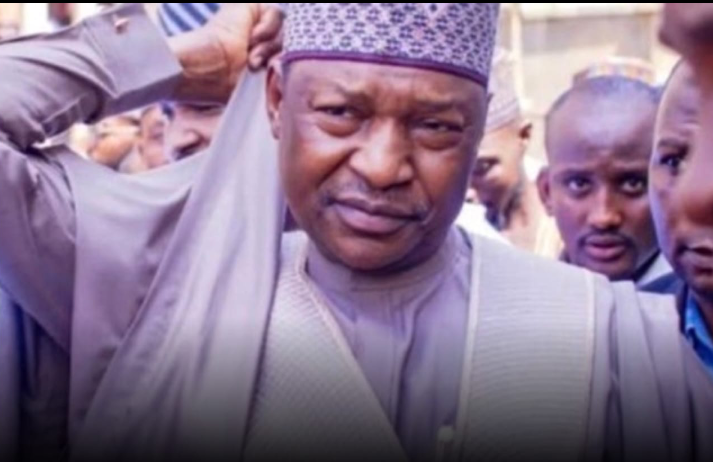
EFCC Traces 41 High-Value Properties to Former Justice Minister Abubakar Malami in Expanding Corruption Probe
Nigeria’s anti-graft war took a dramatic turn as the Economic and Financial Crimes Commission (EFCC) reportedly traced 41 high-value properties to Abubakar Malami, the former Attorney-General of the Federation and Minister of Justice, intensifying scrutiny around one of the most powerful legal figures of the last administration. The revelations, first reported by TheCable, have triggered widespread reactions across political, legal, and civil society circles, with many describing the scale of the assets as staggering and unprecedented.
According to the report, the properties allegedly linked to Malami span three major locations—Kebbi State, Kano State, and the Federal Capital Territory (FCT). These assets are said to include luxury hotels, expansive residential buildings, large parcels of land, schools, and even a printing press, collectively valued at hundreds of billions of naira. The EFCC’s findings suggest a vast network of real estate holdings accumulated over time, raising serious questions about the source of funds used to acquire them.
The most eye-catching aspect of the report is the valuation of the properties in Kebbi State, Malami’s home state. Assets traced to Kebbi alone are estimated to be worth approximately ₦162.19 billion, a figure that has shocked many Nigerians, especially given the economic realities facing the country. The properties in Kano State are valued at about ₦16.01 billion, while those in the FCT, Abuja’s prime real estate hub, are estimated at ₦34.69 billion. Altogether, the assets allegedly linked to the former minister amount to well over ₦200 billion.
Beyond the tracing of properties, the Federal Government has reportedly taken further legal steps by filing a 16-count charge bordering on money laundering against Malami and his son, Abdulaziz Malami. The charges accuse both father and son of committing offences contrary to Sections 15, 18, and 21 of the Money Laundering (Prevention and Prohibition) Act. These sections deal with the concealment of illicit funds, unlawful transactions, and aiding or abetting money laundering activities, offences that carry severe penalties under Nigerian law.
The inclusion of Malami’s son in the charges has added another layer of complexity to the case, suggesting that investigators believe the alleged financial activities may have involved family-linked channels. While details of the specific transactions are yet to be fully aired in open court, legal observers say the scope of the charges indicates a comprehensive investigation that goes beyond surface-level allegations.
TheCable reports that it has obtained the full list of the properties allegedly linked to the former minister, further fueling public interest and debate. Although the EFCC has not officially released the complete breakdown to the public, sources familiar with the investigation say the properties range from high-end developments in urban centers to large-scale investments that suggest long-term financial planning. The diversity of the assets has led many to question how such wealth could have been amassed by a public official within the timeframe of his service.
Abubakar Malami served as Attorney-General of the Federation and Minister of Justice from 2015 to 2023, a period during which he wielded enormous influence over Nigeria’s legal and judicial processes. As the nation’s chief law officer, he was responsible for advising the government on legal matters, overseeing major prosecutions, and playing a central role in the administration’s anti-corruption agenda. Ironically, his position placed him at the forefront of efforts to combat financial crimes, making the current allegations particularly striking.
Public reaction to the revelations has been swift and intense. On social media, Nigerians have expressed a mix of anger, disbelief, and grim validation of long-held suspicions about corruption at the highest levels of government. Many users have contrasted the reported value of the properties with the country’s minimum wage and the economic hardships faced by ordinary citizens, arguing that the case highlights the deep inequality embedded in Nigeria’s political system.
Legal analysts say the case could become a major test of the current administration’s commitment to accountability and the rule of law. While allegations against former officials are not uncommon, cases of this magnitude often face delays, legal technicalities, or political pushback. However, observers note that the decision to file formal charges suggests that the government believes it has sufficient evidence to proceed.
The EFCC, for its part, has maintained that it is committed to following due process and allowing the courts to determine the outcome of the case. The commission has repeatedly stated that no individual is above the law and that investigations are conducted based on evidence, not political considerations. If proven in court, the allegations against Malami and his son could result in asset forfeiture, heavy fines, and possible prison sentences.
Supporters of the former minister, however, have urged caution, emphasizing the principle of presumption of innocence. They argue that tracing properties does not automatically equate to guilt and that Malami should be given the opportunity to defend himself in court. Some have also suggested that the case could have political undertones, given Malami’s prominence and influence within Nigeria’s political landscape.
As the legal process unfolds, attention will likely focus on how the courts handle the case and whether the EFCC can successfully link the properties and alleged transactions to illicit activities. For many Nigerians, the outcome will be seen as a litmus test for the country’s fight against corruption and its ability to hold powerful individuals accountable.
For now, the revelations have already left a significant mark on the national conversation, reinforcing calls for transparency, stronger institutions, and a justice system that treats all citizens equally. Whether the case ultimately leads to convictions or not, the scale of the allegations against a former Attorney-General has ensured that it will remain in the spotlight for a long time to come.
Popular Posts
Elon Musk’s Feminism Comment Sparks Global Debate on Family, Power, and the Future of Gender Politics
25 Dec, 2025
Date Gone Wrong: Social Media Uproar as ‘God-Fearing’ Man Is Accused of Taking a Lady’s Phone After Dinner
25 Dec, 2025
From Forbes Darling to Deported Felon: The $11 Million Fraud Case That Ended Invictus Okeke’s American Dream
25 Dec, 2025Scroll to Top