news
Five Years On, Lekki Toll Gate Debate Reignites as Lai Mohammed Maintains No Protester Died There
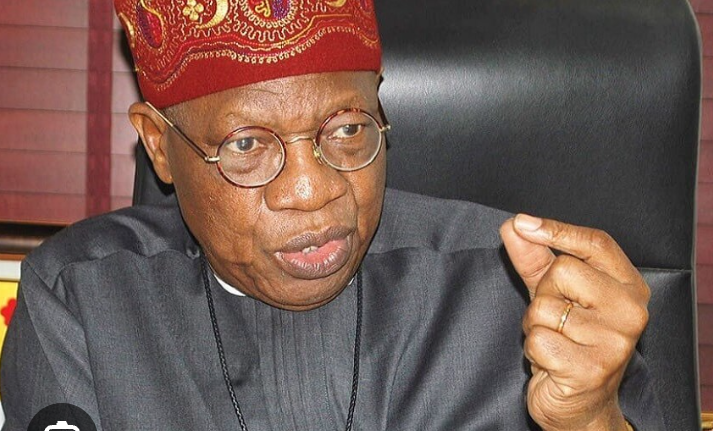
Five years after the #EndSARS protests shook Nigeria and drew global attention to police brutality and governance failures, the controversy surrounding what happened on the night of October 20, 2020, at the Lekki Toll Gate has once again returned to the centre of national discourse. Former Minister of Information and Culture, Lai Mohammed, has reiterated his long-held position that no protester was killed at the Lekki Toll Gate, insisting that the Federal Government never denied that lives were lost during the nationwide protests, but firmly disputing claims of deaths at that specific location.
Mohammed made the remarks on Tuesday while appearing as a guest on Politics Today, a current affairs programme aired on Channels Television. Speaking with a tone that suggested both resolve and frustration, the former minister said his stance has remained unchanged since the events of 2020, despite the intense public scrutiny, international reactions and the findings of investigative panels that followed the protests. According to him, while casualties did occur during the #EndSARS demonstrations across the country, those casualties did not include protesters killed at the Lekki Toll Gate.
“At no point did the government ever say that lives were not lost during #EndSARS,” Mohammed said during the interview. He stressed that the narrative that the Federal Government denied all fatalities was inaccurate and misleading. Instead, he argued that the government consistently acknowledged that lives were lost during the unrest, including the deaths of security personnel who were attacked as the protests escalated and were eventually hijacked by violent elements.
The former minister explained that on the night of the Lekki Toll Gate incident, he was in constant communication with senior military officials, even before troops were deployed to Lagos. According to him, this direct line of communication informed his understanding of events as they unfolded and reinforced his confidence in the information he has continued to present publicly. Mohammed said this firsthand engagement with top officials distinguished his position from what he described as speculation and emotionally charged accounts circulating on social media.
One of the most controversial aspects of his comments was his insistence that, five years later, there has been no verifiable claim from any family stating that a relative went to the Lekki Toll Gate protest and never returned. “Five years after, nobody has come out today to say, ‘My ward went to the toll gate, and he didn’t come back,’” he stated, suggesting that such an absence of direct claims supports his argument that no protester died at the scene.
Mohammed also distanced himself from the findings of the Lagos State Judicial Panel of Inquiry, which in its report described the Lekki Toll Gate incident as a massacre. The panel’s conclusions, released after months of hearings and testimonies, were widely circulated and praised by civil society groups, while also drawing criticism from government officials. Mohammed said he was not part of the Lagos State Government and therefore could not be bound by the panel’s conclusions, which he described as inconsistent and flawed.
Questioning how the panel arrived at its findings, Mohammed argued that key elements of the report did not align with information available to him. He maintained that soldiers deployed to the Lekki Toll Gate were armed with blank ammunition and suggested that this fact alone raised serious doubts about claims of protesters being shot dead at the scene. His remarks echo earlier statements by military authorities, which have also insisted that troops did not use live rounds against protesters that night.
Defending the decision to deploy soldiers to the Lekki Toll Gate, Mohammed said the Federal Government acted appropriately in response to a deteriorating security situation. According to him, what began as peaceful demonstrations against police brutality were later overtaken by hoodlums who exploited the protests to loot, vandalise property and attack security personnel. He argued that the state had a responsibility to restore order and protect lives and property, adding that the deployment of troops was not unusual in the face of widespread unrest.
The Lekki Toll Gate incident remains one of the most contentious and emotionally charged moments of the #EndSARS protests. Videos, eyewitness accounts and social media posts from the night in question have continued to shape public opinion, both within Nigeria and abroad. For many Nigerians, particularly young people who participated in or supported the protests, the events at Lekki Toll Gate symbolise a deep sense of injustice, mistrust in government institutions and unresolved national trauma.
Annual memorials held on October 20 have kept the issue alive in public consciousness, with protesters and activists gathering to remember what they describe as victims of state violence and to demand accountability. Legal actions and advocacy campaigns have also persisted, ensuring that the debate does not fade from national attention. Against this backdrop, Mohammed’s renewed insistence that no protester died at the toll gate is likely to further polarise opinion and reignite old arguments.
Supporters of the former minister’s position argue that emotions and social media misinformation have overshadowed facts, and that the lack of concrete evidence, such as death certificates or identified victims linked specifically to Lekki Toll Gate, should prompt a more cautious interpretation of events. Critics, however, see Mohammed’s remarks as dismissive of the pain and experiences of protesters, accusing him and other officials of attempting to rewrite history and evade responsibility.
Five years on, the #EndSARS protests continue to cast a long shadow over Nigeria’s political and social landscape. The movement not only forced the disbandment of the Special Anti-Robbery Squad but also exposed deeper issues of governance, accountability and youth alienation. While the country has moved on in many respects, the unresolved questions surrounding the Lekki Toll Gate incident ensure that it remains a symbol of unfinished business.
As narratives continue to clash and memories remain raw, Lai Mohammed’s comments serve as a reminder that Nigeria’s reckoning with the events of October 2020 is far from over. Whether the truth, as understood by the public, courts or history itself, will ever fully align remains uncertain. What is clear, however, is that five years later, the Lekki Toll Gate debate still has the power to reopen wounds, spark outrage and challenge the nation’s collective conscience.
Popular Posts
₦1 Million on the Line: Boniface Refuses to Return Carterefe’s iPhone 17 Pro Max After Explosive Bet Fallout
24 Dec, 2025
Drake’s $800,000 Christmas Surprise: Rap Superstar Gifts Friend a Brand New Rolls-Royce
24 Dec, 2025
“We’re Building, Not Rushing”: Shola Ogudu Explains Why Son Bolu, Champz, Is Stepping Back From Live Performances for Now
24 Dec, 2025Scroll to Top