news
From Bread Packets to Bus Routes: Police Uncover Brazen Drug Trafficking Network Linking Mumbai, Bengaluru and Kerala
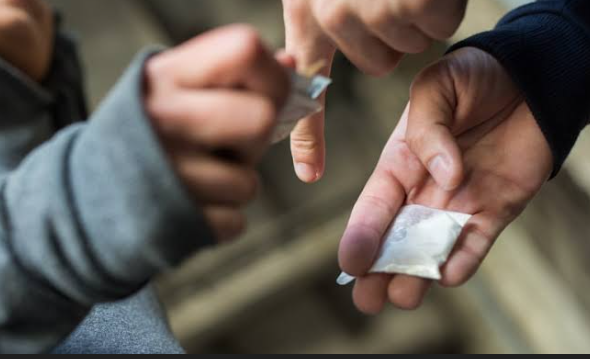
What began as a routine tip-off quickly unfolded into a revealing portrait of how illicit drugs are quietly moved across state lines in India, concealed in everyday items and transported through ordinary public routes. Investigators have arrested a woman accused of trafficking cocaine from Mumbai to Bengaluru, allegedly hiding the narcotics inside packets of bread to evade security checks, while a separate but related operation led to the arrest of two alleged drug peddlers from Kerala with high-value narcotics intended for distribution in the Karnataka capital.
According to police sources, the woman at the centre of the first case was acting on the instructions of a friend based in Mumbai. Investigators say she procured cocaine from him and transported it to Bengaluru multiple times, relying on private buses to move unnoticed between cities. Rather than using elaborate concealment devices, she allegedly opted for a deceptively simple method, hiding the drugs inside common food items such as bread packets, banking on the assumption that such items would attract minimal scrutiny during routine checks.
Police said the suspect’s movements had come under watch after they received specific intelligence about a woman transporting narcotics into Bengaluru. Acting on the tip-off, officers tracked her from a bus stand to her friend’s house. An initial search of her belongings reportedly yielded no incriminating evidence, a moment that briefly suggested the lead might have gone cold. However, investigators did not abandon the operation. A more thorough follow-up search later revealed cocaine hidden inside a packet of bread she was carrying, confirming the suspicions that had triggered the surveillance in the first place.
The discovery has drawn attention to the increasingly innovative and low-profile methods being used by drug traffickers to move contraband across state borders. Law enforcement officials noted that concealing narcotics in everyday food items is becoming more common, as traffickers attempt to exploit gaps in routine inspections and the sheer volume of passengers using public transport daily. Private buses, in particular, are often favoured due to less stringent checks compared to airports or railway terminals.
Following the seizure, a case was registered against the woman under the Narcotic Drugs and Psychotropic Substances (NDPS) Act, 1985. Police confirmed that she is currently being questioned as part of a broader investigation aimed at uncovering the full scope of the operation. Investigators are working to identify the original source of the cocaine, the individuals or groups who were meant to receive it in Bengaluru, and whether the trafficking route has links to larger inter-State or even international drug networks.
Officials familiar with the probe say the focus is not limited to the woman alone, stressing that couriers are often only one layer in a much wider supply chain. “People who physically transport the drugs are usually following instructions from higher up,” a police source said, adding that tracking communication records and financial transactions will be key to determining who was coordinating the operation and how long it has been running.
In a separate but related development highlighting the scale of drug trafficking into Bengaluru, Jalahalli police arrested two alleged drug peddlers from Kerala. The suspects were identified as Nikhil Raj, aged 30, and Melvin Monsi, aged 23. During the operation, police seized 247 grams of hydro ganja and 19 grams of MDMA, with the total value of the drugs estimated at ₹26.9 lakh.
According to investigators, the duo allegedly transported the drugs from Kerala to Bengaluru with the intention of distributing them within the city. Police believe the substances were meant for sale to a network of local dealers, potentially targeting party circuits and other high-demand areas. The arrests were made following sustained surveillance and intelligence gathering, suggesting that law enforcement agencies are increasingly coordinating efforts to disrupt supply lines before drugs reach end users.
The seizure of hydro ganja and MDMA underscores the diversity of narcotics entering Bengaluru, a city that has repeatedly been flagged by authorities as a major consumption and distribution hub. MDMA, often associated with nightlife and party scenes, commands high prices and is typically sourced through organised networks, while hydro ganja has gained popularity due to its potency and relatively discreet transportation compared to bulkier forms of cannabis.
Police officials said the two men are being questioned to determine their suppliers in Kerala and whether they were working independently or as part of a larger syndicate. Investigators are also examining whether there are any operational or logistical links between this case and the cocaine trafficking incident, including shared routes, intermediaries, or financiers.
Law enforcement agencies have expressed concern over the adaptability of drug trafficking networks, noting that arrests in one route often lead to the emergence of alternative paths and concealment strategies. The use of buses, ordinary luggage, and common household items makes detection more challenging, especially in a country with vast inter-State travel and millions of daily commuters.
Authorities reiterated that the NDPS Act provides for stringent punishment, including long prison terms, for those found guilty of trafficking or possessing commercial quantities of narcotics. Officials hope that strong enforcement, combined with intelligence-led policing, will deter traffickers who increasingly rely on couriers and low-tech concealment methods to move drugs across regions.
Both cases have sparked renewed calls for tighter checks at bus terminals and improved coordination between police forces across states. While airports and major railway stations often receive significant attention, officials acknowledge that private bus routes remain vulnerable due to limited manpower and infrastructure for thorough inspections.
As investigations continue, police say more arrests are likely, particularly as they trace communication trails and financial links connected to the suspects. For now, the arrests serve as a reminder that behind seemingly ordinary journeys and everyday items can lie complex criminal operations stretching across cities and states, quietly feeding an underground trade that authorities are racing to contain.
Popular Posts

Elon Musk’s Feminism Comment Sparks Global Debate on Family, Power, and the Future of Gender Politics
25 Dec, 2025
Date Gone Wrong: Social Media Uproar as ‘God-Fearing’ Man Is Accused of Taking a Lady’s Phone After Dinner
25 Dec, 2025
From Forbes Darling to Deported Felon: The $11 Million Fraud Case That Ended Invictus Okeke’s American Dream
25 Dec, 2025Scroll to Top