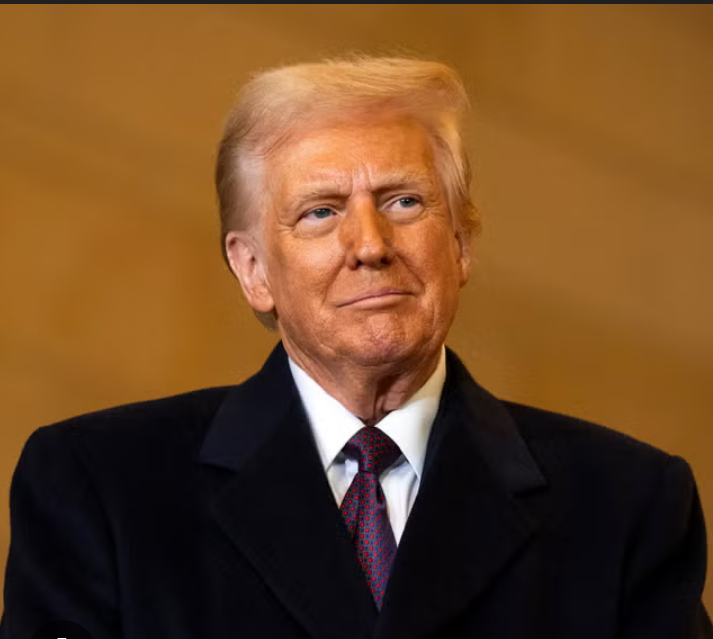
President Donald J. Trump marked Christmas Day with a message that blended holiday greetings, sharp political rhetoric, and a sweeping declaration of what he described as America’s renewed strength, using his X (formerly Twitter) account to deliver a statement that quickly drew massive attention and reignited debate across the political spectrum. Posted at 2:12 a.m. on December 25, 2025, the message amassed more than 17 million views within hours, underscoring Trump’s enduring ability to dominate public conversation even during moments traditionally reserved for unity and reflection.
The message opened with what Trump called a Christmas greeting to “all,” but swiftly pivoted into familiar territory, as he extended his wishes to what he labeled the “Radical Left,” accusing them of doing “everything possible to destroy our Country,” while asserting that their efforts were “failing badly.” The language, confrontational and unapologetic, stood in contrast to the conventional tone of presidential holiday messages, which typically emphasize reconciliation, compassion, and shared values. Yet for Trump’s supporters, the bluntness was consistent with the political style that has defined his career and endeared him to millions who see him as unfiltered and resolute.
In the message, Trump outlined a series of policy claims and achievements he said defined the current state of the nation. He declared an end to what he described as “Open Borders,” rejected the inclusion of transgender athletes in women’s sports, criticized progressive gender policies, and emphasized what he called a return to strong law enforcement. These statements reflected long-standing culture war themes that have been central to Trump’s political identity and messaging, particularly among conservative voters who view such issues as emblematic of broader societal shifts.
Trump also highlighted economic indicators, presenting a picture of robust national performance. He pointed to what he described as a record-breaking stock market, strong 401(k) retirement accounts, historically low crime rates, and an absence of inflation. He further claimed that the United States had recorded a 4.3 percent GDP growth figure, which he said exceeded expectations by two points, portraying it as evidence of economic momentum and effective governance. These assertions were framed as proof that the country was not only stable but thriving under his leadership.
Central to Trump’s economic narrative was his emphasis on tariffs, a policy tool he has long defended despite criticism from economists and global trade partners. In his Christmas message, Trump credited tariffs with generating “trillions of dollars in growth and prosperity,” presenting them as a cornerstone of national economic revival. He also linked these policies to what he described as the strongest national security the country has ever had, arguing that economic strength and security are inseparable.
The message concluded on a patriotic note, with Trump asserting that the United States is “respected again, perhaps like never before,” before signing off with “God Bless America!! President DJT.” The closing underscored a recurring theme in Trump’s rhetoric: the idea of restored global respect and national pride following what he and his allies often characterize as years of decline.
Reactions to the message were swift and polarized. Supporters praised Trump for what they saw as honesty, strength, and a refusal to soften his stance even on a day traditionally associated with goodwill. Many echoed his claims about economic success and national security, sharing the post widely and applauding his emphasis on patriotism and faith. For these followers, the message reinforced their belief that Trump represents a decisive break from political norms they view as ineffective or insincere.
Critics, however, condemned the message as divisive and inappropriate for Christmas Day, arguing that it deepened political fractures rather than promoting peace and unity. They took issue with the tone, particularly the attack on political opponents during a religious holiday, and questioned the accuracy of several claims made in the post. Some commentators described the message as emblematic of a broader erosion of civic norms, while others argued it reflected a deliberate strategy to keep cultural and political conflicts at the forefront of public discourse.
Political analysts noted that the message was consistent with Trump’s long-established communication style, which often blends celebration with confrontation and policy declarations with personal grievance. Even as the post referenced “peace and unity,” its language highlighted the persistent divisions shaping American politics. For Trump, such messaging has historically served not only to energize his base but also to dominate news cycles, ensuring that attention remains focused on his narrative.
The timing of the post, in the early hours of Christmas morning, also drew attention. Some saw it as a calculated move to capture global audiences across time zones, while others viewed it as another example of Trump’s unconventional approach to presidential communication. Regardless of interpretation, the post succeeded in its apparent goal of commanding attention during a moment when most political figures adopt a more restrained tone.
As America continues to grapple with deep ideological divides, Trump’s Christmas message highlighted the challenges of balancing calls for unity with the realities of a polarized political environment. While he framed the nation as stronger, safer, and more prosperous, the varied reactions to his words illustrated that consensus on these claims remains elusive.
Ultimately, the message served as a reminder that Donald Trump’s presence in American politics continues to shape discourse in powerful ways. Even on Christmas Day, a moment associated with peace, reflection, and goodwill, his words sparked debate, reaffirmed loyalties, and reignited opposition. Whether viewed as a declaration of national triumph or a missed opportunity for reconciliation, the message underscored a defining feature of the Trump era: the blending of celebration, confrontation, and political messaging into a single, unmistakable voice that continues to resonate across the nation and beyond.
Popular Posts

Elon Musk’s Feminism Comment Sparks Global Debate on Family, Power, and the Future of Gender Politics
25 Dec, 2025
Date Gone Wrong: Social Media Uproar as ‘God-Fearing’ Man Is Accused of Taking a Lady’s Phone After Dinner
25 Dec, 2025
From Forbes Darling to Deported Felon: The $11 Million Fraud Case That Ended Invictus Okeke’s American Dream
25 Dec, 2025Scroll to Top