news
Homecoming of the Heart: 700 African Descendants Return to Burkina Faso to Honor Their Ancestral Roots and Support Pan-Africanism
In an emotional and historic event that has captured the spirit of unity across continents, seven hundred Africans in America — descendants of those forcefully taken from the continent centuries ago — have landed in Burkina Faso to reconnect with their ancestral homeland. The symbolic journey, described as a “spiritual homecoming,” is a powerful testament to the enduring bond between Africa and its diaspora, as well as a show of solidarity with Captain Ibrahim Traoré’s pan-African vision that continues to inspire millions across the continent and beyond.
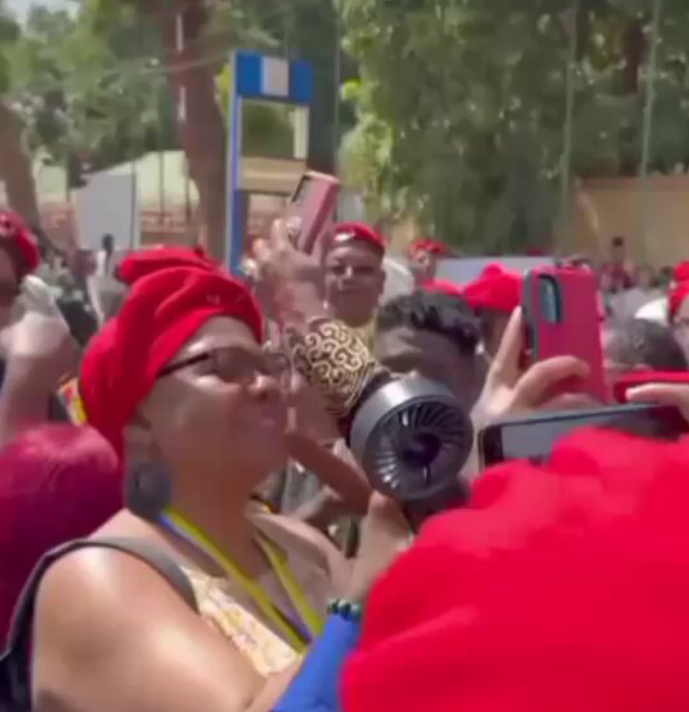
The group, composed of men, women, and young people from various African-American communities across the United States, arrived in Ouagadougou, the capital of Burkina Faso, to a rousing welcome from locals waving flags, drumming, and dancing in the streets. For many of these visitors, stepping foot on African soil for the first time was more than a trip — it was a reconnection with a past that had been violently severed by centuries of enslavement and colonial domination. Tears flowed freely as chants of “Welcome home!” filled the air, blending with the rhythmic beats of traditional Burkinabé drums that echoed through the capital like a heartbeat of history itself.
According to organizers, the homecoming was not just a cultural exchange but a deeply political and spiritual statement — a declaration that the children of Africa, no matter how far away they were scattered, have never forgotten where they came from. “We are here to honor our ancestors, those who suffered, those who fought, and those who dreamed of this day,” one of the participants said. “We are also here to stand with Captain Ibrahim Traoré, who represents the kind of leadership our people have longed for — a leadership that stands for dignity, sovereignty, and unity.”
Burkina Faso, under the leadership of Captain Ibrahim Traoré, has become a rallying point for pan-African ideals and anti-imperialist movements. Traoré, who took power in 2022, has consistently called for Africa’s liberation from foreign control, urging unity among African nations to reclaim their resources and identity. His message has resonated strongly with Africans both on the continent and in the diaspora. For many African-Americans, Traoré embodies the kind of fearless, people-centered leadership that echoes the revolutionary spirits of Thomas Sankara, Kwame Nkrumah, and Patrice Lumumba.
The homecoming ceremony was filled with symbolism and emotion. Participants dressed in traditional African attire, adorned with Ankara prints, kente fabrics, and cowries, knelt on Burkinabé soil, some kissing the ground as they whispered prayers of gratitude and remembrance. A large tree was planted to commemorate the occasion — a “Tree of Return,” symbolizing rebirth, reconnection, and the restoration of broken roots.
Cultural performances, storytelling sessions, and spiritual rites were held to celebrate the reunion. The Burkinabé people, known for their hospitality and resilience, opened their homes to the visitors, offering them local dishes like tô, riz gras, and peanut stew, while griots narrated stories of heroism, resistance, and the golden days of African empires before the transatlantic slave trade.
Beyond the cultural immersion, the event also had a strong political undertone. Representatives from the diaspora expressed their support for Burkina Faso’s defiance of neocolonial structures, particularly its recent moves to assert independence from Western influence. “What Captain Traoré is doing is not just about Burkina Faso,” one delegate said. “It’s about the whole of Africa standing up. It’s about us — the descendants of those who were taken — saying that the fight of our ancestors is not over. We are ready to join hands and rebuild the Africa they dreamed of.”
The visit has also sparked conversations about the future of pan-Africanism and how the diaspora can play a more active role in Africa’s development. Many of the visitors have expressed interest in investing in agriculture, education, and technology in Burkina Faso and other African nations. Plans for cultural exchange programs, dual citizenship pathways, and heritage tourism are also being discussed as ways to deepen the connection between Africans at home and abroad.
Local Burkinabé citizens have described the visit as one of the most uplifting moments in recent history. “Seeing our brothers and sisters from America return home is something that fills our hearts with pride,” said a university student in Ouagadougou. “They are proof that Africa is not forgotten. They remind us that no matter how far we are scattered, we are one people with one destiny.”
Social media across Africa has been flooded with messages of solidarity and joy. Images of the descendants being welcomed with hugs, music, and tears have gone viral, accompanied by hashtags like #WelcomeHome, #PanAfricanUnity, and #BurkinaFasoRising. Many Africans have praised the initiative, calling it a model for other nations to emulate — a step toward healing the wounds of history and building a future rooted in self-reliance and shared pride.
Observers say the timing of this homecoming is particularly significant. Across Africa, a new wave of consciousness is spreading — one that calls for unity, decolonization, and economic independence. Countries like Mali, Niger, and Burkina Faso have been at the forefront of rejecting old power structures and asserting control over their own affairs. For many in the diaspora, this signals a long-awaited awakening — a revival of the pan-African dream that leaders like Thomas Sankara once envisioned.
The visit culminated in a powerful closing ceremony at the Independence Square in Ouagadougou, where both the diaspora visitors and Burkinabé locals joined hands in a candlelight vigil to honor the memory of enslaved Africans who perished in the transatlantic slave trade. The flickering lights illuminated the faces of hundreds gathered — faces filled with emotion, pride, and hope. As traditional songs of freedom echoed into the night, one could feel the spirit of the ancestors hovering in the air, witnessing a long-overdue reunion of their children.
Before their departure, the visitors pledged to continue strengthening ties with Burkina Faso and to serve as cultural ambassadors promoting Africa’s image and unity globally. “This is not the end,” said one of the coordinators. “This is the beginning of a movement — a movement to restore our dignity, reclaim our heritage, and rebuild the bridge between Africa and its scattered children.”
The homecoming of 700 African descendants to Burkina Faso will be remembered not just as a symbolic return, but as a spark that reignited the flames of pan-African consciousness in the hearts of a new generation. In a time when many are searching for identity, belonging, and purpose, their journey reminds the world that Africa’s heartbeat still echoes across oceans — steady, strong, and unbroken.
It is, perhaps, as one elderly Burkinabé woman said while holding the hand of a young visitor from Chicago, “When a child finds the way home, the ancestors dance.” And indeed, on this day, it seemed as though all of Africa was dancing.
🇧🇫700 Africans in America, who are descendants of enslaved African that were trafficked to the Americas landed in Burkina Faso, to pay homage to the land of their ancestors, and to show support to Captain Ibrahim Traore and panafricanism.
— Sahel Revolutionary Soldier (@cecild84) October 28, 2025
Love to our dear brothers and sisters.… pic.twitter.com/pMoCu6F55g
Twitter Post
Visit websitePopular Posts

Forgotten Kingmaker: EmekaTheStar Cries Out After Claiming He Helped Shape Don Jazzy and Wande Coal’s Rise
06 Dec, 2025
Peller Stirs Social Media Frenzy as TikTok Star Splurges Millions on a Brand-New Mercedes-Benz
06 Dec, 2025
₦400k and Still Delayed: Jemima Osunde’s Frustrating Lagos–Benin Flight Experience Sparks National Outrage
06 Dec, 2025Scroll to Top