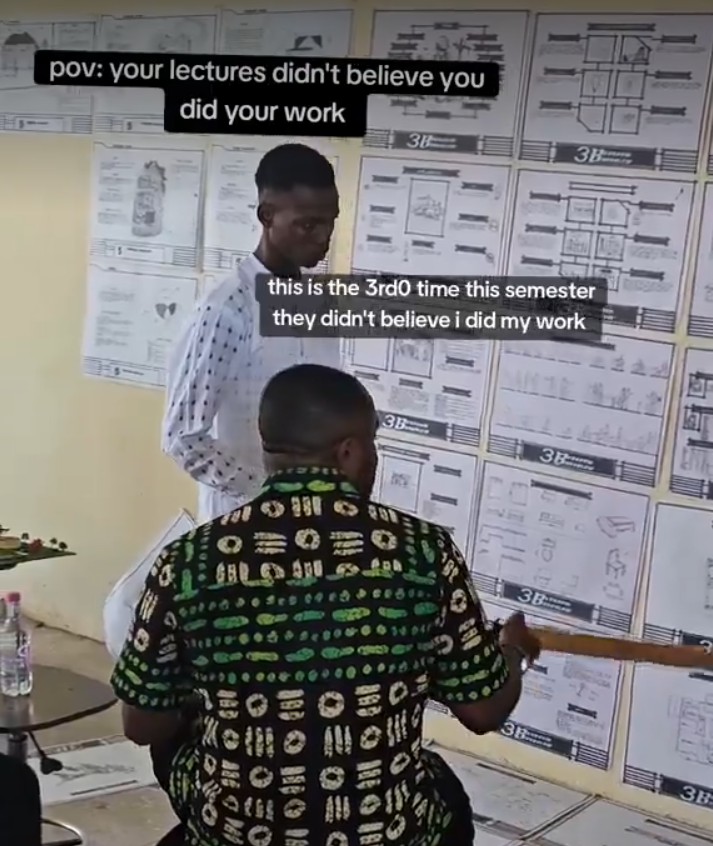
An atmosphere of disbelief and heartbreak filled the air at the Federal University of Technology, Owerri (FUTO) after a shocking incident involving a lecturer and a final-year architecture student left many questioning the culture of doubt and intimidation within Nigerian tertiary institutions. According to eyewitnesses, a student’s architectural project — which had been described as “exceptional” and “one of the best seen in recent years” — was destroyed by a lecturer who claimed the student could not possibly have created such a masterpiece on their own.
The incident reportedly occurred during a project defense session where students were expected to present their final designs before a panel of lecturers. The student, whose name has been withheld for privacy reasons, had poured months of effort, sleepless nights, and personal funds into creating a detailed architectural model that showcased creativity, precision, and modern design sensibilities. However, instead of receiving praise or constructive feedback, the student was met with hostility and suspicion. Witnesses say the lecturer, after inspecting the model, accused the student of outsourcing the work or copying from external sources, declaring it “too perfect” for a student’s capacity. Within moments, the lecturer allegedly smashed parts of the project, breaking key sections of the structure in front of the class.
Students in the hall gasped in horror as the model shattered on the floor, with some even recording the heartbreaking moment on their phones. “It was like watching someone’s dream being torn apart,” one student recounted. “The lecturer didn’t even give the student a chance to explain. He just said there was no way that kind of design came from a student of FUTO and that it must have been done by a professional.” The crowd reportedly fell silent, while the affected student stood frozen, visibly devastated, trying to gather the broken pieces of their project.
The video of the incident, which has since gone viral on social media, has sparked outrage across the country. Netizens have condemned the lecturer’s behavior, calling it not only unprofessional but deeply damaging to the spirit of innovation and creativity that universities are supposed to nurture. Many Nigerians took to platforms like X (formerly Twitter), Facebook, and TikTok to express their anger, saying that this act reflects a much deeper problem in the Nigerian academic system — one where lecturers often believe excellence must be suspicious and mediocrity is the norm.
One viral comment read, “Only in Nigeria will you be punished for being too good. Instead of encouraging creativity, they destroy it.” Another user wrote, “That student might have just been the next great architect from Africa, but this kind of humiliation can break a person’s spirit forever.”
Some alumni of FUTO and other Nigerian universities have also weighed in, recounting similar experiences where lecturers accused them of cheating or outsourcing their work simply because they performed better than expected. “I once had a lecturer tear my design sheets because he said it looked like something copied from an international competition,” one user commented. “It’s like they don’t believe their students can produce something world-class.”
The incident has reignited debates about the toxic power dynamics between students and lecturers in Nigerian universities. Many have criticized the system for fostering fear rather than curiosity and for rewarding obedience over originality. According to some observers, such incidents discourage students from pushing creative boundaries, especially in fields that depend heavily on innovation, like architecture, engineering, and design.
As the backlash grew online, calls intensified for the university management to take action. Student associations, including the FUTO Students’ Union Government (SUG), reportedly issued a statement condemning the lecturer’s behavior and demanding an official investigation. They described the act as “an embarrassment to the institution and an assault on academic freedom.” The statement further read: “We cannot allow lecturers to continue demoralizing students who strive for excellence. The university should be a place that encourages creativity, not punishes it.”
Meanwhile, sources close to the architecture department claim that the lecturer in question is known for being strict and skeptical about students’ capabilities. Some even allege that this is not the first time such an incident has occurred, though few have been publicly reported due to fear of victimization. “Students are scared to speak up,” said one insider. “If you talk, they’ll say you’re disrespecting authority. So most people just endure.”
As of now, there has been no official response from the FUTO management, but reports suggest the administration may soon release a statement due to the growing public outcry. Many are urging the school to protect the student involved and ensure justice is served, not only as a disciplinary measure but also as a statement against academic oppression.
For the student whose project was destroyed, this episode could have lifelong emotional consequences. Colleagues say they had worked on the design for months, often sleeping in studios, researching architectural concepts, and paying out of pocket for materials. The project was reportedly meant to be their final submission — the culmination of five years of study — and its destruction has left them demoralized. “They cried uncontrollably,” one classmate shared. “You could see the pain. It wasn’t just cardboard and glue that got destroyed; it was someone’s pride, sweat, and dreams.”
Nigerians across social media are now demanding that FUTO not only sanction the lecturer but also offer restitution to the affected student. Some have called for mental health support, noting that such humiliation can lead to long-term trauma or even push students to give up on their dreams entirely. A few others have suggested that this incident should spark a wider reform across universities to ensure lecturers are held accountable for abuses of power.
Education advocates have also seized the moment to highlight the need for a cultural shift in academia — one that celebrates excellence and originality instead of treating them with suspicion. “When a student does something outstanding, the right question to ask is ‘How did you achieve this?’ not ‘Who did this for you?’” one commentator wrote. “If we keep killing brilliance out of insecurity and ego, we will never grow as a nation.”
As the story continues to trend, many Nigerians are left reflecting on how much potential has been stifled in classrooms over the years due to similar acts of hostility and disbelief. Whether the Federal University of Technology, Owerri will take meaningful action remains to be seen, but one thing is certain — the heartbreaking scene of a young architect’s dream being crushed in broad daylight has once again exposed the cracks in Nigeria’s educational system.
For now, the public watches and waits, hoping that this time, justice won’t just be another project destroyed and forgotten.
Moment a lecturer at the Federal University of Technology, Owerri (FUTO) d3-str0y3d an architecture student’s project, claiming the student couldn’t have produced something that exceptional. 💔 pic.twitter.com/0zd1pGzdmk
— 𝐀𝐬𝐚𝐤𝐲𝐆𝐑𝐍 (@AsakyGRN) October 27, 2025
Twitter Post
Visit websitePopular Posts

“I Was Having Flashbacks as She Was Kabashing”: Chike’s Candid Confession Sends Waves Through Social Media
06 Dec, 2025
Gospel Artist Victor Thompson’s 5th Wedding Anniversary Photos Spark Praise, Banter, and a Fresh Conversation on ‘Loving Good Things’
06 Dec, 2025
DJ DSF Sparks Debate as She Says It’s Better to Stay in Nigeria Than Do a Job You Hate in the UK
06 Dec, 2025Scroll to Top