Entertainment
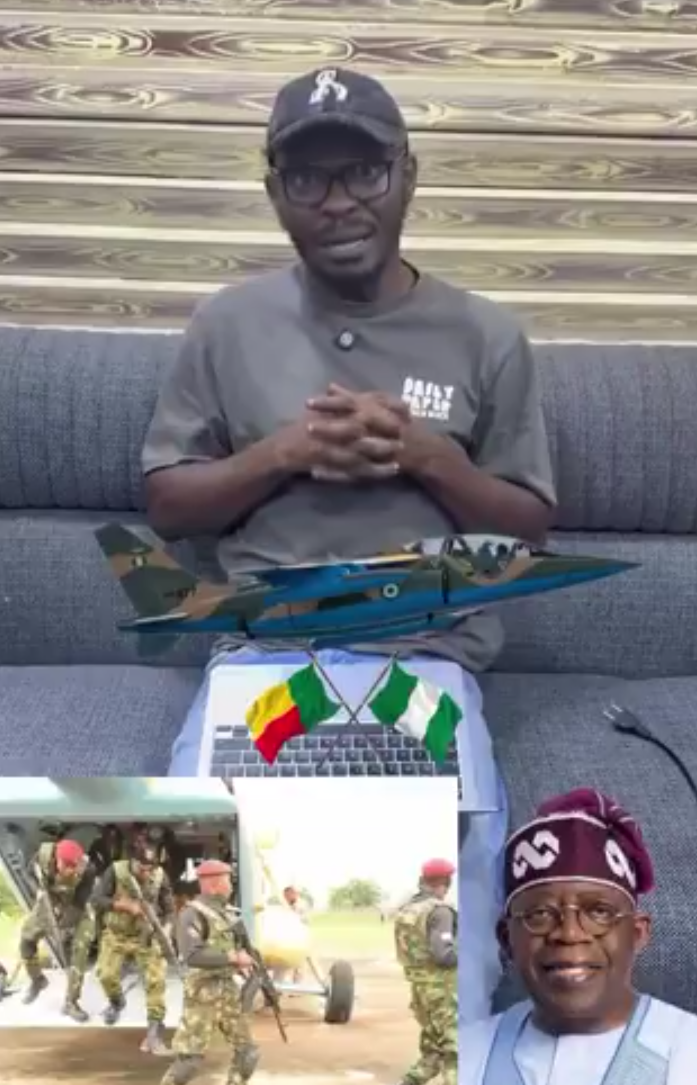
Mr jollof praises Tinubu as Nigeria’s Military Role in Benin Sparks Debate Over Homefront Security
In a week dominated by regional political tension and online commentary, popular Nigerian media personality Mr. Jollof has stirred nationwide conversation after publicly applauding President Bola Ahmed Tinubu and the Nigerian military for assisting the Republic of Benin in what he described as the country’s effort to “restore democracy.” His remarks, which have since gone viral across social platforms, have not only ignited praise but also reopened long-standing debates about Nigeria’s internal security priorities, foreign policy responsibilities, and the complexities of leading Africa’s most populous nation.
According to Mr. Jollof, the Nigerian government deserves “big kudos” for stepping up to help a neighboring country in distress, insisting that critics are overlooking the bigger picture. His comments came in response to widespread reactions from Nigerians who questioned why the military could engage in decisive action outside its borders while terrorism, banditry, and other internal security issues remain persistent at home. But Mr. Jollof’s position is clear: governance in a nation of more than 200 million people is no simple task, and those quick to criticize often fail to acknowledge the geopolitical forces at play, particularly what he calls “foreign actors sponsoring terrorism in Nigeria.”
His statement reflects a sentiment shared by some political analysts who point out that West African stability is deeply interconnected. When one country falls into chaos, neighboring states inevitably feel the ripple effects—whether through refugee crises, economic disruption, or cross-border insecurity. Nigeria, being both the largest economy and the military heavyweight of the region, is often expected to take leadership roles, especially on matters involving democratic stability. Tinubu, who currently chairs the ECOWAS Authority of Heads of State, has repeatedly emphasized that regional peace is crucial to Nigeria’s own security and economic ambitions.
However, critics argue that Nigeria’s first responsibility is to its own citizens. For many Nigerians, the notion that the military can mobilize with precision in a foreign country but struggles to dismantle the well-entrenched networks of terrorists and bandits on home soil feels contradictory. Social media has erupted with comments from frustrated citizens who insist that the government must prioritize domestic stability before focusing outward. “How are we helping another country restore democracy when our own people are still not safe in Zamfara, Kaduna, Plateau, or Niger?” one user wrote in a trending post. Others questioned whether the military’s external operations are distractions from unresolved internal challenges.
Despite the controversy, Mr. Jollof argues that such criticism oversimplifies a deeply complex situation. He insists that unifying a nation as large and diverse as Nigeria—one with over 250 ethnic groups, sharply differing regional priorities, and decades of political and economic tension—is a monumental challenge. According to him, President Tinubu is juggling domestic pressures, international expectations, and the influence of powers outside Africa that, he claims, have strategic reasons to see Nigeria destabilized. His assertion that “foreign actors are the ones sponsoring terrorism in Nigeria” adds another layer to an already complicated narrative, suggesting that not all of Nigeria’s internal problems can be solved solely by force or policy, as some issues stem from geopolitical interference.
Security experts often echo similar concerns, arguing that global arms trafficking, extremist ideologies imported from overseas, and transnational criminal networks contribute significantly to Nigeria’s instability. While the government has not pointed fingers publicly at specific foreign sponsors, officials over the years have confirmed the presence of external influence in the funding, arming, and training of extremist groups. In this light, Mr. Jollof’s comments, though controversial, tap into a broader discourse about Africa’s vulnerability to international power struggles.
But as the debate intensifies, the military’s role in Benin Republic remains a major talking point. For some Nigerians, helping stabilize a neighboring nation is both a moral and strategic duty. A politically troubled Benin could become a gateway for increased cross-border crime, insurgent movement, or mass displacement—issues Nigeria already contends with along multiple borders. Supporters of the intervention argue that strong regional alliances are essential to preventing the spread of instability that could worsen Nigeria’s own security problems. They see the operation as a sign that Nigeria is reclaiming its position as a regional leader after years of internal turmoil and diminished confidence in its capabilities.
And yet, skepticism persists. Many citizens remain unconvinced that the government can balance both domestic and foreign responsibilities effectively. Critics question whether Nigeria’s resources—military, financial, and diplomatic—are being stretched thin at a time when inflation is high, unemployment is a major concern, and many communities still feel unprotected. They also point to unresolved kidnappings, rising crime rates, and recurring security failures as evidence that government priorities may be misaligned.
In the middle of this tug-of-war between praise and criticism, President Tinubu’s administration has maintained that Nigeria’s foreign engagements are deliberate parts of a broader strategy aimed at long-term regional peace and internal stability. Officials argue that insecurity cannot be fully addressed within isolated national borders in today’s interconnected world. They also emphasize that Nigeria’s military has grown more sophisticated and better coordinated than in previous years, capable of handling multiple operations simultaneously.
Nevertheless, the public remains sharply divided, and Mr. Jollof’s comments have ensured that the conversation will not fade anytime soon. His decision to highlight the difficulty of unifying over 200 million people resonates with supporters who argue that Nigerians often underestimate the complexity of governance. Meanwhile, his remarks about foreign actors fueling terrorism have reignited suspicions about the international forces potentially benefiting from Nigeria’s instability—a subject frequently discussed but rarely addressed directly by officials.
Ultimately, the controversy underscores a deeper truth: Nigerians are desperate for security, accountability, and visible progress. Whether it comes through domestic reforms or regional cooperation, citizens want results—not promises. As the country continues to navigate internal challenges while asserting itself on the international stage, public figures like Mr. Jollof will continue to influence the national conversation with bold statements that spark debate, push for scrutiny, and often reflect the sentiments of an increasingly vocal population.
For now, the discussion remains intense, with many waiting to see if Nigeria’s involvement in Benin will bring about meaningful regional stability and whether the Tinubu administration can translate its international leadership into tangible improvements in the daily lives of Nigerians at home.
“Big kudos to the Nigerian military and President Tinubu for assisting the Benin Republic in restoring democracy. For those saying the Nigerian government has not finished f!ghting terrørism at home but is busy bombing in Benin Republic, remember it isn’t easy for Tinubu to unite… pic.twitter.com/GKlQ91i2Kf
— CHUKS 🍥 (@ChuksEricE) December 8, 2025
Twitter Post
Visit websitePopular Posts
Kebbi’s Bold N10bn Move: Inside the Rush to Secure 1,300 Extra Hajj Slots Before the Deadline
08 Dec, 2025
Hope Restored as Federal Government Secures Release of 100 Abducted Schoolchildren in Niger State
08 Dec, 2025
Mr jollof praises Tinubu as Nigeria’s Military Role in Benin Sparks Debate Over Homefront Security
08 Dec, 2025Scroll to Top