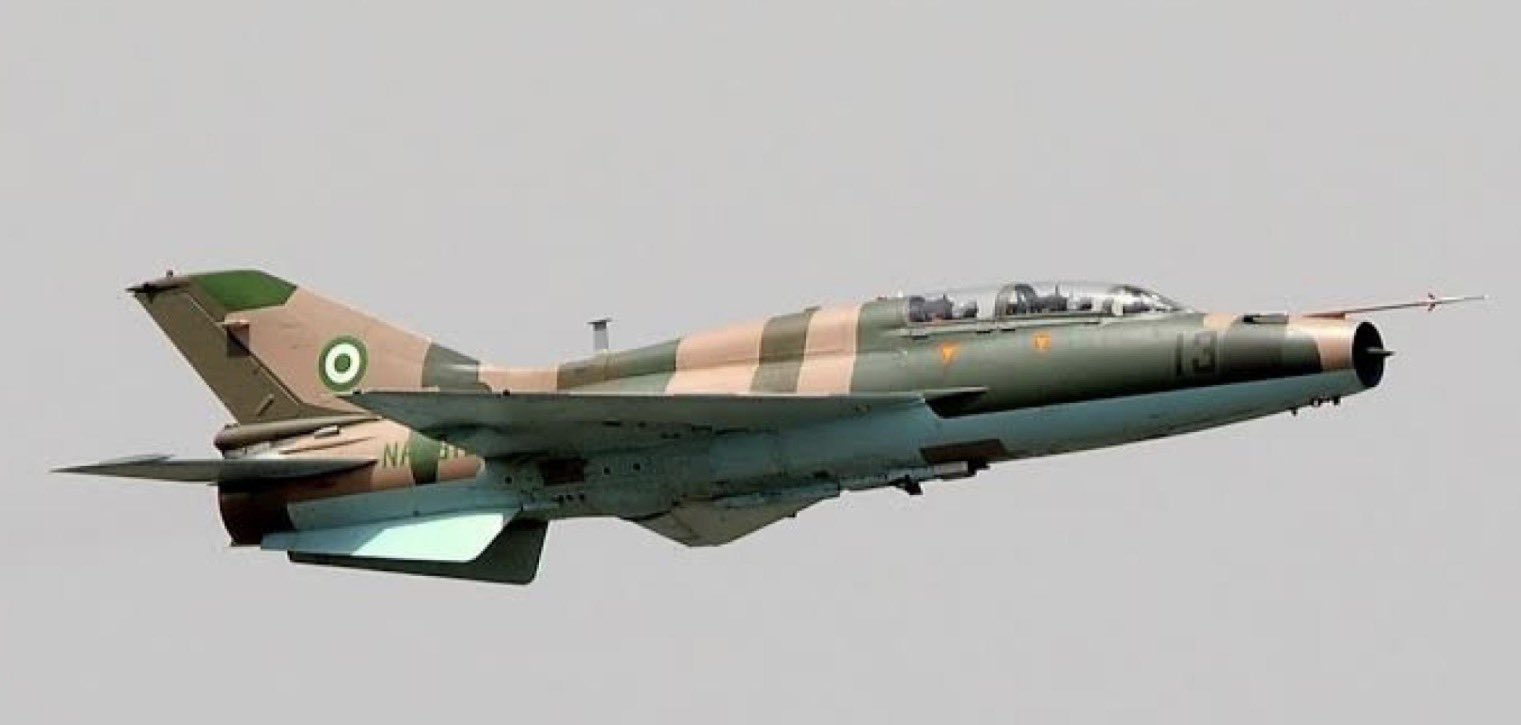
Nigeria has officially recalled the fighter aircraft it deployed to the Benin Republic after authorities confirmed that stability had been restored in the neighbouring country following a brief but tense coup attempt that rattled the region on Sunday. The jet, which had been sent from Lagos as part of an emergency surveillance and airspace monitoring mission, was ordered to return to base after intelligence reports verified that loyalist forces in Benin had fully regained control and neutralised all immediate threats.
The recall marks the end of a swift and closely watched security response by Nigeria, which moved quickly to protect its borders and support regional peace efforts the moment reports of a coup attempt filtered in. According to sources familiar with the operation, the fighter jet entered Benin’s airspace under a regional cooperation framework, with the primary goal of monitoring movements, providing reconnaissance, and ensuring that the unrest did not spill into neighbouring territories. For Nigerian authorities, the deployment was a precautionary step aimed at deterring any escalation and showcasing the country’s readiness to respond to instability within the sub-region.
Sunday’s attempted coup in Benin, though short-lived, sent shockwaves across West Africa, a region already grappling with a worrying resurgence of military takeovers in recent years. Witnesses in Cotonou reported unusual military activity early in the morning, leading to widespread speculation of a coordinated effort to overthrow the government. However, loyalist security forces were quick to counter the insurgent faction, restoring order within hours and averting what could have been another major political crisis in the region. By midday, Benin’s government had announced that the situation was under control, and that the perpetrators were either arrested or on the run.
For Nigeria, whose borders lie just a few hours from Cotonou, the risk of instability spreading was real. Analysts say the rapid deployment of a fighter jet sends a clear message that the country is unwilling to take chances with regional stability, especially at a time when West Africa has witnessed successive coups in Mali, Burkina Faso, Niger, and Guinea. Abuja has consistently reiterated its commitment to defending democratic governance in the region and supporting ECOWAS-led diplomatic and security measures to prevent further disruptions.
Security officials who spoke on condition of anonymity said the aircraft was recalled only after intelligence reports confirmed that the Beninese military high command had regained complete control of all strategic points, including government institutions, communication hubs, and military bases. The Nigerian Air Force reportedly received real-time updates through liaison channels that enabled quick decisions on whether to heighten or downgrade its alert level. Once it became clear that no threat existed to Nigerian territory and that Benin’s leadership was firmly back in charge, the fighter jet was ordered to return to Lagos on Sunday afternoon.
The development has drawn positive reactions from defence observers who see Nigeria’s actions as part of a broader and more coordinated regional security philosophy emerging within West Africa. “What Nigeria did was not an act of aggression, but a show of readiness and cooperation,” said a senior security analyst. “When one country in the region experiences instability, it affects everyone. Nigeria understands its role and the expectations placed upon it as a regional leader.”
Benin’s government, for its part, has not publicly commented on Nigeria’s rapid deployment, but diplomatic sources say such gestures are often acknowledged quietly through established security channels. The two countries maintain a strong defence relationship, with frequent intelligence exchanges and joint border operations aimed at combating piracy, smuggling, and extremist activities involving cross-border criminal networks. The failed coup attempt, though contained, has raised fresh questions about internal discontent in Benin and the possibility of unseen political fractures beneath the surface.
Residents in Cotonou and surrounding cities described Sunday as one of the most unsettling days in recent memory. While life appears to have returned to normal by evening, many expressed concern about the country’s political future. Markets were briefly shut, and transport services were disrupted as security forces conducted sweeps and manned checkpoints across major routes. By nightfall, however, the atmosphere calmed, with businesses reopening and citizens resuming their usual activities.
In Abuja, Nigeria’s Ministry of Defence has remained tight-lipped about the specifics of the operation, declining to disclose further details regarding the fighter jet’s exact mission parameters or the intelligence assessments that informed its withdrawal. However, insiders say the move reflects a deliberate strategy to avoid unnecessary tension or misinterpretation, especially in a region where military involvement in politics has become a sensitive and closely scrutinised issue.
Regional political analysts warn that although the failed coup was swiftly contained, it signals the need for Benin and its neighbours to intensify efforts aimed at strengthening democratic institutions and addressing underlying political grievances. They argue that West Africa is currently at a tipping point, where small cracks in governance structures can easily be exploited by ambitious military factions or political opportunists. The failed coup in Benin may therefore act as a wake-up call for the government to re-evaluate its domestic security framework and improve engagement with citizens and civil society groups.
Meanwhile, international partners including the African Union, ECOWAS, and the European Union have been monitoring developments closely but have yet to issue extensive statements beyond their initial condemnation of the attempted power grab. Diplomats predict that discussions around the coup attempt will feature prominently in upcoming regional security meetings, especially as West Africa continues to grapple with lingering threats from extremism, economic instability, and political tension.
For now, both Nigeria and Benin appear eager to move past Sunday’s events and refocus attention on restoring full normalcy. With the fighter jet safely back on home soil and diplomatic channels working overtime, the incident serves as another reminder of the fragile but resolute nature of regional cooperation in a time of heightened uncertainty. West Africa continues to navigate one of its most challenging political eras, but swift actions like Nigeria’s recall of its aircraft highlight a growing commitment among its nations to defend stability, democracy, and collective security—no matter how unexpected the challenge may be.
Popular Posts

Korra Obidi Sets Social Media on Fire After Twerking Inside Seun Kuti’s Unfinished Lagos Mansion
07 Dec, 2025
“My Journey Toward Peace Began With You” — Regina Daniels’ Heartfelt Birthday Tribute to Brother Sammy West Melts Fans Across Nigeria
07 Dec, 2025
Tears in the Ashes: Elderly Benue Farmer Weeps as Fulani Herdsmen Attack Claims His Family and Livelihood
07 Dec, 2025Scroll to Top