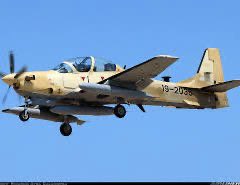
Nigeria has officially withdrawn the fighter jet it deployed to the Benin Republic following Sunday’s unexpected and short-lived coup attempt, a development that briefly plunged the usually stable West African nation into uncertainty. The decision to pull back the aircraft comes after authorities in both countries concluded that calm had been fully restored and that the threat of further unrest had significantly diminished. The episode, though swiftly contained, drew widespread regional attention as leaders across West Africa watched closely to ensure the crisis did not spiral into a larger conflict.
According to security sources familiar with the operation, the Nigerian Air Force had mobilised the aircraft as a precautionary measure in line with established defence cooperation agreements between the two neighbours. The deployment was described as a rapid, strategic response aimed at deterring instability and protecting Nigeria’s borders should the situation escalate. Officials emphasized that the move was not an act of aggression, but a demonstration of Nigeria’s commitment to safeguarding regional peace, particularly at a time when West Africa continues to grapple with rising coups and political volatility.
The attempted coup in Cotonou reportedly began in the early hours of Sunday when a small group of rogue soldiers tried to seize control of key government installations. Residents near the presidential palace recounted hearing sporadic gunshots before security forces quickly intervened. Within hours, the Beninese government announced that the coup plot had been foiled, several of the soldiers involved were arrested, and order had been restored. The speed of the response drew praise from regional bodies that have grown increasingly concerned by the wave of military power grabs sweeping parts of the continent.
Following the failed attempt, Nigeria’s surveillance and defence units went on heightened alert. Abuja was determined to avoid any security spillover, particularly in its northern corridor where the two nations share a long and porous border. Defence analysts noted that quick cross-border security coordination has become more essential than ever, given the complex network of threats facing West Africa — from armed militias to political uprisings and extremist movements exploiting moments of instability. Nigeria’s decision to deploy its aircraft was therefore seen as both strategic and symbolic, signalling its readiness to support democratic order in neighbouring states.
By Tuesday morning, however, intelligence reports confirmed that Benin had regained full control and that no further threats were anticipated. Nigerian officials stated that all indicators pointed to a stabilised political environment, making continued aerial deployment unnecessary. The fighter jet was ordered to return to base, ending the brief military support posture. A senior defence official revealed that Nigeria acted in consultation with Beninese authorities throughout the entire episode, ensuring that all actions taken respected sovereignty while prioritising regional security.
In Cotonou, government spokespersons reassured citizens that there was no lasting danger and vowed that the full extent of the plot would be investigated. They also confirmed that the individuals involved were part of a small, isolated faction within the military and did not represent the broader armed forces. For many Beninese citizens, the swift containment was a relief, as Benin has been largely viewed as one of the more politically stable countries in a region increasingly marked by turbulent transitions. The failed takeover nevertheless sparked nationwide conversations about deeper political tensions, governance challenges, and the need for continued vigilance.
The Economic Community of West African States (ECOWAS) also reacted promptly, commending the Beninese government for its immediate action and reaffirming the bloc’s zero-tolerance policy for unconstitutional changes in government. ECOWAS, already stretched thin by crises in Niger, Burkina Faso, Guinea, and Mali, has been under pressure to maintain democratic norms in a region where military juntas are becoming more assertive. Analysts say Sunday’s incident tested the bloc’s alertness but also demonstrated that not all coup attempts in West Africa are guaranteed to succeed, especially in countries with stronger institutional structures.
Security experts further highlighted that Nigeria’s quick response underscored its renewed emphasis on regional stability under its ongoing foreign and defence policy framework. As the largest military power in West Africa, Nigeria has repeatedly affirmed its obligation to help maintain peace in neighbouring states. The temporary deployment of the fighter jet served as an assurance not only to Benin but to ECOWAS that Abuja remains committed to collective security. Officials noted that West Africa’s security challenges are deeply interconnected and that countries cannot afford to address threats in isolation.
Meanwhile, residents of border communities expressed mixed emotions as news of the coup attempt spread. Some spoke of initial fears that unrest might spill across the border, while others said they had confidence that their governments would act swiftly to contain any disruption. Local traders who rely on daily cross-border movement hoped the failed coup would not lead to prolonged security checks or tightened border restrictions that could affect their livelihoods. Government sources later clarified that border operations would remain normal, though surveillance would be discreetly intensified for the time being.
In Abuja, discussions have already begun among security agencies on how to enhance early-warning systems and intelligence sharing to prevent similar incidents from catching the region off guard. Officials revealed that Nigeria and Benin are exploring additional joint security initiatives, including expanded air reconnaissance cooperation, rapid-response mechanisms, and enhanced communication links between military commands. These measures, they believe, will help ensure that any potential threat — whether political or extremist — is addressed swiftly and decisively.
Although the immediate crisis has passed, analysts warn that the attempted coup serves as a reminder of the fragile political climate across West Africa. Even nations with strong democratic track records, like Benin, are not immune to the ripple effects of broader regional instability. Experts argue that socioeconomic pressures, internal disagreements within security institutions, and rising public discontent in parts of the continent continue to create openings for opportunistic actors. Sunday’s events, they say, should encourage both national governments and regional bodies to intensify efforts to strengthen governance, improve military professionalism, and promote political inclusiveness.
For now, both Nigeria and Benin are projecting calm, cooperation, and preparedness. Nigerian officials say they remain ready to offer assistance if needed, while Benin’s leadership has vowed to protect its democratic institutions against any future threats. As the fighter jet returns to its base and normalcy resumes, the brief but dramatic episode stands as another chapter in West Africa’s ongoing struggle to safeguard democracy in a turbulent era.
Popular Posts

Tears, Relief, and Renewed Anger as 100 Abducted Niger Schoolchildren Regain Freedom, Over 150 Still in Captivity
07 Dec, 2025
Korra Obidi Sets Social Media on Fire After Twerking Inside Seun Kuti’s Unfinished Lagos Mansion
07 Dec, 2025
“My Journey Toward Peace Began With You” — Regina Daniels’ Heartfelt Birthday Tribute to Brother Sammy West Melts Fans Across Nigeria
07 Dec, 2025Scroll to Top