Nigerians Raise Alarm as Man Questions Shocking Hygiene Conditions at Local Pepper Grinding Spots
A social media conversation that began with a spoiled blender has now spiraled into a nationwide debate on hygiene standards at local pepper grinding spots, after X user Mide Adams (@adams_miide) questioned whether the environments many Nigerians rely on daily for freshly ground pepper are truly safe. His simple, almost
A social media conversation that began with a spoiled blender has now spiraled into a nationwide debate on hygiene standards at local pepper grinding spots, after X user Mide Adams (@adams_miide) questioned whether the environments many Nigerians rely on daily for freshly ground pepper are truly safe. His simple, almost casual post—“My blender don spoil… is this even hygienic?”—quickly ignited a storm, drawing thousands of reactions from people who could instantly relate to the sight, smell, and stories surrounding the traditional open-air grinding machines that have served Nigerian households for decades.
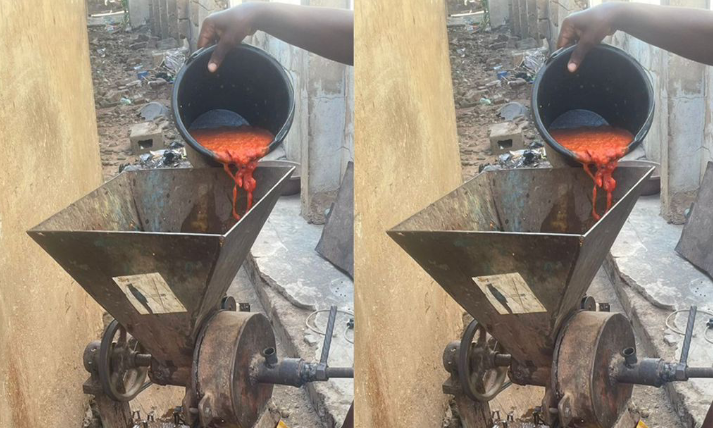
What started as a lighthearted complaint about a faulty appliance has unexpectedly become a mirror held up to a deeper, long-overdue conversation. In a country where home cooking is a cultural pillar and pepper-based meals are a staple, the grinding spots scattered across markets and street corners have long been considered indispensable. But behind the convenience they offer lies a set of unsettling realities that many Nigerians have now admitted they simply ignored, tolerated, or normalized. The moment Adams posted the picture of a local grinding area—one with visibly dusty surroundings, murky water, and a machine that looked like it had survived several eras—the internet collectively paused.
Within minutes, Nigerians flooded the comments with their own experiences, some expressing disgust, others admitting they had never thought too deeply about the hygiene implications. Many pointed out that grinding machines often process multiple customers’ ingredients at once without proper cleaning in-between, raising concerns about contamination, cross-contact, and health risks. Some even claimed that the grinding spots reuse the same bowls and water repeatedly throughout the day, regardless of the buildup of food residue, dirt, or even insects.
For many, the viral post triggered a sense of long-suppressed unease. Several users confessed that they had grown up eating pepper mixtures ground in these spots and had simply assumed their bodies were “used to it,” a phrase that surfaced repeatedly in the replies. But as public awareness around food safety grows, especially in an age where people demand more transparency and standardization, the question Adams raised suddenly felt urgent.
Health professionals also joined the online debate, warning that contamination from grinding machines can introduce harmful bacteria that may cause gastrointestinal infections, food poisoning, and other preventable illnesses. One Lagos-based nutritionist explained that the grinding environment—often exposed to dust, flies, stagnant water, and unwashed surfaces—poses a serious risk, especially for ingredients like tomatoes, onions, ginger, pepper, and crayfish which spoil quickly or harbor microorganisms when not properly handled.
Yet, ironically, the very same grinding spots have been lifelines for millions of Nigerian families who cannot afford high-powered blenders or food processors. Many users were quick to defend them, pointing out that the workers rely on the little income they make and often lack access to better equipment or sanitized facilities. They argued that instead of shaming these spots, the focus should be on finding solutions—whether through local government intervention, better regulations, community support, or public education on proper food handling.
Some Nigerians also shared creative alternatives, including blending ingredients at small restaurant kitchens, using grinding mills in cleaner environments, or investing in cooperative grinding centers where neighbors pitch in to buy shared, well-maintained equipment. Others humorously suggested that Adams’ broken blender was a blessing in disguise, as it exposed a broader issue everyone had conveniently overlooked.
While the humor continued to flow—after all, Nigerians never miss an opportunity to laugh through discomfort—the underlying concern grew deeper. Many users said they had witnessed the grinding machines being used to process items as varied as pepper, beans, maize, ogi, crayfish, and even herbal mixtures without thorough cleaning. The realization that their fresh stew ingredients might have shared surfaces with completely unrelated substances left some people unsettled. A few commenters said they would now start using home blenders more frequently, even if it meant blending in batches or repairing old appliances repeatedly.
Market traders, too, weighed in, explaining that hygiene practices often break down due to inadequate water supply, high customer rush, and the cost of maintaining machines. According to them, the grinding machine operators are aware of the hygiene concerns but struggle with inconsistent access to clean running water and cannot afford frequent machine servicing, which is expensive in many urban centers.
Adams, whose post sparked the entire discussion, later joked that he had simply wanted to grind pepper—not start a national debate. But by then, the conversation had taken on a life of its own. People began sharing pictures of the grinding spots in their neighborhoods, comparing conditions and even ranking the worst ones. What initially seemed like a trivial complaint became a trending topic, highlighting how deeply Nigerians care about their food, their health, and the everyday systems that sustain them.
Perhaps the most striking part of the debate was the nostalgia it triggered. Several older Nigerians reminisced about the days when grinding machines were relatively new inventions, replacing traditional grinding stones used by mothers and grandmothers. Those stones, though labor intensive, were considered cleaner because they were washed thoroughly and used exclusively by the family. Some users even claimed they might return to using grinding stones, insisting the effort was worth the peace of mind.
In the end, the viral moment was more than just humor—it was a wake-up call. By shining a light on a practice so deeply embedded in Nigerian culture, Adams inadvertently forced people to confront uncomfortable truths. The conversation has now pushed some local councils to consider enforcing stricter sanitation rules in markets, encouraging machine operators to adopt safer practices, and promoting public education on food hygiene.
For everyday Nigerians, the post was a reminder that convenience sometimes comes at a cost, and the systems we rely on deserve scrutiny. Whether or not people continue to use local grinding spots, the awareness sparked by the viral tweet may have just set the stage for long-term improvements in food safety. As one user put it plainly, “We love our pepper, but we also love our health. Something has to change.”
Share this post
Related Posts

BREAKING: Alexander Isak to Liverpool in Record £130m Move — Medicals Scheduled Today
Liverpool have pulled off one of the most sensational transfers in recent Premier League history,...

Midnight Siege in Agwara: Bandits Torch Police Station, Burn Church and Abduct Five in Coordinated Dawn Assault
Fear and uncertainty have gripped residents of Agwara town in Niger State following a coordinated...

Shocking Scene in Lagos as Man Arrested for Brutal Assault on Wife Just Four Days After Childbirth
LAGOS—In a chilling incident that has sparked public outrage and reignited calls for stronger enforcement...