news
North-East Governors Unite to Launch N30bn Regional Air Shuttle, Promise New Era of Connectivity
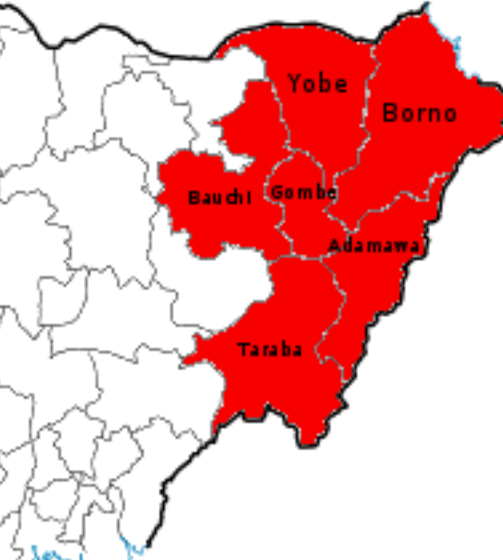
In a move described as a bold step toward regional integration and economic revival, governors of the six states in Nigeria’s North-East have agreed to jointly contribute N30 billion for the establishment of a regional air shuttle designed to significantly improve air transportation across the zone. The initiative, which will see each state contribute N5 billion, is expected to address long-standing challenges around mobility, security, trade, and investment in a region that has endured years of infrastructural setbacks.
The decision was disclosed on Wednesday by the Gombe State Commissioner for Finance and Economic Development, Muhammad Magaji, following a State Executive Council meeting held in Gombe. According to Magaji, the council approved the immediate release of N5 billion as Gombe State’s contribution to the project, signaling the state’s readiness to meet the agreed deadline and move the plan from concept to reality.
Magaji explained that the funds would be used for the purchase of two aircraft that will operate as a North-East regional shuttle, providing regular and reliable air services between states in the zone and potentially beyond. He said the governors were united in their belief that air transportation is critical to unlocking the region’s economic potential and strengthening ties among the states.
“The six governors of the North-East states agreed that there is a need for the region to have a Northeast shuttle, that is, an airline,” Magaji said, emphasizing that the initiative was born out of collective interest rather than individual state ambition. He noted that the project is designed to serve the common good of the region, particularly in easing movement for government officials, business people, investors, and residents.
The idea of a regional air shuttle is not entirely new. Magaji revealed that discussions around the project began as far back as 2020, when the six states jointly paid N69 million for consultancy services to study the feasibility of establishing the airline. That early investment, he said, laid the technical and financial groundwork for the current phase, which focuses on asset acquisition and operational planning.
For years, poor transportation infrastructure has been identified as one of the major obstacles to development in the North-East. Despite having operational airports in states such as Gombe, Borno, Yobe, Adamawa, Bauchi, and Taraba, flight frequency has remained limited, fares have often been high, and connectivity between states has been weak. Many travelers are forced to route their journeys through Abuja or other regions, increasing costs and travel time.
Supporters of the new shuttle believe it will change this narrative by offering more direct routes within the region, improving efficiency and reducing dependence on external hubs. They also argue that improved air connectivity could have a multiplier effect on commerce, tourism, humanitarian operations, and post-conflict reconstruction efforts.
The North-East has long been a focal point for humanitarian and development agencies due to the impact of insurgency and displacement. Stakeholders say a reliable regional airline could ease logistics for aid delivery, enable quicker response to emergencies, and encourage more organizations to establish offices and projects in the region. For local businesses, the shuttle is expected to open up new markets and reduce the friction associated with moving people and goods.
Economists and policy analysts have described the joint funding model as a rare example of inter-state cooperation in Nigeria. By pooling resources and sharing ownership, the governors are spreading risk while maximizing collective benefit. Observers note that such collaboration could serve as a template for other regions seeking to tackle shared challenges through regional solutions.
Magaji stressed that Gombe State’s decision to make its payment immediately reflects the seriousness with which the governors are treating the project. He added that timelines have been agreed upon to ensure that the initiative does not stall at the funding stage, a common problem with large public sector projects.
While specific details about the management structure of the proposed airline were not disclosed, sources familiar with the discussions say the governors are considering a professionally run model that minimizes political interference. This, they believe, will be key to ensuring sustainability, profitability, and adherence to aviation safety standards.
The announcement has generated mixed reactions among residents and civil society groups. Some have welcomed the project as a forward-looking investment that prioritizes long-term growth over short-term consumption. Others have raised questions about cost, transparency, and whether the funds could be better spent on pressing social needs such as healthcare, education, and road infrastructure.
In response to such concerns, officials involved in the project argue that improved transportation is itself a catalyst for social development. They insist that the air shuttle should not be viewed in isolation but as part of a broader strategy to reposition the North-East as a viable destination for investment and opportunity.
There are also expectations that the airline could eventually expand beyond the region, connecting the North-East to other parts of Nigeria and even neighboring countries in the Lake Chad basin. Such expansion, analysts say, would further enhance trade, cultural exchange, and regional security cooperation.
As Nigeria continues to grapple with economic uncertainty, rising costs, and infrastructure gaps, the North-East governors’ decision to jointly invest N30 billion in a regional air shuttle stands out as an ambitious attempt to think collectively and act decisively. Whether the project succeeds will depend on execution, governance, and sustained political will, but for now, it represents a rare moment of consensus and optimism in a region eager for transformation.
For residents of the North-East, the promise of a dedicated regional airline carries symbolic weight as well as practical significance. It signals a desire by their leaders to chart a new course, one that prioritizes connectivity, collaboration, and confidence in the region’s future. As plans move forward and payments are made, attention will now turn to implementation, with many hoping that the long-awaited Northeast shuttle will soon take to the skies and deliver on its promise.
Popular Posts

New Year Shock: Actress Mariam Ogbonna Recounts Terrifying Robbery During Cross-Over Service
01 Jan, 2026
Anthony Joshua Discharged From Lagos Hospital After Tragic Crash as Sanwo-Olu Thanks Nigerians for Outpouring of Support
01 Jan, 2026
“Reverse Japa Is Coming” — Pastor E.A. Adeboye Releases 2026 Prophecy for Nigeria, Sparks Mixed Reactions
01 Jan, 2026Scroll to Top