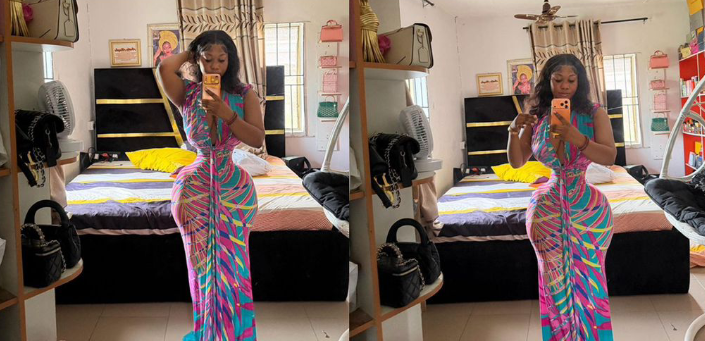
Outrage and Shock as Man Questions Nigerian Lady Who Allegedly Removed Ribs for Curvier Body
Social media has erupted once again, and this time the debate sits at the intersection of beauty standards, body modification, and economic realities. A seemingly innocent post by a young Nigerian lady expressing her desire to go out tonight has spiralled into a heated conversation after a man reacted to
Social media has erupted once again, and this time the debate sits at the intersection of beauty standards, body modification, and economic realities. A seemingly innocent post by a young Nigerian lady expressing her desire to go out tonight has spiralled into a heated conversation after a man reacted to her photos and claimed she had allegedly removed some of her ribs to achieve a curvier body. What began as a casual exchange has now turned into a wider discussion about priorities, societal pressure, and the rising trend of extreme cosmetic procedures among young Nigerians.
The drama started when X user Ewatomi Damilade A (@oluwatomisin47) posted a simple message: “Feel like going out with someone tonight.” The tweet came with photos that highlighted her tiny waist and hourglass figure—features that many followers admired instantly. Compliments rolled in as expected, with admirers praising her confidence and looks. But the tone shifted abruptly when Duke of Africa (@Allezamani) fired a shot that has since travelled across social platforms. “How do you have money to remove some ribs in your body and you\'re still living in this kind of apartment?” he asked, attaching an image of what appeared to be her modest, sparsely furnished room.
The comment triggered a storm. Some users accused him of shaming the lady unnecessarily, while others applauded him for “saying the truth out loud.” In a digital world where beauty enhancements and lavish lifestyles often trend side by side, his comment struck a nerve many have tried to ignore. The allegation that she removed ribs—a dangerous and medically discouraged procedure—is unverified, but it was enough to ignite heated arguments about body modification and the lengths people are willing to go in pursuit of “the perfect body.”
Users who came to her defense condemned what they described as “class shaming,” insisting that one\'s living conditions should never be mocked or used to invalidate their choices. They questioned why a woman’s body should spark such unsolicited scrutiny, especially when the poster herself never mentioned undergoing any surgical enhancement. To them, the man’s remark revealed more about his mindset than her alleged lifestyle. Others pointed out that beauty standards have become so extreme that any woman with a small waist is automatically assumed to have undergone surgery, even when it might simply be genetics, gym routines, or clever posing.
But on the other side of the debate were those who echoed the man’s sentiments, using the moment to criticize what they describe as a growing trend of misplaced priorities among younger Nigerians. They argued that if someone can allegedly afford a high-risk cosmetic procedure—one rumoured to cost millions—then they should at least invest in improving their living conditions. To these critics, her transformation, whether real or assumed, is proof of a generation obsessed with social media aesthetics while neglecting long-term stability.
The conversation also opened up bigger questions about societal pressure and how far people are willing to go to fit into the curated beauty ideals dominating online spaces. With the rise of influencers showcasing tiny waists, sculpted hips, and flawless curves, young women are increasingly exploring cosmetic alterations—some safe, others extremely dangerous. While Brazilian Butt Lifts (BBLs) and liposuction have become more normalized, rib removal remains one of the most controversial and riskiest procedures due to the vital structures the ribs protect.
Several doctors have repeatedly warned against such extreme surgeries, noting that removing ribs compromises the body’s natural protection of organs like the lungs and liver. But the internet’s obsession with the “snatched waist” look has made even the most dangerous procedures sound appealing to those chasing viral moments or validation in likes and retweets. Whether or not the lady in question actually had ribs removed, the fact that thousands believed it without hesitation shows just how common and believable such modifications have become.
Meanwhile, many women online expressed frustration over the constant policing of female bodies. They noted that a woman cannot post a simple photo without being scrutinized, sexualized, or attacked. Some argued that even if she had undergone surgery, it was her body and her right, and mocking her living space was unnecessary and cruel. Others saw the man\'s comment as yet another example of how society places unrealistic expectations on women—demanding perfect looks while simultaneously criticizing the effort taken to achieve them.
Interestingly, the lady at the center of the storm has remained silent through the chaos, neither confirming nor responding to the allegation. Her calm silence has only fueled speculation, with some praising her for refusing to be dragged into the fray and others insisting that she owes the public an explanation. But observers point out that she posted a harmless tweet and never asked to become the subject of a nationwide conversation about surgery and poverty.
As the debate continues, one thing is clear: the pressure to appear perfect online is growing, and the expectations placed especially on women are becoming more unrealistic by the day. Social media has turned everyday people into symbols of larger societal issues—beauty standards, economic struggles, and the desire for validation. A single picture can spark a thousand opinions, and a single comment can ignite a trending topic.
For now, the online community remains divided. Some believe the man simply voiced a harsh but honest opinion about priorities and societal expectations. Others see his remark as yet another instance of unnecessary cruelty masked as concern. But across both sides, the situation has opened a broader conversation about how Nigerians perceive body enhancement, financial choices, and the pressures of digital life.
What started as a simple post about wanting to go out tonight has now become a mirror reflecting deeper issues within society—issues of judgment, insecurity, aspiration, and the ever-growing influence of social media. Whether or not the lady surgically altered her body, the uproar surrounding her photos and living conditions reveals how quickly Nigerians jump to conclusions and how harshly women’s choices are often judged.
In a world where everyone is trying to look their best while navigating economic realities, perhaps empathy should trend more than speculation. But until that day comes, social media will remain a battlefield where perception, reality, and judgment collide—one viral photo at a time.
Share this post
Related Posts
Fan Praises Iyabo Ojo for Steering Daughter Priscilla Away from Enioluwa to ‘Real Man’ Juma Jux in Viral Post
In a social media wave that’s stirred up a storm across Facebook and beyond, popular...
Tinubu Shakes Up Varsity Leadership, Appoints AVM Saddiq Kaita as Bayero University Governing Council Chairman
In a move that signals a fresh wave of appointments in Nigeria’s tertiary education sector,...

Ghana and Guinea Cardinals in the Running for Next Pope: A Historic Possibility?
On April 21, 2025, a notable post on X from Africa Facts Zone sparked widespread...