Entertainment
“Ready to Be a Bad Boy”: A Toddler’s Church-Day Confession Sparks Laughter and a Gentle Parenting Conversation Online
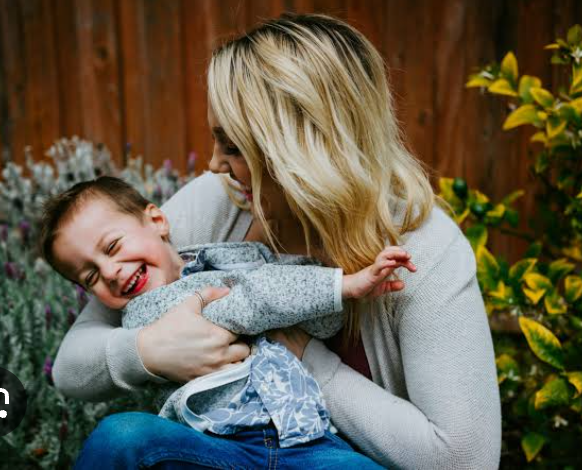
A lighthearted moment shared by Makida Moka Onyek on social media has quickly become one of those small, human stories that cuts through the daily noise online and reminds people why the internet can still be a place of warmth, laughter, and shared experience. In a short post that has since resonated with parents and non-parents alike, Makida recounted a simple exchange with her nearly three-year-old son that unfolded on what should have been a routine Sunday morning.
According to her post, the family was getting ready for church, the familiar pre-service rush playing out as it does in many homes. Clothes were chosen, shoes located, and the general excitement and mild chaos of preparing a young child for an outing filled the house. At some point, the boy’s father opened the door and casually asked the toddler if he was ready. The expectation, of course, was that the child would echo what he had likely been hearing all morning: that they were ready to go to church.
Instead, the response came out blunt, unexpected, and hilariously honest. The little boy reportedly replied, without hesitation, that he was “ready to be a bad boy.” For his parents, it was one of those moments that lands somewhere between shock, disbelief, and suppressed laughter. As Makida added in her post, the declaration turned out to be prophetic, because the rest of the day’s behavior more than lived up to the announcement.
What made the story instantly relatable was not just the humor in the child’s words, but the way it captured a universal parenting truth: toddlers are unpredictable, expressive, and often far more honest than adults expect. The phrase “showing us his true colours,” which Makida used to describe her son as he approaches his third birthday, struck a chord with many readers who recognize that stage when children begin to assert their personalities more boldly.
Online reactions poured in almost immediately. Parents flooded the comments with laughing emojis and stories of their own children’s unexpected confessions, public outbursts, and unfiltered commentary. Many noted that children around the ages of two and three are in a developmental phase where language skills are expanding rapidly, but emotional regulation is still very much a work in progress. The result is often a mix of impressive vocabulary and behavior that keeps adults constantly on their toes.
Beyond the laughs, some readers saw the post as a gentle reminder not to take every challenging moment too seriously. Parenting, they noted, is full of days when plans don’t go as expected and children refuse to cooperate with carefully laid schedules. A toddler declaring himself “ready to be a bad boy” before church may sound dramatic, but it is also a reflection of a child experimenting with words, roles, and boundaries, trying to make sense of the world around him.
Others pointed out how refreshing it was to see a parent share such a moment without embarrassment or harsh judgment. In an age where social media often showcases perfectly dressed children and serene family outings, Makida’s candid storytelling stood out. She did not frame her son as a problem to be fixed, but as a small human being learning, testing limits, and occasionally causing chaos in the most honest way possible.
The post also sparked conversations about how children interpret language. Some commenters suggested that the boy may have heard the phrase “bad boy” used jokingly or descriptively elsewhere and decided to adopt it for himself, without fully understanding its negative connotation. For young children, words can be playful labels rather than moral judgments, and repeating them is often more about exploration than intent.
In Nigeria and beyond, the story traveled quickly because it reflected everyday family life across cultures. Whether preparing for church, school, or a simple outing, parents everywhere recognize that moment when a child’s mood suddenly shifts and the day takes on a life of its own. The cultural context of church-going added another layer of humor, as many readers imagined the contrast between the solemn expectations of the setting and the toddler’s mischievous mindset.
Some readers used the opportunity to reflect on patience and perspective. They noted that childhood is fleeting, and the same behaviors that feel exhausting in the moment often become cherished memories later. A child who proudly announces his intention to misbehave may one day grow into an adult who barely remembers those early years, while the parents will laugh about them for decades.
Makida’s brief caption, ending with an expressive “Ehn?!!”, perfectly captured the mix of disbelief and resignation familiar to caregivers. It communicated everything that needed to be said about the day without going into detail, leaving readers to fill in the gaps with their own experiences. That simplicity is part of what made the post so effective and widely shared.
In a digital space often dominated by heavy news, controversies, and arguments, this small domestic moment offered a pause. It reminded people that humor can be found in the ordinary, that parenting does not come with a script, and that sometimes children say exactly what they are thinking, even when it completely derails adult expectations.
As the toddler in question edges closer to his third birthday, his parents, like many others, are likely learning to navigate a new phase marked by stronger opinions, louder protests, and surprising self-awareness. If this church-day confession is any indication, the journey ahead will be filled with stories that are equal parts challenging and amusing.

Ultimately, the viral appeal of Makida Moka Onyek’s post lies in its honesty. It did not try to teach a lesson or present a polished image. It simply shared a moment as it happened, and in doing so, it allowed thousands of others to feel seen, understood, and entertained. In the end, a toddler “ready to be a bad boy” became a reminder that sometimes, the most meaningful stories are the ones that make us laugh at ourselves and appreciate the beautiful unpredictability of family life.
Popular Posts

“I’m Looking for a Nigerian Wife”: Busta Rhymes’ Emotional Homecoming Sparks Detty December Frenzy
21 Dec, 2025
Seyi Tinubu and Wife Layal Make Regal Entrance at Oyo Palace as He Is Crowned Okanlòmo of Yorubaland
21 Dec, 2025
Hidden in Plain Sight: How NDLEA Tracked a Lagos Mother Who Stashed ₦5bn Cocaine in Her Children’s Room
21 Dec, 2025Scroll to Top