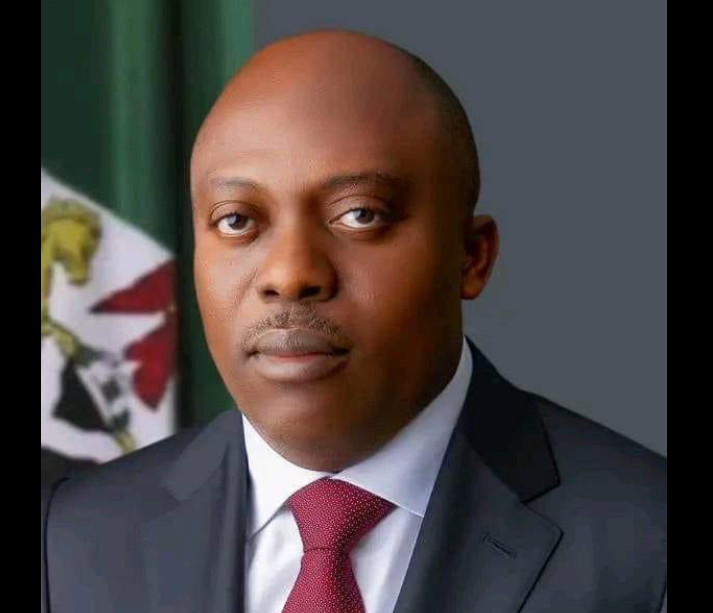
A fresh wave of political tension has swept through Rivers State following the rejection of a N100,000 Christmas gift sent to members of the State House of Assembly by Governor Siminalayi Fubara, a move that has further exposed the deepening cracks between the executive arm and the legislature. What might ordinarily have been seen as a seasonal gesture of goodwill has instead become another flashpoint in an already strained relationship shaped by loyalty battles, power struggles, and unresolved political realignments in the oil-rich state.
The controversy erupted after lawmakers received credit alerts of N100,000 each, paid on the direct instruction of Governor Fubara as part of a Christmas goodwill package. Rather than welcoming the gesture, the legislators immediately pushed back, describing the funds as “unapproved and unsolicited.” Their reaction underscored the fragile political atmosphere in Rivers State, where governance has increasingly been overshadowed by internal disputes and factional loyalties.
In a statement issued shortly after the development, the Chairman of the House Committee on Information and Petitions, Enemi Alabo George, confirmed that the lawmakers had indeed received the money but rejected it outright. According to him, the Assembly did not authorize or request any such payment, and the governor’s decision to credit individual lawmakers without prior consultation was viewed as inappropriate and unacceptable. He emphasized that the lawmakers were united in their resolve to distance themselves from the gesture, which they believe could be misinterpreted or politicized.
The legislators, most of whom are known to be loyal to former Rivers State Governor and current Minister of the Federal Capital Territory, Nyesom Wike, took immediate steps to return the money. George stated that arrangements were already underway to formally refund the full amount to the Rivers State Government’s account, making it clear that the Assembly did not wish to benefit from what it described as an irregular financial transaction. The swift decision to refund the funds was intended to send a strong message of disapproval and to reinforce the lawmakers’ stance on financial propriety and institutional independence.
This incident is the latest in a series of confrontations that have defined the relationship between Governor Fubara and the Rivers State House of Assembly since he assumed office. What began as subtle disagreements has gradually escalated into open political hostility, often playing out through public statements, legislative actions, and symbolic gestures such as this rejected Christmas gift. Analysts say the rejection of the N100,000 payment is not merely about money but about power, trust, and control within the state’s political structure.
Governor Fubara, who emerged as governor following the end of Wike’s tenure, has faced persistent resistance from a legislature largely aligned with his predecessor. This dynamic has created a complex situation in which the governor’s policy initiatives and administrative decisions are frequently scrutinized or opposed by lawmakers who see themselves as protectors of Wike’s political legacy. The Assembly’s rejection of the Christmas gift is widely seen as a continuation of this broader struggle rather than an isolated disagreement over seasonal spending.
Supporters of the lawmakers argue that their decision was rooted in principle, insisting that public funds should only be disbursed through approved and transparent processes. They contend that even well-intentioned gestures must follow due process, especially at a time when many Nigerians are grappling with economic hardship and demanding greater accountability from their leaders. From this perspective, the Assembly’s action is portrayed as a stand against what they perceive as informal or discretionary use of state resources.
On the other hand, some observers believe the rejection reflects the depth of political mistrust in Rivers State rather than genuine concern over procedure. They note that similar goodwill gestures by past administrations did not always generate such strong reactions, suggesting that the current fallout is driven largely by political alignment and rivalry. For these critics, the incident illustrates how governance in Rivers State has become entangled in personal and factional disputes, often to the detriment of public perception and administrative harmony.
The timing of the controversy, coming during the Christmas season, has also drawn public attention. In a period traditionally associated with peace, unity, and generosity, the rejection of a festive gift has been interpreted by many residents as symbolic of how deeply divided the state’s political leadership has become. Social media platforms were quickly flooded with mixed reactions, with some praising the lawmakers for standing their ground and others lamenting what they see as unnecessary drama over a relatively modest sum.
While Governor Fubara has not immediately issued a detailed public response to the rejection, sources close to the government describe the gesture as a goodwill move intended to foster unity and ease tensions during the festive period. These sources argue that the governor did not intend to undermine the Assembly or bypass any formal process, but rather sought to extend a hand of cooperation at a time when the state needs stability and collective focus on development.
However, the lawmakers’ firm rejection suggests that such overtures may not be enough to bridge the widening gap between both arms of government. Political watchers warn that unless meaningful dialogue and reconciliation occur, similar confrontations are likely to continue, potentially affecting governance and policy implementation in the state. The ongoing standoff has already raised concerns about legislative-executive cooperation, budget approvals, and the overall effectiveness of government operations.
As the Assembly proceeds with plans to refund the N100,000 to the state government, the incident is expected to remain a talking point in Rivers State’s political discourse. It highlights the delicate balance between symbolism and substance in politics, where even a festive gesture can take on deeper meaning depending on the context in which it is made. More importantly, it reflects the challenges facing Governor Fubara as he navigates a political environment still heavily influenced by his predecessor’s loyalists.
For residents of Rivers State, the hope remains that political leaders will find a way to move beyond public confrontations and focus on governance issues that directly affect the lives of citizens. As the dust settles on the rejected Christmas gift, many are watching closely to see whether this episode will further entrench divisions or serve as a wake-up call for renewed dialogue and cooperation in the state’s leadership.
Popular Posts

“‘I’m Worth It’: Viral ‘Baddie’ Sparks Heated Debate as Nigerians Argue Over Love, Responsibility, and Modern Relationships”
31 Dec, 2025
Teyana Taylor and Aaron Pierre Go Separate Ways After Brief but Buzzworthy Relationship
31 Dec, 2025
New Year, New Charges: Banks to Deduct ₦50 Stamp Duty on Transfers From ₦10,000 Starting January 1, 2026
31 Dec, 2025Scroll to Top