SCRATCHING NIGERIA’S POTENTIAL: DANGOTE’S BOLD ANALOGY IGNITES NATIONAL DEBATE
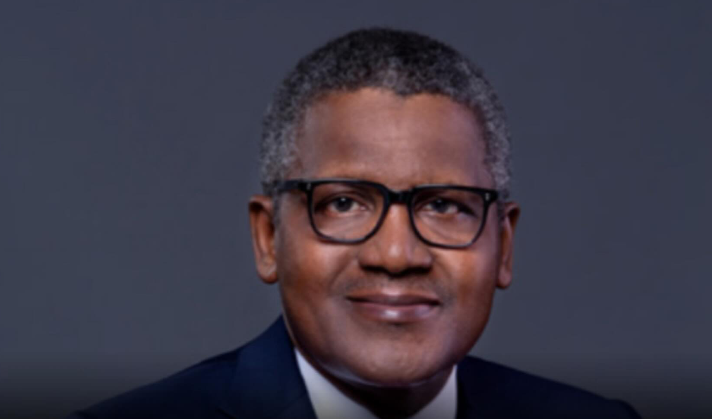
Africa’s richest man, Aliko Dangote, has once again sparked nationwide conversation after drawing a striking comparison between Nigeria and a scratch card, suggesting that the nation’s true value becomes visible only when one looks beyond the surface. His comments, delivered on Tuesday while applauding President Bola Tinubu’s economic reforms, have
Africa’s richest man, Aliko Dangote, has once again sparked nationwide conversation after drawing a striking comparison between Nigeria and a scratch card, suggesting that the nation’s true value becomes visible only when one looks beyond the surface. His comments, delivered on Tuesday while applauding President Bola Tinubu’s economic reforms, have quickly dominated public discourse, resonating with some citizens while stirring skepticism among others.
Dangote, who has long championed industrial growth and local production, praised what he described as bold, transformative decisions taken by the Federal Government, including the controversial removal of fuel subsidy and the sweeping overhaul of the foreign exchange system. According to him, these policies—though initially painful—are already beginning to create the type of environment required for long-term economic prosperity. His words were direct, symbolic, and intended to inspire confidence at a time when many Nigerians continue to grapple with inflation, high living costs, and economic uncertainty.
Speaking with clear optimism, Dangote said: “Nigeria is like a scratch card; you only see the good of it when you scratch the card. Some of us who have scratched it are seeing the results.” It was a metaphor that immediately caught the attention of Nigerians across multiple platforms, painting the picture of a nation whose worth might be obscured by surface-level challenges but holds significant hidden potential for those willing to invest, innovate, and endure the initial discomfort of change.
The billionaire industrialist went further to commend President Tinubu for embracing policies that many previous administrations were reluctant to touch, especially as they often come with short-term hardships for citizens. The removal of the fuel subsidy, for instance, remains one of the most debated decisions in contemporary Nigerian governance. While the government has insisted that the move was essential to curb misuse, redirect funds to more productive areas, and stabilize the economy, millions of Nigerians still feel the weight of rising fuel costs, inflated prices of basic items, and reduced purchasing power. To many critics, the reforms feel like promises waiting for results; to Dangote, they are the painful scratches required before the prize is revealed.
Dangote’s endorsement of the new foreign exchange framework also reignited discussions about Nigeria’s place in global commerce. By allowing the naira to move more freely, the government has argued that it is creating a more transparent and investor-friendly financial system. Dangote, who operates across multiple sectors—including cement, sugar, agriculture, oil refining, and petrochemicals—believes this shift is exactly what Nigeria needs to become a more competitive economic hub. His industries rely heavily on consistent policy environments, and his comments appeared aimed not only at praising the government but also encouraging the private sector to look beyond temporary discomfort.
To many Nigerians, however, the question remains: Who has scratched the card—and why does the picture look different depending on who’s looking? While Dangote speaks of emerging results, average citizens continue to wonder when these promised benefits will reflect in their daily lives. For them, the scratch card remains stubbornly unrevealing, offering more uncertainty than clarity. Wages have not risen to match inflation, transportation and food costs remain high, and the “results” Dangote speaks of feel distant, visible perhaps only to those with the financial strength to absorb economic turbulence.
Still, his analogy offers a perspective that encourages patience and long-term thinking—traits often in short supply in fast-evolving political climates. By equating Nigeria’s challenges to the hidden rewards beneath a scratch card’s sealed surface, Dangote positions the country as a work-in-progress whose real potential is gradually becoming clearer to those willing to stay invested. His remarks also subtly highlight the importance of perseverance, innovation, and resilience—all values that have defined his own business success.
Observers note that Dangote’s comments come at a time when confidence in government policies is deeply divided. While some business leaders have continued to support the administration’s reforms, ordinary Nigerians remain cautious, with many expressing frustration over the impact of the reforms on daily living. The government, on its part, continues to emphasize that these short-term sacrifices will lead to long-term stability—echoing, in many ways, Dangote’s metaphor.
In the political sphere, the comments were quickly seized upon by supporters of President Tinubu, who described Dangote’s praise as validation of the administration’s approach. For them, the endorsement of Africa’s richest man is a significant marker that Nigeria is moving in the right direction. Critics, however, argue that government policies should be measured by the lived experiences of ordinary citizens, not solely by the optimism of the country’s elite.
Across social media, the “scratch card” analogy has inspired humor, debate, and introspection. Memes have circulated widely, with some users joking about scratching endlessly without seeing results, while others interpreted Dangote’s metaphor as a challenge to look deeper into what Nigeria can become if reforms are allowed to mature.
Beyond the reactions, Dangote’s comments highlight an important national conversation about patience, sacrifice, and perspective. For decades, Nigeria has battled with economic instability, policy inconsistency, and infrastructural deficits. Major reforms often come with disruptions, and Dangote’s message appears to be that these disruptions should not overshadow the long-term gains they are designed to achieve.
His own investments, particularly the Dangote Refinery—one of the largest in the world—stand as proof of his long-term belief in Nigeria’s potential. The refinery, which has been years in the making, represents his commitment to reducing Nigeria’s reliance on imported fuel and strengthening the nation’s industrial backbone. For him to say that he has “scratched the card and seen results” is perhaps also a reflection of what he hopes the nation will experience soon.
Whether or not Nigerians share Dangote’s optimism, his comments have undeniably added fuel to an ongoing national debate: Is Nigeria’s scratch card beginning to reveal its true value, or are citizens still stuck at the scratching stage, hoping for a sign of reward? As the government continues to defend its policies and citizens push through difficult adjustments, the coming months will be crucial in determining which of these perspectives becomes the dominant reality.
For now, Dangote’s message stands as both reassurance and challenge—a reminder that beneath Nigeria’s complex, sometimes frustrating surface lies a wealth of potential that only becomes visible with time, endurance, and collective effort. Whether this vision becomes the lived experience of every Nigerian remains the question the nation continues to scratch toward.
Share this post
Related Posts

“We Grow From Rejection” — Mr. Eazi’s Stylish Response Sparks Online Frenzy Ahead of ‘Dress Like Your Miracle’
Social media was set abuzz after a lighthearted exchange between Nigerian singer Mr. Eazi and...

MrBeast Turns Down $5 Million Gambling Deal to Protect Brand and Principles
Jimmy Donaldson, better known as MrBeast, has once again proven that not all influencers can...

Kim Kardashian Reveals How Wesley Snipes Once Rescued Her After a Scary Night Out in New York
Kim Kardashian has shared a little-known story from her teenage years that is now taking...