news
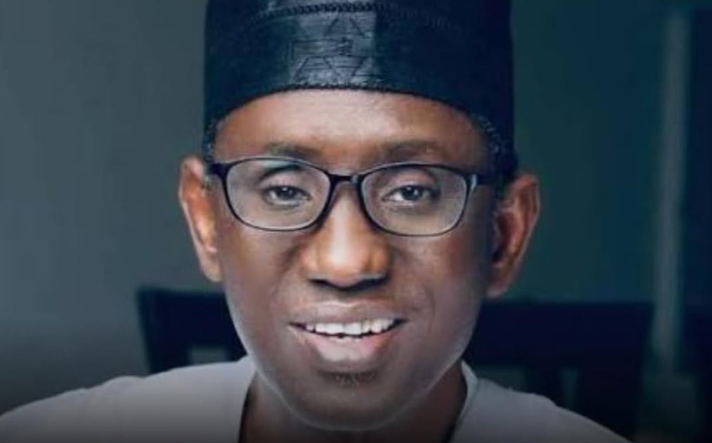
Shockwaves in the Military: Air Force Officer Tied to Alleged Plot to Assassinate NSA Nuhu Ribadu
A storm of uncertainty has gripped Nigeria’s security community following revelations that a Nigerian Air Force officer was allegedly linked to a plot to overthrow the government and assassinate National Security Adviser Nuhu Ribadu. The unsettling report, first disclosed by The Cable, has sent shockwaves through both military and political circles, raising questions about loyalty within the ranks and the extent of infiltration in the country’s security architecture.
According to insider sources, the officer at the heart of the investigation, Squadron Leader S.B. Adamu, with service number NAF/3481, hails from Jigawa State and was only recently deployed to the National Counter Terrorism Centre (NCTC), an entity under the Office of the National Security Adviser (ONSA). Adamu’s posting reportedly took place just four weeks before the alleged coup plot was uncovered, a timing that has now attracted intense scrutiny from investigators and senior defence officials.
Initial reports had suggested that several suspects within the ONSA were under investigation for possible complicity. However, sources close to the probe have clarified that Adamu was the only one directly linked to the office through his deployment to the NCTC. His posting, though routine on paper, now appears to have been an unexpected twist in what investigators describe as a complex web of conspiracy and ambition.
The situation has been further complicated by new details indicating that the National Coordinator of the NCTC, Major General Adamu Garba Laka, had earlier requested a specific officer for posting to the centre in August 2025. That request was reportedly turned down, and Squadron Leader Adamu was deployed in his place. Now, investigators are trying to determine whether this change was the result of procedural military adjustments or a sign that those behind the plot may have been influencing decisions within the chain of command.
The Nigerian Defence Headquarters has so far maintained that the situation remains under control and that the ongoing investigations are part of standard internal disciplinary procedures. Brigadier General Tukur Gusau, the Director of Defence Information, confirmed that 16 officers are currently being interrogated in connection with what the military describes as a “serious internal breach.” He added that the outcome of the investigation would be made public at the appropriate time, emphasizing that due process is being followed.
Still, the gravity of the allegations has stirred anxiety. The mention of a serving officer allegedly being assigned to assassinate the National Security Adviser—a key figure in President Bola Tinubu’s administration—has raised concerns about internal fractures within the armed forces. Ribadu, a former chairman of the Economic and Financial Crimes Commission (EFCC), is seen as one of the president’s most trusted security aides and a central figure in the country’s ongoing counterterrorism efforts.
Sources say that Adamu’s background is now under deep review, with his connections, communications, and activities at the NCTC being closely examined by security agencies. He is reportedly a member of Regular Course 59 of the Nigerian Defence Academy, placing him among the mid-level officer cadre with significant operational and intelligence exposure.
The timing of the alleged plot is also being linked by analysts to recent changes in the top hierarchy of the military. President Bola Tinubu recently dismissed two service chiefs, including Air Marshal Hasan Abubakar, the former Chief of Air Staff. The move, though officially described as routine restructuring, has been interpreted by some insiders as an attempt to stabilize internal divisions and reassert control following rising concerns about discipline and loyalty among officers.
While official details remain scarce, the unfolding narrative suggests that the alleged conspiracy was discovered before it could materialize, thanks to intelligence-sharing between multiple security agencies. The Air Force, Army, and Department of State Services (DSS) are said to be collaborating on the investigation, with the probe focusing on potential breaches in communication protocols and possible external influences.
Within military quarters, the situation has sparked quiet tension. Several officers, speaking on condition of anonymity, described the atmosphere as one of “deep unease.” One senior source said the development has “rattled the core” of the security establishment, adding that “if such an operation could be contemplated within our own ranks, then no one can underestimate the level of internal vulnerability we now face.”
Nigerians, meanwhile, have been reacting with a mix of disbelief and concern. Many recall previous coup attempts and political crises that destabilized the nation during its turbulent past, and fear that renewed internal dissent could threaten the country’s fragile stability. The timing, coming amid rising economic challenges and growing public discontent, has only added to the sensitivity surrounding the issue.
Security experts have warned that even the perception of disloyalty within the armed forces could have far-reaching implications. Dr. Kabiru Oladipo, a security analyst based in Abuja, noted that “the military thrives on absolute trust and hierarchy. The moment there’s suspicion at the top, it erodes command cohesion and can lead to dangerous fractures.” He added that the current probe “must be handled transparently and decisively to restore public confidence.”
Meanwhile, sources close to the Office of the National Security Adviser have confirmed that additional security measures have been implemented around Nuhu Ribadu since the news broke. Ribadu himself has not issued a public statement, but aides say he remains focused on his duties and has been in regular contact with both the President and service chiefs.
The Defence Headquarters is expected to brief the public once the investigation concludes, but insiders suggest that the process may take weeks as security agencies comb through data, financial records, and electronic communication logs. The goal, according to a senior military source, is to ensure that “every angle of the conspiracy, whether internal or external, is fully exposed.”
For now, the alleged plot remains a stark reminder of the delicate balance within Nigeria’s security architecture and the immense pressures facing those tasked with safeguarding the nation. It also underscores the persistent risks that come with political transitions and power realignments in a country still grappling with multiple security threats—from insurgency and banditry to separatist agitation and organized crime.
As Nigerians await the outcome of the probe, one thing remains clear: the trust between the military and the public is once again being tested. Whether the case of Squadron Leader S.B. Adamu turns out to be an isolated incident or part of a wider conspiracy, the episode has already exposed the vulnerabilities that lie at the heart of Nigeria’s defense system—and the high stakes for those charged with protecting its democracy.
In a country where whispers of coups once defined its history, the mere mention of such a plot sends shivers down the spine of a nation that has fought hard to maintain civilian rule. The coming days will determine not just the fate of the officers under investigation, but also the resilience of Nigeria’s democratic and security institutions in the face of one of their most unsettling tests in recent memory.
Popular Posts
Nigeria Pulls Back Fighter Jet After Benin’s Failed Coup as Calm Returns to the Region
07 Dec, 2025
Nigerian fighter jets deployed to Benin Republic as military takeover triggers regional alarm
07 Dec, 2025
Arne Slot Fired in Stunning Shake-Up: Liverpool Rocked by Sudden Managerial Dismissal
07 Dec, 2025Scroll to Top