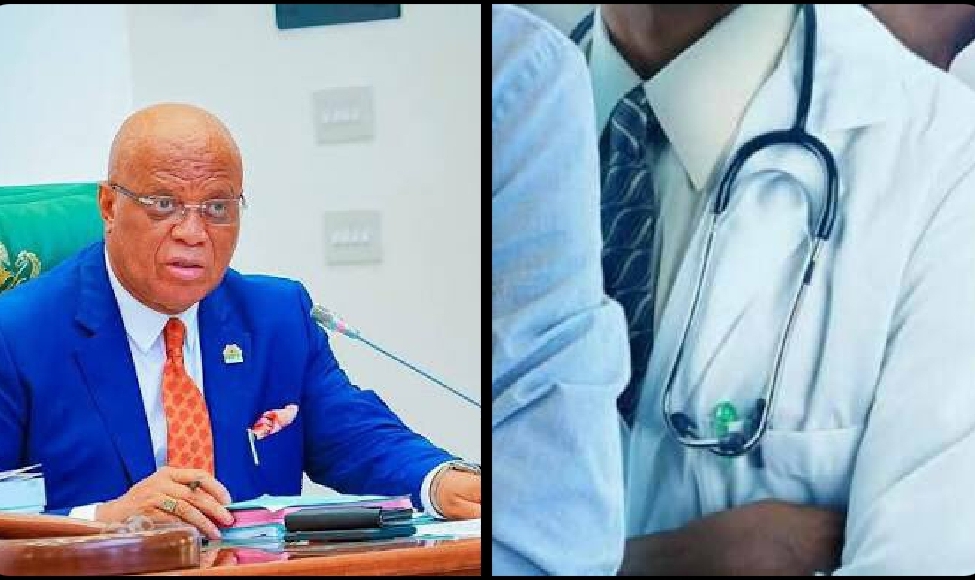
Akwa Ibom Hunts Runaway Doctors as Nigeria’s Brain Drain Crisis Deepens
The Akwa Ibom State Government has issued a dramatic ultimatum to two doctors, Uduakabasi Ita and Mfonobong George Bassey, demanding they either refund the cost of their state-sponsored medical training or return to duty. The move has stirred heated debate across Nigeria, exposing the country’s desperate struggle to hold on
The Akwa Ibom State Government has issued a dramatic ultimatum to two doctors, Uduakabasi Ita and Mfonobong George Bassey, demanding they either refund the cost of their state-sponsored medical training or return to duty.
The move has stirred heated debate across Nigeria, exposing the country’s desperate struggle to hold on to its medical professionals amid a worsening healthcare crisis.
Training a doctor in Nigeria is a long, costly journey that can stretch over eight years. States often shoulder a significant share of this burden, hoping to deploy the doctors in public hospitals already overwhelmed by patient loads.
Yet, for many young professionals, the lure of greener pastures abroad is irresistible. A 2021 study in the Journal of Global Health estimated that over half of Nigerian-trained doctors emigrate to countries like the UK, US, and Canada in search of better pay and working conditions.
The result is a system at breaking point. According to a 2023 World Health Organization report, Nigeria’s doctor-to-patient ratio stands at a staggering 1:5,000—far below the recommended 1:1,000. In practice, this means patients often wait hours, sometimes days, to see a doctor, while critical cases are left unattended. Against this backdrop, the disappearance of state-funded doctors feels not just like a betrayal, but a blow to an already battered system.
Yet beneath the government’s pursuit lies a more complex truth. Studies, such as one published in BMC Health Services Research in 2020, reveal that poor infrastructure, lack of essential medical supplies, and meager wages are major drivers of this exodus. A young doctor can earn in a day in London what might take a month in a Nigerian public hospital. Faced with crumbling facilities and little professional growth, many feel they have no choice but to leave.
The Akwa Ibom government’s decision to track these doctors internationally through medical councils raises sharp ethical questions. Should the state exert control over a person’s career choices simply because it funded their education? Or does the crisis justify extreme measures to prevent the collapse of Nigeria’s healthcare system?
As the debate rages, one thing is clear: this is not just about two doctors in Akwa Ibom. It is about a nation caught in a vicious cycle, training doctors it cannot keep, and patients paying the ultimate price for a system unable to heal itself.
Share this post
Related Posts

Paystack Fires Co-Founder Ezra Olubi Over Sexual Misconduct Allegations as Old Explicit Tweets Resurface
The African tech ecosystem was thrown into shockwaves on November 22, 2025, after Paystack—one of...

“Respect Is to a Man What Love Is to a Woman” — Woman’s Five Relationship Lessons Ignite Heated Online Debate
A woman has set social media ablaze after sharing what she described as the five...

Tiwa Savage Reveals She Rejected Private Jet and Range Rover Gifts from Nigerian Politicians — Fans Split Between Praise and Skepticism
Afrobeats queen Tiwa Savage has sparked intense social media debate after revealing that she once...