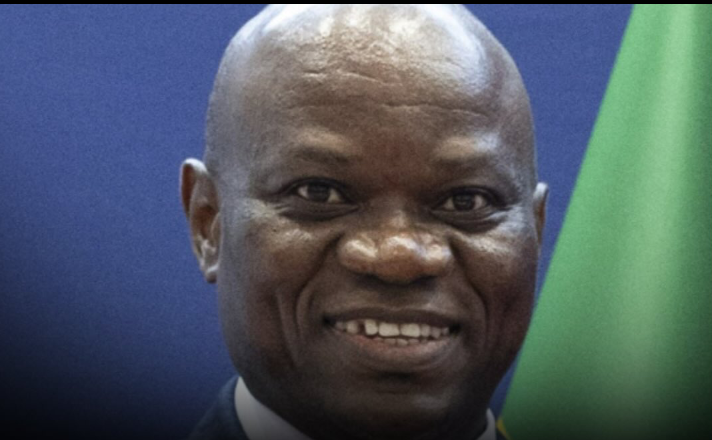
Digital Silence: Gabon Orders Indefinite Social Media Shutdown Over National Stability Fears
In a sweeping move that has ignited global debate over freedom of expression and state authority in the digital age, the government of Gabon has announced the indefinite suspension of social media platforms across the country, citing escalating concerns that online content is fueling division, unrest, and threats to national
In a sweeping move that has ignited global debate over freedom of expression and state authority in the digital age, the government of Gabon has announced the indefinite suspension of social media platforms across the country, citing escalating concerns that online content is fueling division, unrest, and threats to national cohesion. The decision, confirmed Tuesday by the country’s media regulator, signals one of the most stringent digital crackdowns in recent Central African history and underscores mounting tensions between state stability and the increasingly powerful influence of social media in shaping public discourse.
The announcement came via a televised statement by the High Authority for Communication, Gabon’s regulatory body overseeing media and communications. According to the regulator, the suspension was enacted in response to what it described as a surge in “inappropriate, defamatory, hateful, and insulting content” circulating across social networks, material officials say undermines human dignity, erodes public morality, and poses a direct risk to the country’s social fabric. Authorities also cited the proliferation of misinformation, cyberbullying incidents, and unauthorized sharing of personal data as key factors behind the extraordinary decision.
Spokesman Jean-Claude Mendome warned that unchecked digital activity had reached a level capable of igniting social conflict and destabilizing state institutions. “These actions risk sparking social conflict, destabilizing institutions, and undermining national unity and democratic progress,” Mendome stated, emphasizing that the government considered the threat severe enough to justify a nationwide suspension without a defined end date. The lack of a timeline has intensified concern among citizens, journalists, and rights advocates, who fear the measure could become a prolonged restriction rather than a temporary intervention.
While officials did not specify which platforms would be affected, observers widely assume that major global networks such as Facebook, X, WhatsApp, and TikTok fall within the scope of the suspension, given their dominant role in Gabonese online life. For many citizens, these platforms serve not only as communication tools but as essential channels for business transactions, news consumption, civic engagement, and diaspora connections. The sudden digital blackout has therefore triggered immediate anxiety among entrepreneurs, activists, and ordinary users who rely on social media for income, information, and community ties.
Government officials were careful to stress that freedom of expression remains a protected right under Gabonese law, even as they justified the sweeping restriction. The regulator insisted that citizens retain the right to comment, criticize, and debate public issues, framing the suspension as a necessary step to protect that very democratic environment from manipulation and abuse. Yet critics argue that halting access to entire platforms rather than targeting specific harmful content represents a disproportionate response that risks silencing legitimate voices alongside harmful ones.
The decision arrives against a backdrop of heightened political sensitivity in Gabon, where social media has played an increasingly prominent role in shaping narratives around governance, elections, and public accountability. In recent years, online platforms have enabled activists and opposition figures to bypass traditional state-aligned media channels, amplifying dissent and exposing allegations of corruption or abuse. At the same time, authorities contend that these same networks have become fertile ground for rumors, incitement, and reputational attacks capable of triggering real-world tensions.
Digital rights advocates across Africa have expressed alarm at the precedent the move could set. Several regional organizations warn that indefinite suspensions normalize internet shutdowns as a governance tool, potentially encouraging similar measures in other countries facing political pressure. They argue that while governments have legitimate concerns about harmful online content, international human rights standards emphasize that restrictions on expression should be lawful, necessary, and proportionate. Blanket shutdowns, critics say, rarely meet those criteria and often inflict broad collateral damage on economic and civic life.
Within Gabon itself, reactions have been mixed. Some citizens have voiced support for stricter regulation, citing fatigue with online harassment, misinformation, and political insults that dominate digital spaces. Others, however, describe the shutdown as collective punishment that curtails access to information and isolates the country from global conversation. For small business owners who depend on messaging apps and social platforms to reach customers, the suspension threatens immediate financial loss, compounding economic pressures in a nation already grappling with inequality and youth unemployment.
The economic implications extend beyond individual livelihoods. Analysts note that social media platforms underpin a growing share of Gabon’s informal digital economy, from online retail and marketing services to freelance content creation. Interrupting these networks risks slowing entrepreneurship and innovation at a time when many African governments are promoting digital transformation as a pathway to development. Telecommunications companies may also face indirect impacts as data usage declines and consumer confidence wavers.
International observers are watching closely to see whether the suspension remains in place or evolves into targeted regulation. Previous internet disruptions in parts of Africa have often coincided with elections or political crises, sometimes lasting days or weeks before restoration. Gabon’s decision stands out for its indefinite nature and its explicit framing around social cohesion rather than a specific event. This ambiguity has fueled speculation that authorities seek broader control over digital discourse amid shifting political dynamics.
Legal scholars note that Gabon’s constitution recognizes freedom of expression but allows limitations in the interest of public order and morality, creating a framework authorities can invoke to justify restrictions. The key question, they say, is whether the current measure can be demonstrated as necessary and proportionate to a clear threat. Without transparent criteria or a defined review mechanism, the suspension risks being perceived as arbitrary, undermining trust in institutions the government says it aims to protect.
The regulator’s statement also referenced concerns over unauthorized sharing of personal data, highlighting a growing global issue of privacy violations online. While such concerns are widely acknowledged, experts emphasize that addressing them typically requires stronger data protection laws and enforcement rather than platform-wide bans. Similarly, combating misinformation and cyberbullying often involves a mix of digital literacy programs, content moderation partnerships, and targeted legal action against perpetrators.
As the shutdown takes effect, citizens are turning to alternative communication channels, including virtual private networks and traditional media, to maintain connections. Such workarounds, however, are unevenly accessible and may expose users to legal risk if authorities interpret them as attempts to circumvent state orders. The resulting digital divide could deepen existing inequalities, privileging those with technical knowledge or resources while marginalizing others.
The broader geopolitical context also shapes perceptions of the move. Across Africa and beyond, governments are wrestling with how to regulate powerful social media ecosystems that transcend national borders. Some states have enacted platform-specific bans or heavy fines for noncompliance with local laws, while others have pursued data localization and licensing regimes. Gabon’s blanket suspension represents one of the more extreme options on this spectrum, reflecting both frustration with online harms and anxiety over political stability.
For now, the country enters an uncertain period of enforced digital quiet. Whether the suspension achieves its stated goals of restoring cohesion and protecting institutions—or instead deepens mistrust and economic strain—will depend on how long it lasts and what reforms accompany it. Observers say that if authorities pair the measure with transparent dialogue, legal safeguards, and clear benchmarks for restoration, the impact may be mitigated. Without such steps, the shutdown risks being remembered less as a stabilizing intervention and more as a moment when an entire nation was cut off from its digital voice.
As Gabon navigates the balance between order and openness, the episode underscores a defining challenge of modern governance: how to preserve social harmony without extinguishing the vibrant, if chaotic, marketplace of ideas that social media has unleashed. The outcome will resonate not only within Gabon’s borders but across a continent and world still grappling with the promise and peril of the connected age.
Share this post
Related Posts
\"As Long as Europe and America Control Our Money, They Will Control Our Economy\" – Kagame Calls for African Common Currency Backed by Resources
In a bold and unapologetic declaration, President Paul Kagame of Rwanda has once again ignited...

From 600k to 1 Million: Tenant War Erupts as Nigerian Landlady Raises Rent Overnight
A mild drama has unfolded online after a Nigerian lady shared how her mother, a...

Bright Chimezie Bounces Back with a Bang: Veteran Highlife Legend Signs Publishing Deal with Sony Music Publishing
In a move that has sent ripples of excitement through the Nigerian music scene and...