From Teen to Adult: Man\'s 2020–2026 Transformation Sparks Reflection on Growth
In a world increasingly obsessed with snapshots and timelines, a recent post by social media personality Eyítáyò has captured attention far beyond the confines of his usual follower count. In a throwback shared on his Twitter handle, Eyítáyò posted two photos side by side: one from 2020, where he appeared
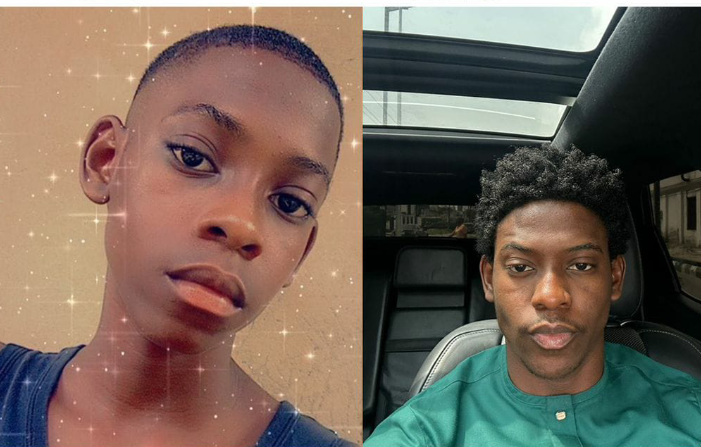
In a world increasingly obsessed with snapshots and timelines, a recent post by social media personality Eyítáyò has captured attention far beyond the confines of his usual follower count. In a throwback shared on his Twitter handle, Eyítáyò posted two photos side by side: one from 2020, where he appeared a vibrant 16-year-old, and another from 2026, showing him at 26 years old. The images, simple in execution yet profound in implication, have ignited discussions around personal growth, the passage of time, and the ways in which we perceive ourselves versus how the world perceives us.
The 2020 photo shows Eyítáyò with an unmistakable youthful exuberance: bright eyes, unassuming smiles, and the kind of raw, untamed energy that only comes with being sixteen. It is a picture that speaks of beginnings, of a person on the brink of discovery, facing the world with curiosity rather than caution. Fast forward six years, and the contrast is striking. The 2026 photo presents a young man fully formed in his confidence, his gaze steady and deliberate, his posture poised. The natural charm remains, but it is now tempered with an elegance born of experience. The difference is more than physical—it is emblematic of a journey that has seen the child of 2020 become the adult of 2026.
Eyítáyò’s post resonates with followers because it taps into a universal experience: the undeniable yet often unacknowledged evolution that occurs between adolescence and adulthood. Social media, with its constant stream of updates and highlights, often freezes moments in time, creating a sense that life can be neatly packaged in images. Yet, Eyítáyò’s throwback reminds his audience that life is a continuum. The boy in 2020 was not just a version of himself frozen in nostalgia; he was the foundation for the man of 2026. His post encourages reflection, prompting his followers to examine their own journeys. How have they changed in the past six years? What lessons have they learned, and what milestones have shaped their present selves?
The public reaction to Eyítáyò’s post has been emphatic. Tweets have poured in from admirers who relate to the transformation he highlights. Some users reflect on their own growth, noting the differences between who they were as teenagers and who they are now. Others comment on the confidence and poise he exudes, with many expressing admiration for his ability to evolve without losing the authenticity that made him relatable in the first place. Confidence, another Twitter user, commented on the post, stating, “The concept of being a child in 2020 and an adult in 2026—it’s wild how time reshapes us.” The sentiment resonates widely, as it encapsulates the bittersweet nature of growing up: the joy of discovery, the challenges of self-definition, and the inevitability of change.
Experts on youth development and social psychology note that posts like Eyítáyò’s serve an important cultural function. Dr. Nneka Oladipo, a psychologist specializing in adolescent development, explains, “People often underestimate the power of reflection on personal growth. When someone shares their own transformation, it validates the experiences of others who may feel anxious about the passage of time or uncertain about their own progress. It creates a collective acknowledgment that change is not only natural but also necessary for maturity.” Social media, often criticized for fostering comparison and insecurity, can also act as a mirror, helping individuals see the arc of their own lives more clearly when framed in moments of personal storytelling.
Eyítáyò’s throwback also serves as a reminder of the broader societal expectations placed on young people as they transition from adolescence into adulthood. At sixteen, the world often feels like a place of infinite possibilities, yet with limited responsibility. By twenty-six, the weight of decisions—career, relationships, self-identity—can feel overwhelming. The images shared by Eyítáyò capture both extremes, juxtaposing youthful optimism with adult confidence. Followers have noted that the post resonates not just with the visual contrast but with the emotional narrative that accompanies it. It’s a story of growth, resilience, and the sometimes invisible effort required to navigate the complexities of life between these two points in time.
The post has also sparked discussions about self-perception. In 2020, Eyítáyò may have seen himself through the lens of adolescence—curious, unsure, and constantly comparing himself to peers. By 2026, his self-image appears refined, suggesting a degree of self-assurance that comes from experience and introspection. Social media users have praised him for embracing both phases of his life, highlighting the importance of accepting one’s past while continuing to evolve. In a culture obsessed with perpetual youth, celebrating both the child we were and the adult we become challenges conventional notions of identity and self-worth.
While Eyítáyò’s transformation is deeply personal, it also reflects a generational phenomenon. Millennials and Gen Z, who grew up in the era of social media, are uniquely positioned to document their growth publicly. Unlike previous generations, whose transformations might only have been recorded in family albums or yearbooks, today’s youth have a digital footprint that chronicles the evolution from adolescence to adulthood in real time. Eyítáyò’s post is a testament to this dynamic, capturing not just a moment in history but a narrative that can be revisited, analyzed, and celebrated.
The discussion sparked by Eyítáyò’s throwback is likely to extend beyond mere social media commentary. It invites broader conversations about time, identity, and personal development. What does it mean to grow up in a digital age where every stage of life can be captured, shared, and judged? How does one reconcile the self of yesterday with the self of today, particularly in a public forum? Eyítáyò’s simple act of sharing a before-and-after photo answers these questions indirectly: growth is inevitable, reflection is valuable, and confidence emerges not overnight but through the accumulation of experiences, choices, and lessons learned.
For Eyítáyò himself, the post seems to be less about seeking validation and more about embracing his journey. In an era where social media often amplifies the pressure to present a curated version of life, his post stands out for its honesty and relatability. It’s a quiet celebration of self, a reminder that life is a series of chapters, each important in shaping the person we become.
As the comments, shares, and reactions continue to accumulate, it becomes clear that Eyítáyò has touched on something deeply human: the passage of time is universal, and growth is both personal and shared. His throwback, while anchored in specific years and ages, speaks to a timeless truth: we are all works in progress, constantly evolving, learning, and redefining ourselves. In celebrating his own transformation, Eyítáyò invites others to do the same—to look back not with regret, but with appreciation for the journey, and to look forward with the confidence that comes from knowing how far one has come.
Ultimately, Eyítáyò’s post is more than just a comparison of images from 2020 and 2026. It is a reflection on life itself—the fleeting yet transformative nature of time, the joy and challenge of growing up, and the profound satisfaction of becoming comfortable in one’s own skin. In a world obsessed with instant gratification and curated perfection, his post serves as a gentle reminder: growth takes time, confidence is cultivated, and the passage from child to adult is a story worth telling.
Share this post
Related Posts

“Daddy, Why Didn’t You Like My Status?” — How One Cute Message From a 9-Year-Old Melted the Internet
A heart-melting moment between a father and his 9-year-old daughter has taken over social media...

Malian Woman Shatters World Record After Giving Birth to Nine Surviving Babies in a Single Delivery
In a medical and human miracle that has stunned the world, Halima Cissé, a young...

“We Don’t Send From This End!” – Tacha Proudly Embraces Her Single Life with Bold Message to Fans
Reality TV star and social media sensation, Anita Natacha Akide, popularly known as Tacha, has...