Global Patience Wears Thin: Trump Joins Allies in Criticizing Israel\'s Gaza Offensive
In a stunning turn of events that signals a dramatic shift in global sentiment, former President Donald Trump, long considered one of Israel’s most staunch defenders on the international stage, publicly urged an end to the devastating war in Gaza on Sunday. His comments come amid a growing chorus of
In a stunning turn of events that signals a dramatic shift in global sentiment, former President Donald Trump, long considered one of Israel’s most staunch defenders on the international stage, publicly urged an end to the devastating war in Gaza on Sunday. His comments come amid a growing chorus of discontent among Israel\'s closest allies, raising questions about the future of the country’s diplomatic support network as the conflict drags into its nineteenth month.
Speaking to reporters in New Jersey just before boarding Air Force One, Trump said, “Israel, we’ve been talking to them, and we want to see if we can stop that whole situation as quickly as possible.” The remarks represent a stark departure from the former president’s earlier rhetoric, which largely absolved Israel of blame and squarely placed responsibility for the violence on Hamas.
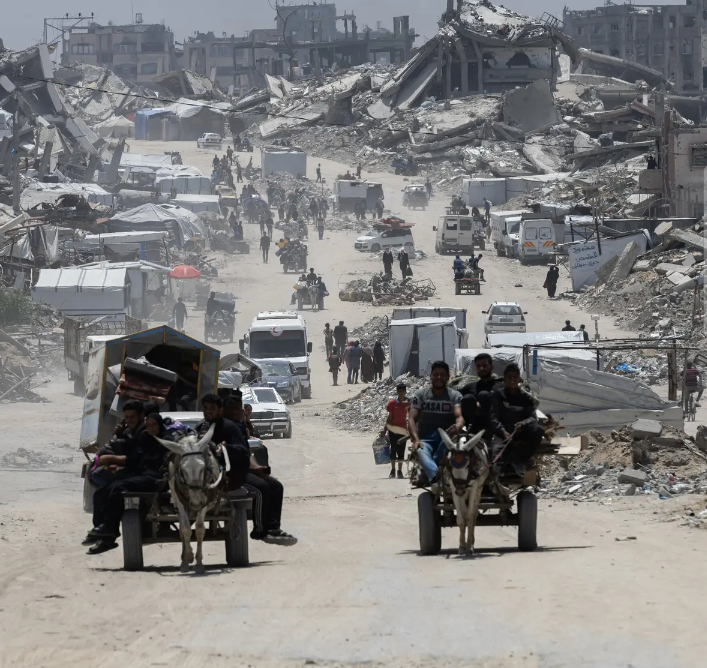
Trump’s shift is emblematic of a broader erosion in Western patience with Israel’s military campaign, which has reduced vast swathes of Gaza to rubble and triggered what international observers have repeatedly called a humanitarian catastrophe. Once buffered by unwavering diplomatic support from key allies like the United States, Britain, and France, Israel now finds itself increasingly isolated — its government’s actions drawing pointed criticism, even from longtime partners.
In Berlin, German Chancellor Friedrich Merz made headlines Monday by issuing a scathing critique of Israel’s expanding operations in Gaza. Speaking on national television, Merz expressed disbelief at what he described as disproportionate military action. “What the Israeli Army is doing in the Gaza Strip right now — I honestly don’t understand what the goal is in causing such suffering to the civilian population,” he said. Germany, a country whose historical relationship with Israel has long dictated a cautious tone in such matters, appeared to cross a diplomatic Rubicon with Merz’s unusually candid remarks.
Italy followed closely behind. Foreign Minister Antonio Tajani, representing a right-wing government that has historically aligned itself with Israeli leadership, struck a similarly forceful tone. “Netanyahu must halt the raids on Gaza,” Tajani said in a statement posted on his ministry’s official website. “We need an immediate cease-fire and the release of hostages by Hamas, which must leave Gaza.”
These developments mark a significant inflection point in the geopolitical calculus surrounding the war. While international humanitarian groups have for months condemned the siege of Gaza, alleging collective punishment and indiscriminate bombings, major Western capitals have largely restrained themselves from issuing outright rebukes — let alone suggesting policy consequences. That restraint is rapidly evaporating.
Analysts say the tipping point may have been reached not only due to the staggering civilian toll, now estimated to exceed 35,000, but also due to growing public anger in these countries, where pro-Palestinian demonstrations have surged and political leaders find themselves under increasing pressure to reflect the mood of their electorates.
In the United States, Trump\'s comments are particularly significant because they may signal a bipartisan shift. While President Biden has faced mounting criticism for his handling of the crisis and remains cautious in his language, Trump’s change of tone could embolden others within the Republican establishment to express similar doubts. That, in turn, could catalyze a rare moment of cross-party consensus on the need to rein in Israel’s military campaign.
Inside Israel, Prime Minister Benjamin Netanyahu faces a different kind of pressure. Beset by domestic challenges and growing international condemnation, Netanyahu remains defiant, arguing that continued military pressure is necessary to eliminate Hamas as a threat. But his coalition government — itself a patchwork of hard-right factions — is beginning to show signs of strain. Israeli media has reported behind-the-scenes disagreements over the scale and sustainability of the operation, and public support is waning as the economic and psychological toll of the war mounts.
For Israel’s military, the stakes are equally high. Commanders argue that pulling back now would squander months of operational gains and potentially allow Hamas to regroup. But that line is proving harder to defend in the face of images of destroyed neighborhoods, malnourished children, and overwhelmed hospitals. The country’s once-robust global support system appears to be fraying, and even Israel’s ironclad relationship with Washington is no longer impervious to doubt.
On Capitol Hill and in European parliaments, discussions have shifted from rhetorical disapproval to possible action. Sanctions, arms sales restrictions, and changes in intelligence-sharing protocols are all now being discussed, even if quietly. The Israeli government, which once counted on silent tolerance from allies as it pursued its goals in Gaza, may now be forced to grapple with real consequences.
This new phase of the conflict — characterized by external pressure, internal division, and a creeping loss of legitimacy — could prove pivotal. Whether Israel chooses to adjust its strategy in light of these developments remains to be seen, but the message from the international community is unmistakable: the cost of continued aggression may now include more than just battlefield losses.
As the war continues, with no clear end in sight, the consequences of Israel’s decisions will be shaped not only by rockets and raids but by the rapidly shifting political winds abroad. What was once seen as a defensive campaign supported by allies is increasingly being viewed as an overreach — one that could leave Israel not just militarily entangled but diplomatically stranded.
For now, the streets of Gaza remain engulfed in dust and fire, while in world capitals, conversations grow louder, more urgent, and less forgiving. The question is no longer whether Israel has the right to defend itself — a point few dispute — but whether the scale and method of its defense are now costing it the very alliances it has long relied upon.
Share this post
Related Posts
JUST IN: Nigerian Navy Lieutenant Dismissed And Jailed For Affair With Colleague’s Wife
The Nigerian Navy has announced the dismissal and sentencing of one of its lieutenants after...

Comfort Emmanson Walks Free as Court Clears Her of Ibom Air Unruly Behavior Charges
The storm is finally over for Comfort Emmanson, the woman whose name became a hot...

Atiku Abubakar’s Bold Political Gamble: Former Vice President Makes Shock Move to ADC in Adamawa
Nigeria’s political landscape was shaken today as former Vice President Atiku Abubakar officially joined the...