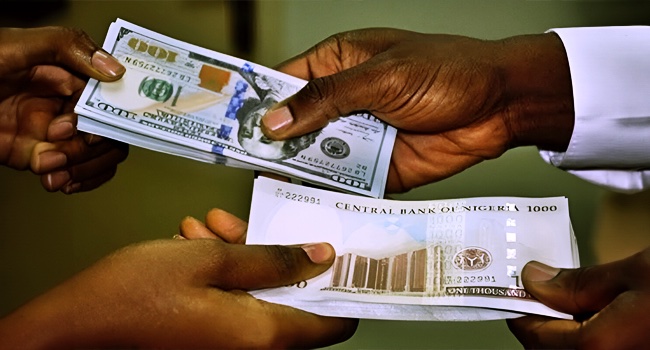
Naira Holds Around ₦1,355 Per Dollar as Nigeria’s Currency Battle Continues
Nigeria’s currency market has once again drawn national attention as the naira trades around ₦1,355 to the United States dollar, a rate that reflects both the ongoing struggle and fragile stability of the country’s foreign exchange market. For millions of Nigerians, the number represents more than just a statistic—it mirrors
Nigeria’s currency market has once again drawn national attention as the naira trades around ₦1,355 to the United States dollar, a rate that reflects both the ongoing struggle and fragile stability of the country’s foreign exchange market. For millions of Nigerians, the number represents more than just a statistic—it mirrors the daily economic realities affecting businesses, traders, students abroad, and households across the country.
Recent market data shows the naira hovering within the ₦1,351 to ₦1,355 range against the dollar in official trading windows, suggesting a period of relative stability compared to previous months when the currency experienced sharper swings. Despite this apparent calm, the broader economic story remains complex, shaped by global financial trends, domestic economic policies, and persistent demand for foreign currency.
At the official market, figures from the foreign exchange trading platform monitored by the Central Bank of Nigeria show the naira recently closing at about ₦1,355.37 to one U.S. dollar, marking a slight depreciation compared to earlier sessions. While the movement may appear small on paper, currency traders and financial analysts say it signals the continued pressure facing Africa’s largest economy.
Across Nigeria’s parallel or informal market—commonly referred to as the black market—the situation often reflects even stronger demand for dollars. In that segment, the naira has been quoted at around ₦1,420 per dollar in recent trading, highlighting the persistent gap between official and informal exchange rates. The difference between these markets continues to influence business operations, especially for importers and small businesses that rely heavily on access to foreign currency.
Nigeria’s foreign exchange challenges have been years in the making. The naira, introduced decades ago as the country’s official currency, once held a much stronger value against the dollar. Over time, however, economic pressures, declining oil revenues, rising demand for imports, and structural weaknesses in the economy have steadily weakened the currency’s purchasing power.
Today, the exchange rate serves as a crucial indicator of the country’s economic health. When the naira weakens against the dollar, the effects ripple through every sector. Imported goods become more expensive, fuel prices tend to rise, and businesses dependent on international transactions face higher operational costs. For ordinary Nigerians, this often translates into increased food prices, transportation costs, and a general rise in the cost of living.
Economic analysts note that one of the biggest factors affecting the naira is the high demand for foreign exchange within Nigeria’s import-driven economy. Many businesses rely on dollars to purchase machinery, electronics, raw materials, and finished goods from abroad. When demand for dollars outpaces supply, the local currency inevitably comes under pressure.
Another important factor influencing the exchange rate is global financial sentiment. In recent weeks, geopolitical tensions and global economic uncertainties have strengthened the U.S. dollar internationally, making it harder for emerging market currencies like the naira to hold their ground. Investors often move their funds into the dollar during periods of uncertainty, which further increases demand for the American currency and weakens others.
The Central Bank of Nigeria has been actively trying to stabilize the situation through various policy measures. These include interventions in the foreign exchange market, monetary policy adjustments, and efforts to increase foreign reserves. The bank has also worked to reduce volatility by introducing regulatory reforms aimed at improving transparency in currency trading.
In addition, authorities have been encouraging increased foreign investment and remittances from Nigerians in the diaspora, both of which provide valuable sources of dollar inflows into the economy. Such inflows can help ease pressure on the currency by increasing the supply of foreign exchange available within the financial system.
Still, many economic experts believe that deeper structural reforms are necessary to achieve long-term stability for the naira. Diversifying the economy away from heavy reliance on crude oil exports remains a key goal frequently mentioned by policymakers. Nigeria earns a large share of its foreign currency from oil sales, meaning fluctuations in global oil prices can significantly affect the country’s exchange rate.
When oil prices drop or production levels fall, the amount of dollars entering the Nigerian economy decreases, which can weaken the naira. Conversely, stronger oil revenues often provide temporary relief for the currency.
Beyond oil, sectors such as agriculture, technology, and manufacturing are increasingly being viewed as potential drivers of foreign exchange earnings. Expanding exports from these industries could help Nigeria build a more resilient economy capable of supporting a stronger currency in the long term.
For businesses operating within Nigeria, the current exchange rate environment requires careful financial planning. Importers must manage fluctuating costs, while exporters often benefit from a weaker naira because their goods become cheaper and more competitive in international markets.
Financial institutions, meanwhile, closely monitor currency movements as they influence inflation, interest rates, and overall economic stability. Nigeria has already experienced high inflation in recent years, and exchange rate pressures can further complicate efforts to control rising prices.
For everyday Nigerians, the dollar rate is often discussed as passionately as politics or football. From Lagos markets to social media discussions, people frequently track the exchange rate because it directly affects their purchasing power and financial decisions.
Students studying abroad, families paying international school fees, entrepreneurs importing goods, and freelancers earning foreign currency all feel the impact of the naira’s value. In many ways, the exchange rate has become a daily measure of economic optimism or concern across the country.
Despite the challenges, some analysts remain cautiously optimistic. The relative stability around the ₦1,355 mark in recent weeks suggests that policy interventions may be gradually calming volatility in the foreign exchange market. However, experts warn that stability will depend on consistent economic reforms, stronger export performance, and improved investor confidence.
As Nigeria continues to navigate its complex economic landscape, the naira’s journey against the dollar remains a powerful symbol of the country’s broader financial struggles and ambitions. Whether the currency strengthens or weakens in the coming months will depend on both global economic trends and the effectiveness of policies designed to reshape Africa’s largest economy.
For now, with the naira trading around ₦1,355 per dollar, Nigerians are once again reminded of how closely their daily lives are tied to the fluctuating value of the national currency—and how critical economic stability remains for the future of the country.
Share this post
Related Posts

Dragged from the Shadows: Outrage as Police Nab Popular TikToker in Gestapo-Style Abduction
A storm of public outrage has been stirred following the controversial arrest and detention of...

\"Even With My Millions, Davido Makes Me Feel Like a Broke Man\" – Young Jonn Admits in Candid Interview
In a strikingly honest moment that has set social media ablaze, renowned Nigerian music producer...

Alleged WhatsApp Chats Between Actress Doris Ogala and Pastor Chris Okafor Ignite Explosive Scandal Over Secret Affair Claims
A fresh storm has erupted across Nigerian social media after alleged WhatsApp exchanges surfaced linking...