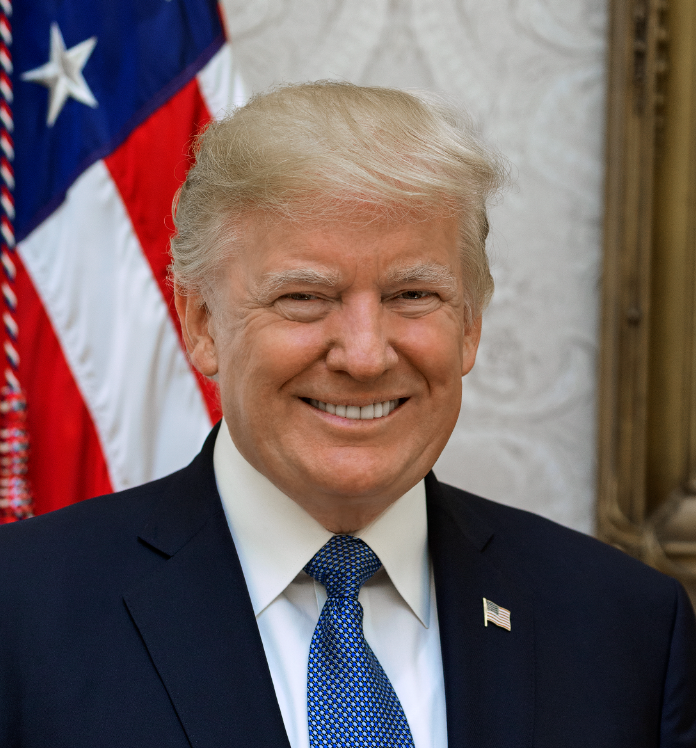
Trump Signals Potential U.S. Military Strikes in Nigeria Over Attacks on Christians
In a statement that has sent ripples through both Washington and Abuja, former U.S. President Donald Trump warned on Thursday that the United States could carry out additional military strikes in Nigeria if attacks on Christians persist. Speaking in an interview with The New York Times, Trump described the situation
In a statement that has sent ripples through both Washington and Abuja, former U.S. President Donald Trump warned on Thursday that the United States could carry out additional military strikes in Nigeria if attacks on Christians persist. Speaking in an interview with The New York Times, Trump described the situation in Nigeria as dire for the country’s Christian population and suggested that more aggressive U.S. involvement could be imminent if the Nigerian government fails to address what he perceives as targeted attacks.
Trump’s comments come shortly after a U.S. military strike on Christmas Day targeting Islamic State affiliates in northwest Nigeria. The operation, which Washington framed as a counterterrorism mission, was described by Nigerian officials as a “joint operation against terrorists with nothing to do with a particular religion.” Despite these assurances, Trump maintained that the Christian population in Nigeria is under severe threat and indicated that the United States could respond militarily should the situation deteriorate further.
“I hope this strike can be a one-time action,” Trump told the newspaper, “but if Christians continue to be targeted, there may be further steps.” The former president’s warning underscores his longstanding position that Christianity in Nigeria is facing an “existential threat,” a phrase he has used repeatedly in recent months to describe the plight of the country’s Christian communities. Trump’s remarks have sparked debate over the appropriate role of U.S. military involvement abroad, with critics questioning whether intervention framed around religion risks escalating tensions in an already volatile region.
When asked about comments from his Africa adviser, who noted that both Muslims and Christians are victims of militant violence in Nigeria, Trump acknowledged that Muslims have indeed suffered in attacks by Boko Haram, Islamic State West Africa Province (ISWAP), and other armed groups. However, he insisted that Christians are disproportionately targeted and remain at the center of the crisis. “Yes, Muslims are being killed, too,” Trump said, “but Christians are the primary targets, and that cannot be ignored.”
Nigeria, the most populous country in Africa with over 230 million people, is roughly evenly divided between Christians and Muslims. Christians are largely concentrated in the southern and central regions, while the northern states are predominantly Muslim. This religious geography has often intersected with issues of governance, economic disparity, and security challenges, creating a complex and sometimes volatile environment.
The country continues to grapple with a range of security threats, from insurgency in the northeast led by Boko Haram and ISWAP to banditry, kidnappings, and communal clashes across multiple regions. These crises have caused widespread displacement, strained resources, and created an atmosphere of insecurity that affects millions of Nigerians, regardless of religion. In this context, Nigerian authorities have consistently emphasized that extremist violence is not confined to a single religious group.
Nigerian government officials have repeatedly rejected the notion that Christians are being singled out for attacks, insisting that all communities—Muslims and Christians alike—have been affected by terrorism and criminal activity. Authorities have highlighted that insurgency in the northeast and violent crime in the northwest are driven by ideological extremism, economic grievances, and the pursuit of criminal profit, rather than religious animosity.
Despite these assurances, the U.S. military strike on Christmas Day reignited debate about foreign intervention and the framing of violence along religious lines. Critics argue that singling out Christians as the primary victims risks oversimplifying a complex conflict and could inflame sectarian tensions. Supporters of Trump’s stance, however, argue that highlighting the specific plight of Christians is necessary to protect vulnerable populations and to hold governments accountable for the safety of their citizens.
The potential for further U.S. military action has prompted careful responses from Nigerian officials. Foreign Ministry representatives have expressed a willingness to cooperate with Washington in combating violent groups, but they have stressed that language suggesting religiously targeted attacks is misleading. A senior Nigerian diplomat said, “We remain committed to joint efforts against terrorism, but it is important to recognize that the violence affects all Nigerians, regardless of faith. Framing it otherwise does not reflect the reality on the ground.”
Analysts note that Trump’s warning comes at a sensitive time for U.S.-Nigeria relations. The Biden administration has maintained a focus on counterterrorism and development assistance in the region, while also encouraging democratic governance and human rights protections. Trump’s statements, framed around the religious identity of victims, could complicate diplomatic efforts and potentially inflame tensions within Nigeria, where accusations of religious favoritism are highly sensitive.
Security experts also warn that additional military strikes carry both potential benefits and risks. Targeted strikes against militant leadership and infrastructure can degrade the operational capabilities of armed groups, potentially saving lives and stabilizing affected regions. However, they can also provoke retaliation, contribute to civilian casualties, and deepen grievances if perceived as biased toward one religious community. The challenge for U.S. policymakers, these experts say, is to balance a desire to protect vulnerable populations with the need for precise intelligence, local cooperation, and a broader strategy that addresses root causes of violence.
In response to Trump’s warning, advocacy groups focused on religious freedom in Nigeria have reiterated their calls for international attention. Some have praised the former president for drawing attention to the suffering of Christians, while others have cautioned that militarized responses alone cannot solve the underlying issues. “Nigeria’s crises are multifaceted,” said one analyst. “While protection of civilians is critical, long-term solutions require addressing poverty, governance, and community tensions alongside security operations.”
The United States’ military presence in Africa, through the U.S. Africa Command (AFRICOM), has long focused on counterterrorism, training, and intelligence-sharing with local forces. Christmas Day’s operation in northwest Nigeria reflects this ongoing engagement, which aims to disrupt militant networks while minimizing risks to civilians. However, framing future interventions around religious lines, as Trump has suggested, represents a departure from the traditional language of U.S. counterterrorism policy and raises questions about the potential consequences for both Nigerian security and regional stability.
As Nigeria navigates these challenges, the government faces pressure from multiple fronts: maintaining internal security, protecting religious and ethnic communities, and managing relationships with powerful international partners like the United States. While Nigerian officials have reassured citizens that all groups are equally threatened by violence, Trump’s comments underscore the continued international spotlight on the country’s security landscape and the delicate balance between external assistance and national sovereignty.
Observers now watch closely to see whether the U.S. will follow through with additional strikes and how Nigerian authorities will respond to both the threat and the rhetoric. The situation underscores the broader global debate over military intervention, human rights, and the role of religion in shaping foreign policy. For Nigerians, the message is both sobering and urgent: the security of communities remains fragile, and international attention—whether supportive or contentious—will continue to influence the country’s response to ongoing threats.
With nearly a quarter of a billion people, a complex religious landscape, and persistent violence across multiple regions, Nigeria faces no easy solutions. The warning from former President Trump has intensified scrutiny, prompting renewed discussions about responsibility, intervention, and the future of both security and religious freedom in Africa’s most populous nation. As the country grapples with insurgency, banditry, and kidnappings, the question remains whether external military action can meaningfully protect vulnerable populations without creating new risks or exacerbating existing tensions.
For now, Nigeria remains on edge, monitoring both the threats from militant groups and the international responses that could follow. Trump’s warning signals the potential for further action, while Nigerian authorities continue to insist that all citizens—Muslim and Christian alike—are at risk. The coming weeks may prove critical in shaping the trajectory of U.S.-Nigeria cooperation, the protection of civilians, and the broader battle against terrorism and instability in the region.
Share this post
Related Posts

Kevin Gates defends relationship with 26-year-old girlfriend, calls older women “used car lot” in viral rant
A viral 36-second clip of rapper Kevin Gates, 39, has set social media ablaze after...
Chad shuts Nigeria border amid fears of U.S. military incursion in West Africa
In a dramatic move reflecting mounting regional tensions, Chad’s government under President Mahamat Idriss Déby...

“I Have No Business With Abraham, Isaac, and Jacob” — Music Producer Ozedikus Speaks on Ancestry and Identity
In a statement that has caught the attention of music fans and cultural commentators alike,...