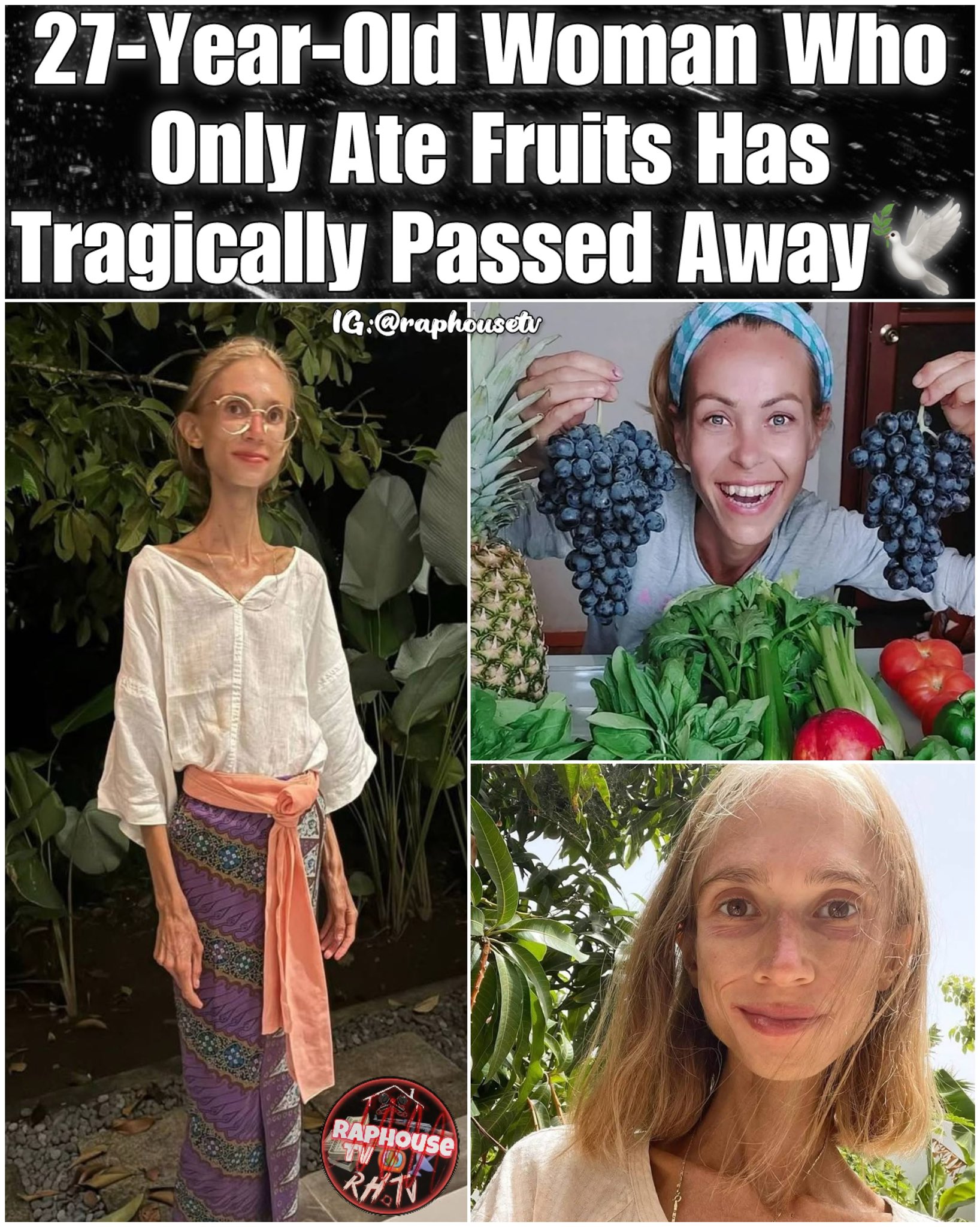
“Tragedy of a Lifestyle: 27-Year-Old Woman Who Survived on Only Fruits Dies After Silent Health Decline
A heartbreaking story has shaken online communities and health-conscious circles as a 27-year-old woman known for her strict fruit-only eating lifestyle has tragically passed away. The young woman, whose dedication to a raw, fruitarian diet was once celebrated by followers who admired her discipline and naturalist approach to wellness, is
A heartbreaking story has shaken online communities and health-conscious circles as a 27-year-old woman known for her strict fruit-only eating lifestyle has tragically passed away. The young woman, whose dedication to a raw, fruitarian diet was once celebrated by followers who admired her discipline and naturalist approach to wellness, is now at the center of a painful conversation about extreme dieting, hidden health struggles, and the dangers of unmonitored lifestyle trends. Her death has left many in shock, prompting reflection on the silent risks that often hide behind certain online food philosophies.
According to those close to her, the woman had been committed to a fruit-only diet for several years, believing deeply in the healing power of nature, detoxifying foods, and the promise of “pure energy” from raw fruits. Her social media presence, though not massive, reflected a life she often described as clean, free, and spiritually aligned. She frequently encouraged others to embrace plant-based living, and she documented her days in short clips filled with fruits, sunshine, and minimalist routines. What many didn’t know, however, was that her health had been deteriorating quietly behind the scenes.
Friends said she had grown increasingly frail over the past year, though she dismissed their concerns, insisting that her body was going through “a cleansing phase.” She often attributed significant weight loss, fatigue, and episodes of dizziness to detox symptoms, a common idea in certain alternative nutrition circles. Those who cared about her were alarmed but reluctant to push too far, as she was deeply passionate about her beliefs and convinced that food alone had the power to heal any imbalance inside the body. Her sudden death has now left them grappling with regret and a painful sense of helplessness.
Reports indicate that she collapsed after several days of feeling weak, and despite efforts to revive her, she did not survive. Preliminary medical examinations suggest severe nutritional deficiencies, dehydration, and organ complications may have played a role in the tragedy. While official results are still pending, medical experts have already begun weighing in on the incident, warning about the dangers of extreme diets that eliminate entire food groups essential to human survival. Many nutritionists stress that while fruits are rich in vitamins, antioxidants, and natural sugars, they do not provide enough protein, healthy fats, or minerals to sustain the body over long periods of time.
The news has sparked emotional reactions across social media, where people who followed her journey expressed shock, sorrow, and confusion. Some shared old videos of her smiling and enjoying fresh fruits under the sun, struggling to reconcile the vibrant image she portrayed with the harsh reality of her passing. Others who once admired or even attempted to emulate her lifestyle posted warnings, urging others to prioritize balance over perfection and to listen to their bodies rather than internet philosophies. The woman’s story has become a painful symbol of how far admiration for natural living can go when not grounded in scientific understanding.
As the story continues to gain traction, conversations have broadened beyond her individual choices to the larger issues surrounding wellness culture, influencer-driven dieting, and the illusion of health on social platforms. Experts point out how easy it is for extreme diets to gain popularity online, especially when they are paired with aesthetic images, confident statements, and personal testimonies of transformation. Many young people, they say, fall into these trends searching for purpose, identity, or healing, but often lack access to real medical guidance or understanding of the potential consequences. What looks pure and harmless on the outside can be deeply dangerous when misunderstood or taken to the extreme.
Some individuals who once followed similar fruit-only or raw-food diets spoke up after the news broke, sharing their own experiences with crashing energy levels, psychological stress, and long-term health damage. One former fruitarian wrote that she felt “trapped by the pressure to stay pure,” explaining how she believed stepping away from the diet meant she was failing morally. Another person admitted that the diet left them with severe deficiencies that took years to repair. These personal accounts have sparked a wave of renewed skepticism toward restrictive wellness practices that appear attractive but lack medical backing.
Amid the grief and outrage, one of the loudest conversations has centered on the importance of early medical intervention and the dangers of rebranding illness as “detox symptoms.” Doctors have repeatedly warned that prolonged weakness, dizziness, rapid weight loss, or chronic fatigue are not signs of cleansing but often major red flags of malnutrition or metabolic imbalance. They emphasize that proper nutrition requires a combination of macronutrients and micronutrients, none of which can be substituted solely with fruits regardless of their nutritional richness. The woman’s death, though tragic, has sadly become a case study illustrating these warnings.
Her family, devastated but composed, released a brief statement thanking people for their condolences and urging others not to romanticize or weaponize her lifestyle. They described her as a warm, thoughtful young woman who believed strongly in natural healing but who also struggled with the pressures of living up to her own ideals. They shared that she was intelligent, passionate, and kind-hearted, and they hope that her story will save others from experiencing a similar fate. Their message has been widely shared, with many calling it a powerful reminder of the need for balance, compassion, and awareness in health choices.
The tragedy has also prompted renewed calls for tighter regulation around wellness content online. Advocates argue that while people should be free to share their personal lifestyle choices, platforms must do more to curb misleading dietary claims, especially those that promote extreme deprivation. They argue that young audiences are particularly vulnerable, often seeking quick fixes or alternative health answers without understanding the science behind proper nutrition. Some have suggested mandatory disclaimers, improved moderation, or better educational tools built directly into social media apps.
As the online world continues to mourn the young woman’s passing, her story stands as a sobering reminder that health is more complex than aesthetic routines or personal philosophies. It is shaped by biology, environment, mental wellbeing, genetics, and professional care. While natural living and plant-based diets can provide tremendous benefits, they must be practiced with knowledge, balance, and the understanding that the human body needs variety to thrive. Her death has opened a difficult but necessary conversation about the line between wellness and harm, inspiration and illusion, discipline and danger.
The memory of the 27-year-old who loved sunlight, fresh fruit, and natural simplicity now lingers as both a tribute and a warning. In honoring her life, many hope her story inspires a more grounded approach to health—one that encourages mindful eating, medical guidance, and a willingness to seek help long before the body begins to silently fail.
Share this post
Related Posts

“I Don’t Even Have the Energy to Womanise” – Timini Egbuson Shuts Down Dating Rumors with Brutal Honesty
Nollywood heartthrob and certified screen sensation, Timini Egbuson, has finally addressed the rumors that have...

“Brymo Sparks Controversy: ‘Stop Jumping on Every Hit Song Remix’ — Singer Calls Out Nigerian A-Listers
Nigerian singer and songwriter Olawale Ọlọfọrọ, popularly known as Brymo, has once again stirred up...

When Sisterhood Becomes Competition: Mary Remmy Njoku Sparks Hard Truths About Women Supporting Women
Nollywood actress and filmmaker Mary Remmy Njoku has ignited an important and uncomfortable conversation with...