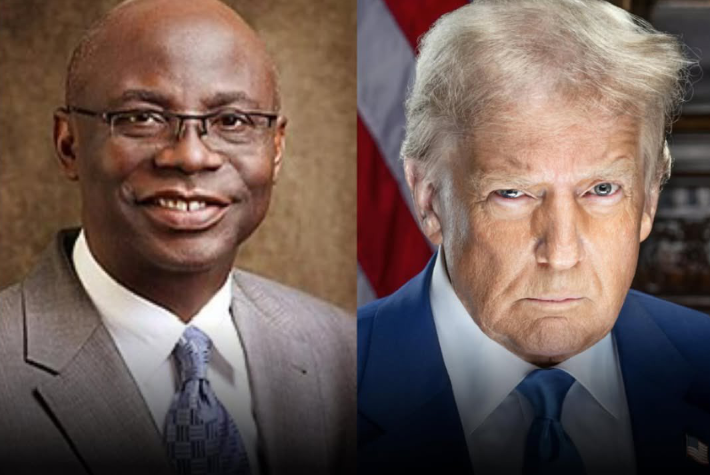
Trump’s Eyes on Nigeria’s Oil? Tunde Bakare Sparks Fierce Debate With Bold Claims
Pastor Tunde Bakare has once again ignited national conversation after alleging that former U.S. President Donald Trump’s growing interest in Nigeria is not rooted in humanitarian concerns, but in a calculated pursuit of the country’s vast oil and mineral wealth. Speaking during his latest State of the Nation Address, the
Pastor Tunde Bakare has once again ignited national conversation after alleging that former U.S. President Donald Trump’s growing interest in Nigeria is not rooted in humanitarian concerns, but in a calculated pursuit of the country’s vast oil and mineral wealth. Speaking during his latest State of the Nation Address, the Serving Overseer of the Citadel Global Community Church claimed that Trump’s recent posture toward Nigeria — including placing the country on the “Country of Particular Concern” (CPC) list and amplifying claims of Christian g+nocide — is tied to strategic economic and geopolitical motives.
According to Bakare, the Trump administration’s actions are far from coincidental. He argued that Nigeria’s natural resources, including its massive oil reserves, mineral deposits, and expanding real estate and technology sectors, have positioned the nation as a lucrative target in Trump’s broader global agenda. He described the former U.S. president not as an ideologically driven leader, but as one whose decisions are deeply transactional, often revolving around business interests rather than diplomacy or humanitarian advocacy.
Bakare took his audience back to what he described as a “vision” he had shortly after Trump’s 2024 election victory. In the vision, Trump was said to have arrived in Lagos wearing Arabian attire, a symbolic image that Bakare interpreted as an indication of the former president’s alignment with Middle Eastern interests and global oil power blocs. To him, the attire was not merely clothing but a “signal” that Trump’s dealings with Nigeria would be heavily influenced by Middle Eastern politics, petroleum interests, and emerging technology networks that link several global powers.
He emphasized that the symbolism also carried religious undertones, which he warned could inflame social tensions if not handled carefully by Nigerian leadership. He urged the government to pay close attention to these signals, stressing that such geopolitical dynamics, if mismanaged, could deepen religious divides and fuel unrest in a country already battling instability.
Bakare did not mince words in listing the sectors that he believes have placed Nigeria directly on Trump’s radar. Oil topped the list, followed by the nation’s minerals, real estate opportunities, and its strategic relevance in the value chain of global emerging technologies. He argued that the former U.S. president views Nigeria as not just a nation but a “business opportunity,” and that his administration’s foreign policies are shaped to maximize economic advantage.
He urged the Nigerian government to avoid being caught unprepared. Rather than engaging the U.S. through reactive policies or defensive diplomacy, Bakare advised President Bola Tinubu to design a comprehensive business plan that both appeals to Trump’s interests and protects Nigeria’s long-term stability. According to him, the best way to manage a transactional leader is to respond with strategic, mutually beneficial transactions — not sentiment.
Bakare insisted that Nigeria must scale up its internal capacity, especially in sectors like security, education, industrialisation, and advanced technology. He believes the country should use diplomatic engagement with the U.S. as a platform to attract technological transfer, investment in critical industries, and support for national security architecture. With a clear plan, he argued, Nigeria could turn external interest — even one motivated by self-gain — into national advantage.
However, he cautioned that such gains are impossible without first addressing Nigeria’s deteriorating security landscape. In one of the most striking moments of his address, Bakare described the persistent killings and unrest across the Middle Belt, North-West, and South-East as a “sh@me on the Nigerian state.” He criticised the government’s tendency to focus on military recruitment and procurement, insisting that true reform requires deeper and more strategic approaches.
He proposed a national apology to victims of violence — a symbolic yet powerful gesture he believes could help rebuild trust between citizens and the state. Beyond that, he called for a comprehensive Victims and Survivors Register to ensure accountability and recognition for those affected by years of conflict. He also advocated for a stronger presence of military and paramilitary forces in vulnerable areas, alongside sophisticated surveillance systems capable of monitoring threats before they escalate.
One of Bakare’s most significant recommendations was his call for multilayered policing structures. He urged the federal government to move toward state, zonal, and community policing models, all coordinated within a national security framework. According to him, Nigeria’s current centralised police structure is outdated, ineffective, and incapable of responding to the complex security challenges facing different regions.
Beyond security, Bakare argued that Nigeria’s deepest wounds are rooted in what he termed the “Nigeria Question” — an ongoing national struggle involving identity, dignity, equity, coexistence, and governance. He insisted that the country’s issues cannot be solved through economic policies or military strategies alone, but through genuine structural reforms that redefine what it means to be Nigerian.
He maintained that until Nigeria resolves the contradictions within its national identity, its political struggles, social conflicts, and economic stagnation will persist. He called for courageous leadership that is willing to confront these foundational questions head-on rather than offering temporary fixes or politically convenient rhetoric.
Bakare’s comments have since sparked intense public debate. Some view his take as a necessary warning about the risks of foreign exploitation in an era of global economic competition. Others believe his interpretation of Trump’s motives — particularly his account of the symbolic Arabian attire — is speculative. Yet, many agree that his concerns about Nigeria’s internal vulnerabilities are valid, especially at a time when the country faces increasing security threats, economic pressures, and geopolitical interest from major world powers.
Whether one sees Bakare’s remarks as prophetic, political, or provocative, they have undeniably resurfaced critical conversations about Nigeria’s place in the global order and the urgent need for strategic leadership at home. As Nigeria navigates its relationship with international actors like Trump and the United States, Bakare’s message is clear: the nation must not approach global diplomacy with naivety or emotional sentiment. Instead, it must move boldly, intelligently, and strategically — leveraging its resources while protecting its sovereignty.
In a world where nations act based on interest, not friendship, Bakare’s call serves as a reminder that Nigeria must define and defend its own interests or risk becoming a pawn in global power plays.
Share this post
Related Posts

“Donate It to an Orphanage” – Pastor Paul Enenche Rejects ₦30 Million Crusade Donation from Kebbi State Governor
In a moment that has stirred both surprise and admiration across the Nigerian religious and...
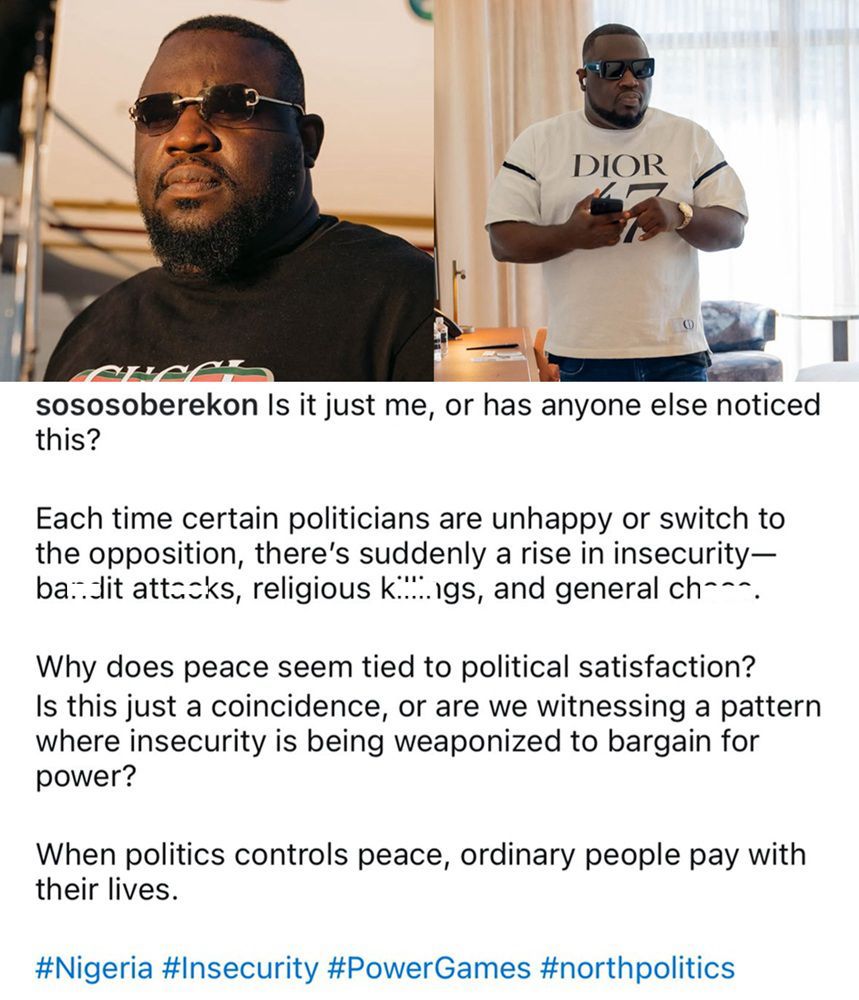
Soso Soberekon Sparks National Debate as He Links Nigeria’s Insecurity to Political Power Plays
In a country constantly grappling with issues of banditry, kidnappings, and religious violence, Nigerian music...

“The War on Fake Sneakers: How One Tweet Sparked a Bigger Conversation About Class, Image, and the Pressure to Look ‘Real’”
It started like many online debates do these days: a simple tweet, tossed casually into...