Entertainment
Why I can’t love Nigeria — Rapper Azealia Banks explains as she calls for IPOB freedom and slams Rema
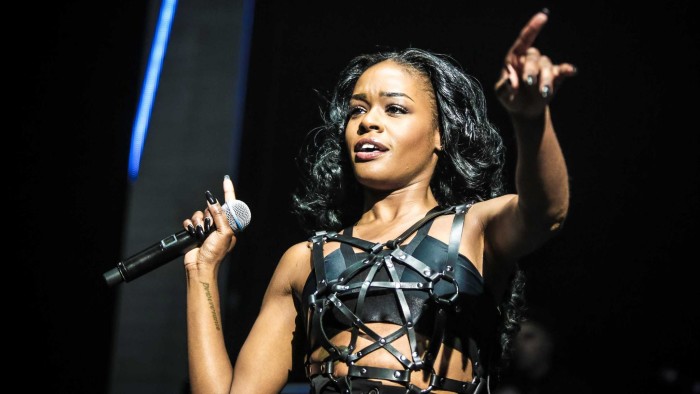
Controversial American rapper Azealia Banks has once again ignited a global firestorm, this time dragging Nigeria, its culture, its music industry, and one of its brightest Afrobeats stars into the center of her latest racial and cultural outburst. Appearing on the Cheapy’s Two Cents podcast, Banks unleashed a tirade that many Nigerians have described as deeply offensive, ignorant, and deliberately inflammatory, as she openly declared why she “can’t love Nigeria,” questioned the nation’s cultural identity, mocked its language, and issued a bizarre political call for the freedom of the Indigenous People of Biafra, IPOB.

What might have been a forgettable podcast appearance swiftly exploded into a viral controversy after video clips of her comments flooded social media platforms, triggering outrage across Nigeria and the African diaspora. In one of her most widely circulated statements, Banks said she had no interest in listening to Nigerian music performed in pidgin, insisting she would rather hear patois instead. She then went a step further by making a highly offensive linguistic claim, asserting that the word “Nigerian” literally meant “nigga’ria,” a remark many Nigerians described as racist, insulting, and rooted in a staggering misunderstanding of African history.
As the backlash intensified, Banks doubled down rather than retreating. “I can’t love Nigerians as they want to be loved,” she declared, a line that quickly became one of the most reposted and criticized quotes from the podcast. In the same breath, she delivered perhaps the most explosive statement of all when she claimed that “Nigeria has no culture,” dismissing what she described as shallow expressions of identity and creativity. For millions of Nigerians who view their country as one of Africa’s richest cultural melting pots, home to over 250 ethnic groups, languages, traditions, and artistic legacies, the comment landed as a direct insult to the nation’s soul.
Her comments did not stop at abstract culture. Banks turned her attention to Afrobeats, the globally dominant genre that has carried Nigerian music to the world’s biggest stages. In a personal attack that quickly went viral, she dismissed superstar singer Rema as a “skinny little boy” and mocked his artistry, saying she had no interest in “such boys’ music.” The attack stunned many fans, especially given Rema’s massive international success, chart domination, and influence in shaping the new generation of African pop on the global scene.
Yet even amid her sweeping condemnation of Nigeria and its mainstream sound, Banks carved out one striking exception. She singled out Tiwa Savage for praise, describing the award-winning singer as “exceptional” and stating that she is the only Nigerian artist she truly enjoys listening to. The selective approval only intensified the online debate, with many questioning how Banks could dismiss an entire nation’s culture while elevating a single artist as worthy of recognition.
The political element of her comments further complicated the uproar. Banks openly called for the freedom of IPOB, a proscribed separatist group in Nigeria whose leader has been at the center of contentious legal and political battles. Her intervention into Nigeria’s sensitive internal security and secession debate drew sharp criticism from those who accused her of exploiting a complex national issue for attention, without understanding the historical, ethnic, and constitutional dimensions involved.
Within hours of the podcast clips going viral, Nigerian social media erupted. Afrobeats fans flooded X, Instagram, and TikTok with videos, hit songs, cultural documentaries, and historical references celebrating Nigeria’s global cultural footprint. Hashtags defending Nigerian culture trended as users pushed back against what they saw as deliberate provocation wrapped in ignorance. Many reminded Banks that Nigerian artists currently dominate club playlists across Europe, the U.S., South America, and Asia, and that Afrobeats has evolved into one of the most powerful cultural exports from the Global South in modern pop history.
Rema’s fans were particularly vocal. Supporters defended his artistry, stage presence, and creative vision, pointing to his sold-out international tours, Billboard chart success, and influence among Gen Z audiences worldwide. Others noted the irony of Banks attacking younger artists while her own public image has long been defined by controversy rather than consistent musical dominance.
At the same time, Tiwa Savage’s unexpected inclusion in the controversy sparked its own wave of reactions. While many agreed that Tiwa’s legacy as a pioneer of modern Afrobeats is undeniable, others argued that Banks’ praise felt less like genuine admiration and more like a convenient shield against total backlash. Some fans accused her of attempting to divide Nigerian artists while still positioning herself as a supposed connoisseur of African music.
Beyond the entertainment angle, cultural commentators warned that Banks’ remarks reflect a broader pattern of outsiders making sweeping judgments about African identity based on stereotypes, limited exposure, and internet narratives. To many Nigerians, her claim that “Nigeria has no culture” was not merely offensive but historically absurd, given the country’s globally studied literature, fashion, film industry, religious diversity, traditional institutions, and artistic heritage that predates colonial borders.
The controversy also reopened long-running criticisms of Azealia Banks’ public behavior. Over the years, the rapper has repeatedly found herself at the center of racial, cultural, and celebrity feuds, often using provocative language that generates viral attention but isolates her from mainstream industry support. For critics, the Nigeria outburst fits neatly into a familiar pattern of controversy used as currency.
As of now, neither Rema nor Tiwa Savage has responded publicly to Banks’ comments. Nigerian music industry figures have largely avoided direct engagement, with many choosing instead to amplify Nigerian achievements rather than dignify the remarks with extended rebuttals. However, fans continue to dissect every word, every clip, and every follow-up post in what has become one of the most heated Afrobeats-related controversies of the year.
What remains undeniable is that Banks’ comments have struck a nerve far beyond music. They touched on race, language, national pride, political struggle, and cultural identity, forcing Nigerians and Africans in the diaspora to once again confront how they are spoken about in global pop spaces. In trying to explain why she “can’t love Nigeria,” Banks may have unintentionally unified millions in explaining exactly why they do.
In the end, while Azealia Banks walked into the podcast studio armed with words meant to provoke, she walked out having triggered a worldwide defense of Nigerian culture, Afrobeats, and the very identity she attempted to dismiss. In today’s digital age, where narratives spread at lightning speed, one reckless monologue was enough to remind the world that Nigeria’s culture does not need validation from controversy — its global impact already speaks louder than any insult ever could.
Popular Posts

“‘Women Are Really Funny Creatures’ — Nigerian Man Shares Bizarre Late-Night Chat That Left Social Media Buzzing”
10 Dec, 2025
“He Said He Didn’t Need My Help Anymore” — Lady Shares Emotional Story of Dating a Single Father That Ended Without Warning
10 Dec, 2025
PDP Describes Fubara’s Defection to APC as Self-Inflicted Wound, Expresses Sympathy
10 Dec, 2025Scroll to Top