news
“₦150 Million Can’t Buy My Shoes”: Primate Ayodele, Adelabu, and the Explosive Clash of Power, Prophecy, and Politics
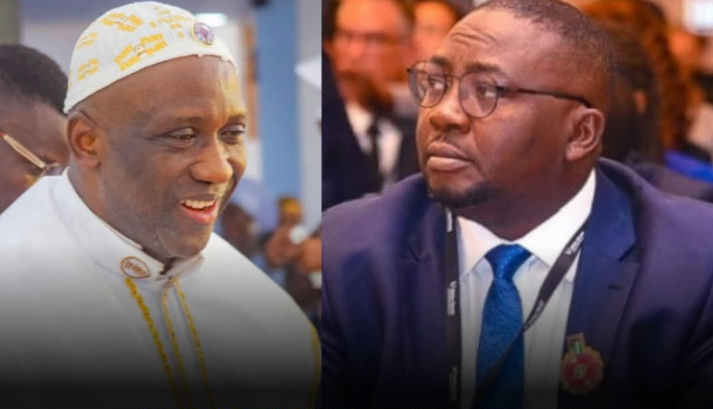
A fresh storm has erupted at the intersection of Nigerian politics and religion following explosive allegations and counter-allegations between the Minister of Power, Adebayo Adelabu, and the outspoken founder of INRI Evangelical Spiritual Church, Primate Elijah Ayodele. What began as a petition alleging extortion has quickly spiraled into a public war of words, complete with sharp insults, dramatic denials, and deep questions about the role of spiritual figures in Nigeria’s political space.
Speaking during a Sunday service at his Lagos church, Primate Ayodele dismissed claims that he demanded ₦150 million from Adelabu in exchange for spiritual intercession ahead of the Oyo State governorship race. With visible anger and a tone laced with mockery, the cleric described the minister as a “small boy” who, in his words, “doesn’t understand what he is saying.” Ayodele insisted that the amount being mentioned was insignificant compared to his wealth, bluntly asking his congregation whether ₦150 million could buy his shoes, let alone his cars or lifestyle.
The controversy stems from a petition reportedly filed by Adelabu to the Department of State Services, in which the minister accused Ayodele of attempting to extort money and materials under the guise of spiritual support. According to Adelabu’s claims, the cleric allegedly requested 1,000 saxophones or trumpets, placing their value between ₦50 million for used, locally sourced instruments and as much as ₦130 million for imported, grade-one versions. The minister further alleged that when he refused to meet these demands, Ayodele retaliated by issuing negative prophecies designed to damage his political image and weaken his chances in future elections.
Adelabu, who previously contested the Oyo governorship twice without success, is believed to be positioning himself for another run in 2027. His petition paints a picture of a desperate political environment where spiritual influence is sought as a strategic advantage, while also suggesting that such influence can be weaponized when expectations are not met. The allegations have sparked intense debate, especially in a country where religious leaders wield enormous moral and social power.
Primate Ayodele, however, flatly rejected the extortion narrative, insisting that it was Adelabu who approached him in desperation, not the other way around. According to the cleric, the minister was willing to offer anything in exchange for becoming governor, driven by frustration and fear of political irrelevance. Ayodele claimed he neither demanded money nor asked for instruments, stressing that he did not collect a kobo from Adelabu and had no interest in using prophecy as a tool for personal enrichment.
In a dramatic response that quickly went viral, Ayodele challenged the logic of the allegations by ridiculing the ₦150 million figure. He portrayed it as an almost laughable sum in the context of his personal wealth, suggesting that the claim insulted both his status and his integrity. His remarks, though provocative, resonated with his followers, many of whom see him as a fearless prophet unafraid to confront political elites.
The cleric further argued that his prophecies are not transactional and are not issued to impress politicians or curry favor. He emphasized that spiritual messages, as he understands them, are revelations meant for public awareness, not commodities to be bought or sold. By framing the allegations as an attack on his spiritual calling, Ayodele positioned himself not just as a victim of false accusations but as a moral authority standing against political manipulation.
At the heart of the dispute is a familiar Nigerian tension: the blurred line between faith and politics. Over the years, several politicians have openly sought endorsements, prayers, and prophecies from prominent clerics, sometimes publicly celebrating favorable predictions and quietly rejecting unfavorable ones. Critics argue that this dynamic encourages exploitation on both sides, while supporters insist that seeking spiritual guidance is a legitimate personal choice in a deeply religious society.
Ayodele’s response also carried a warning, urging the public to ignore what he described as reckless statements from individuals frustrated by political defeat. He portrayed Adelabu’s allegations as the emotional outburst of a man struggling to come to terms with past losses, rather than a credible account of wrongdoing. In doing so, he attempted to shift the narrative from alleged extortion to wounded political ambition.
The minister’s camp, on the other hand, maintains that the petition was filed to protect his reputation and draw attention to what he perceives as unethical conduct. Supporters of Adelabu argue that the issue goes beyond personal insult and touches on a broader need for accountability among influential religious figures who engage with politicians behind closed doors. They insist that no one, regardless of spiritual status, should be above scrutiny.
As the matter gains traction on social media and in public discourse, Nigerians are sharply divided. Some see Primate Ayodele’s remarks as unnecessarily arrogant and dismissive, while others applaud his boldness and perceive the allegations against him as politically motivated. Meanwhile, the imagery of 1,000 saxophones, ₦150 million figures, and prophetic retaliation has added a surreal quality to an already dramatic saga.
For now, the allegations remain unproven, and neither side appears ready to back down. What is clear, however, is that the clash has reignited conversations about power, influence, and integrity in Nigeria’s democratic process. Whether the dispute ends quietly through security investigations or escalates into a prolonged public battle, it underscores how deeply intertwined religion and politics remain in the country.
In the end, the fiery declaration that “₦150 million can’t buy my shoes” may linger longer in public memory than the original petition itself, serving as a symbol of the egos, ambitions, and contradictions that continue to shape Nigeria’s political and spiritual landscape.
Popular Posts

“A Ticking Time Bomb”: Dotun’s Blunt Warning Sparks Fresh Debate After Peller’s Car Crash Drama
15 Dec, 2025
FRSC Warns Celebrities as TikToker Peller Faces Prosecution Over Road Crash
15 Dec, 2025
19-Year-Old Girl Allegedly Stabs Boyfriend to Death During Infidelity Fight in Ogun State
15 Dec, 2025Scroll to Top