Entertainment
“A Wife Is a Wife Before a Wife Is a Wife”: Jada P Sparks Online Debate After Fan’s Advice on Wizkid Relationship
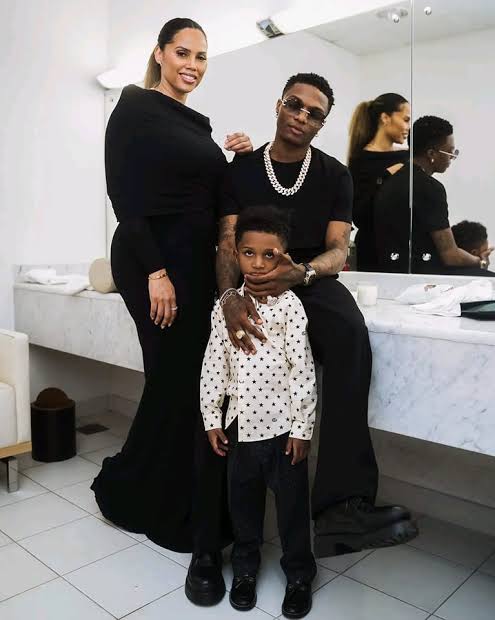
A brief exchange on social media between Jada Pollock, the longtime partner and mother of Wizkid’s children, and a fan has ignited a wider conversation online about marriage, womanhood, and the persistent pressure placed on women in high-profile relationships. What began as a seemingly simple piece of unsolicited advice quickly evolved into a viral moment, drawing reactions from fans, critics, and commentators across Nigeria and beyond.
The exchange unfolded on X, formerly Twitter, where Jada, known online as @jada3p, shared a short post that read, “Someone’s Mum & Dad. it’s possible.” The post, which many interpreted as a reflection on family, partnership, or the idea of stability outside traditional labels, immediately attracted attention. Among the replies was a comment from a user identified as Blade Ernest, who advised her to “Work on becoming the wife, don’t give chance to any other woman.” The statement echoed a familiar narrative often directed at women in long-term relationships with powerful or wealthy men, suggesting that responsibility for securing marriage rests primarily on the woman.
Jada’s response was swift and concise, but layered with meaning. “A wife is a wife before a wife is a wife,” she replied. The sentence, brief yet deliberately phrased, immediately resonated with many users, who interpreted it as a rejection of the idea that a woman’s worth, commitment, or legitimacy is defined solely by a marital title. Within hours, screenshots of the exchange were circulating widely, with thousands weighing in on what Jada meant and why her words struck such a nerve.
For years, Jada Pollock has been a subject of public scrutiny due to her relationship with Wizkid, one of Africa’s biggest music stars. As his partner and the mother of his children, she has often been placed under an intense spotlight, with fans frequently speculating about marriage, loyalty, and the dynamics of their private life. While Wizkid himself is known for keeping personal matters relatively guarded, Jada has repeatedly found herself at the center of conversations that blur the line between public interest and intrusion.
Many supporters praised her response as mature, self-assured, and quietly defiant. To them, her words suggested that being a “wife” is not merely a legal status conferred by a wedding ceremony, but a role defined by character, partnership, and mutual respect long before any formal recognition. Some interpreted her statement as a reminder that commitment and value exist independently of societal labels, especially in relationships that do not conform to traditional timelines or expectations.
Others saw the reply as a subtle critique of the tendency to blame women whenever a man in a high-profile relationship does not marry. In celebrity culture, and particularly within African social media spaces, women are often advised to “secure the ring,” “behave like a wife,” or “work harder” to prevent a man from straying, as though fidelity and commitment are rewards earned through performance rather than choices made by both partners. Jada’s comment, many argued, pushed back against this narrative by implying that womanhood and partnership are not auditions for marriage.
The exchange also reopened broader discussions about how fans relate to celebrities and their partners. While admiration for public figures is common, critics of the fan’s comment questioned why strangers feel entitled to instruct women they do not know on how to live their lives or manage their relationships. To some observers, the advice given to Jada reflected a deeper cultural habit of policing women’s behavior, especially when they are associated with successful men.
At the same time, not everyone agreed with Jada’s stance. Some users argued that the fan’s comment, while poorly worded, reflected a traditional viewpoint that values marriage as the ultimate goal of a relationship. From this perspective, encouraging a woman to “become a wife” is seen as practical advice rather than criticism. These users contended that Jada’s response was evasive and did not address the reality that legal marriage carries social and cultural significance, particularly in African contexts.
Still, the overwhelming reaction leaned toward support, with many women sharing personal stories about being judged, advised, or criticized for not fitting into expected marital roles. The phrase “a wife is a wife before a wife is a wife” quickly took on a life of its own, with users applying it to conversations about self-worth, motherhood, and independence. Memes, think pieces, and long threads emerged, unpacking the meaning of the statement and why it resonated so deeply.
The moment also highlighted how social media has become a space where celebrity partners, especially women, are expected to constantly justify their choices. Unlike the celebrities themselves, who often enjoy the benefit of mystique or silence, their partners are frequently pressured to explain, defend, or perform idealized roles for public approval. Jada’s response, in its brevity, appeared to resist that expectation by refusing to over-explain.
In recent years, there has been a noticeable shift in how women in the public eye respond to such scrutiny. Rather than engaging in lengthy defenses, many now opt for short, pointed statements that assert boundaries without inviting further debate. Jada’s reply fits neatly into this pattern, offering just enough to make a point while leaving interpretation open.
As the conversation continues, what remains clear is that a single sentence can expose deeply held beliefs about gender, marriage, and power. Whether viewed as philosophical, defensive, or empowering, Jada Pollock’s response has forced many to confront why the title of “wife” carries so much weight, and why women are so often tasked with earning it in the court of public opinion.

In the end, the viral exchange was about more than Wizkid, Jada, or one fan’s advice. It became a mirror reflecting society’s ongoing struggle to reconcile tradition with evolving ideas of partnership and self-definition. And in just a few words, Jada managed to remind the internet that titles may change, but identity and worth do not begin or end with a ring.
Popular Posts

FG Eyes N150bn Windfall as Nigeria Moves to Formalise Vehicle Recycling Industry
22 Dec, 2025
“Rotting Our Brains?” Elon Musk Sounds the Alarm on Short-Form Videos and the Cost of Constant Scrolling
22 Dec, 2025
“We Will Not Be Silenced”: Why Nicki Minaj Says She Spoke Out on Alleged Persecution of Christians in Nigeria
22 Dec, 2025Scroll to Top