Entertainment
“We Will Not Be Silenced”: Why Nicki Minaj Says She Spoke Out on Alleged Persecution of Christians in Nigeria
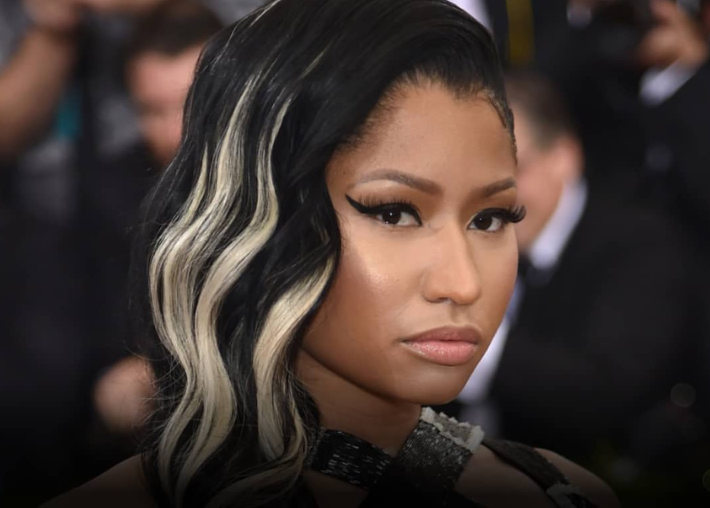
American rap superstar Nicki Minaj has offered a detailed explanation for why she chose to publicly address claims of persecution against Christians in Nigeria, a move that has sparked intense discussion across social media, religious circles, and political spaces. Speaking during a surprise appearance at AmericaFest on Sunday, Minaj said her comments were driven by personal connections to Nigeria and disturbing reports she had encountered about violence against worshippers.
The Grammy-nominated artist made the remarks while responding to a question from Erika Kirk, the widow of conservative commentator Charlie Kirk, during an onstage exchange that quickly gained attention online. Known primarily for her music, fashion influence, and outspoken personality, Minaj’s foray into a sensitive global issue marked a notable shift from entertainment to advocacy, drawing both praise and criticism.
Explaining her motivation, Minaj said Nigeria has long held a special place in her heart. She revealed that her pastor is Nigerian and that she has built close relationships with many Nigerians over the years, including fans she affectionately refers to as “Nigerian barbs.” According to her, these personal ties made it impossible for her to ignore reports of religiously motivated attacks that she said were coming out of the country.
“Nigeria is a place I’ve always loved,” Minaj told the audience. “Someone very dear to me, my pastor, is Nigerian, and I have lots of Nigerian barbs. So hearing that people are being kidnapped while they’re in church, people are being killed, brutalised, all because of their religion — that should spark outrage.”
Her comments immediately resonated with sections of the global Christian community who have long argued that violence against Christians in parts of Nigeria does not receive enough international attention. For years, human rights groups, religious organizations, and security analysts have debated the nature of attacks in the country, particularly in regions affected by insurgency, banditry, and communal conflict. While some frame the violence largely in religious terms, others point to a complex mix of factors including poverty, land disputes, weak security structures, and criminal activity.
Minaj, however, emphasized that regardless of how the crisis is categorized, the loss of innocent lives while people are gathered to worship should never be normalized. She said her decision to speak publicly was not about politics, but about conscience and empathy.
“We’re not backing down anymore,” she added. “We are not going to be silenced by the bullies anymore. We will speak up for Christians wherever they are in this world.”
That declaration drew loud applause from sections of the AmericaFest crowd and was widely shared across social media platforms within hours. Supporters applauded Minaj for using her global platform to highlight what they see as an overlooked humanitarian and religious issue. Many Nigerian Christians online expressed gratitude, saying her voice amplified concerns they have raised for years with little global response.
Others, however, urged caution, arguing that the situation in Nigeria is far more complex than it often appears in international headlines. Critics warned that framing the crisis solely as religious persecution risks oversimplifying deep-rooted security challenges and could unintentionally inflame tensions in a country already struggling with ethnic and religious divides. Some Nigerian commentators also pointed out that Muslims and people of other faiths have similarly been victims of violence in different parts of the country.
Despite the backlash, Minaj’s supporters say her comments should be understood as a call for compassion rather than a policy statement. They note that artists have historically played roles in drawing attention to social injustices, from war and racism to poverty and human rights abuses. In this view, Minaj’s remarks are part of a broader tradition of celebrities leveraging fame to spotlight issues that move them personally.
The rapper herself appeared aware that her words might generate controversy. During her remarks, she stressed that speaking out was a moral decision, not an attempt to insert herself into Nigeria’s internal politics. According to her, silence in the face of suffering is no longer acceptable, especially when credible reports suggest that people are being targeted while practicing their faith.
Minaj’s intervention also highlights the growing intersection between celebrity culture and global advocacy in the digital age. With millions of followers across platforms, a single statement from a star of her magnitude can reach audiences that traditional human rights reports often struggle to engage. That reach, however, comes with heightened scrutiny, as every word is parsed, debated, and sometimes weaponized in online discourse.
In Nigeria, reactions were mixed but intense. Some Christian leaders welcomed the attention, saying international voices can help pressure governments and global institutions to take security concerns more seriously. Others urged foreign commentators to engage more deeply with local realities and listen to a broad range of Nigerian voices before drawing conclusions.
What remains clear is that Minaj’s comments have reignited global conversation about Nigeria’s security challenges and the experiences of religious communities within the country. By tying the issue to her personal relationships and faith connections, she framed her decision as one rooted in empathy rather than trend-chasing.
As debates continue, Minaj has not indicated any intention to retract or soften her remarks. Instead, her message at AmericaFest suggested resolve. For her, speaking up is no longer optional when people she feels connected to are affected by violence, regardless of borders or politics.
In a world where celebrity statements often fade as quickly as they trend, Minaj’s comments stand out for the seriousness of their subject and the conviction behind them. Whether they lead to deeper understanding or further controversy, they have ensured that the conversation around alleged persecution of Christians in Nigeria has once again entered the global spotlight.
Popular Posts
FG Eyes N150bn Windfall as Nigeria Moves to Formalise Vehicle Recycling Industry
22 Dec, 2025
“Rotting Our Brains?” Elon Musk Sounds the Alarm on Short-Form Videos and the Cost of Constant Scrolling
22 Dec, 2025
“We Will Not Be Silenced”: Why Nicki Minaj Says She Spoke Out on Alleged Persecution of Christians in Nigeria
22 Dec, 2025Scroll to Top