Entertainment
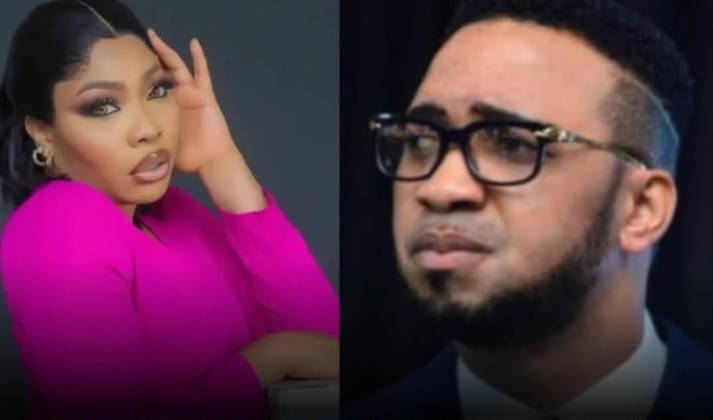
Broken Promises and Public Fallout: Actress Doris Ogala Takes Legal Aim at Pastor Chris Okafor Over Alleged Marriage Pledge
What began as a deeply personal revelation has quickly escalated into a public controversy that is gripping social media and the entertainment space, as Nollywood actress Doris Ogala has declared her intention to sue popular clergyman Pastor Chris Okafor over what she describes as a broken promise of marriage. The actress made the startling announcement during a recent live discussion with outspoken media personality Daddy Freeze, turning what could have remained a private dispute into a full-blown public spectacle that has sparked debate about relationships, accountability, faith leaders, and the legal boundaries of romantic promises.
Speaking candidly during the live session, Ogala alleged that Pastor Okafor had repeatedly assured her of marriage, assurances she says she took seriously and relied upon emotionally. According to her, the situation took a dramatic turn when she discovered that the pastor had gone ahead to marry another woman, a decision she believes directly contradicts commitments he allegedly made to her. For Ogala, the issue is not merely emotional betrayal but one she insists has legal implications, forming the basis of her decision to seek redress in court.
Throughout the conversation, the actress appeared resolute, expressing frustration and disappointment as she recounted the trajectory of her relationship with the clergyman. She framed her claims around the idea that promises were made in clear terms and that those promises influenced her actions and expectations at the time. In her view, the pastor’s subsequent marriage to another woman represents a breach serious enough to warrant legal action, a stance that has divided public opinion almost instantly.
Daddy Freeze, known for his no-holds-barred approach to controversial topics involving religion and celebrity culture, pressed Ogala on several sensitive aspects of her claims. One of the most striking moments came when he questioned her about the timeline of the relationship, particularly whether it overlapped with her marriage to her former husband. Ogala did not shy away from the question and admitted, in her own words, that she engaged in phone-based intimacy with Pastor Okafor during that period. She described the exchanges as inappropriate and acknowledged that she was not proud of her actions, but she was careful to draw a line between emotional or digital intimacy and physical involvement.
“Was I chatting on my husband through phone intimacy? Yes, I did,” Ogala admitted during the live discussion, a statement that immediately fueled intense reactions online. She emphasized, however, that there was no physical relationship between her and the pastor at the time, insisting that their interaction remained limited to phone communication. Her admission, while candid, has opened her up to criticism from some quarters, even as others have praised her for what they see as honesty and vulnerability.
As the conversation progressed, questions arose about evidence. Daddy Freeze asked whether she had tangible proof to back up her allegations, a crucial issue given her stated intention to pursue legal action. Ogala responded confidently, claiming she had preserved chat records, screen recordings, and even a video that she says clearly displays the date and the phone number of the recipient. According to her, these materials would substantiate her claims and demonstrate that the alleged promises were not fabricated.
However, Daddy Freeze was quick to caution her about the potential legal pitfalls of making such private communications public. He warned that releasing chats or recordings without consent could expose her to legal consequences, particularly concerning privacy laws and the unauthorized sharing of personal conversations. His warning added another layer of complexity to the unfolding saga, highlighting that while Ogala may feel wronged, the path she chooses to vindicate herself could carry risks of its own.
Despite the caution, Ogala appeared undeterred. She insisted that she had already consulted her lawyer and given instructions for the matter to be taken up formally. In her view, the legal system is the appropriate arena to resolve the dispute, and she maintained that she is prepared to present whatever evidence she has before a court of law. Her determination suggested that this is not merely a moment of emotional outburst but a step she has thought through, regardless of how messy or public the process might become.
The situation has triggered widespread debate online, with opinions sharply divided. Some social media users have expressed sympathy for Ogala, arguing that promises of marriage, especially when made repeatedly and convincingly, can have serious emotional and psychological consequences when broken. Others, however, have questioned the legal viability of such a case, noting that proving a promise of marriage, particularly in a non-traditional context and involving private communications, can be extremely challenging under Nigerian law.
There has also been significant discussion around the moral and ethical dimensions of the story, especially given that it involves a prominent pastor. Critics have used the opportunity to question the conduct of religious leaders and the expectations placed upon them, while supporters of Pastor Okafor have urged the public to reserve judgment until he responds or the facts are fully established. As of the time of filing this report, Pastor Chris Okafor has not made any public statement addressing the allegations, leaving a vacuum that speculation has been quick to fill.
For now, the story remains one of allegations and counter-questions, with no official legal filing publicly confirmed and no response from the accused party. Yet, the intensity of the discussion suggests that this issue is far from fading quietly. Whether it ultimately becomes a landmark legal case or dissolves into another episode of celebrity controversy, the situation has already reignited conversations about trust, promises, personal responsibility, and the often-blurry line between private relationships and public accountability in the age of social media.
As Nigerians watch closely, one thing is clear: Doris Ogala’s decision to take her grievances into the public sphere has ensured that this story will continue to evolve under intense scrutiny. Until the courts, or the parties involved, provide clearer answers, the allegations, denials, and debates surrounding this high-profile fallout are likely to remain a dominant topic in entertainment and social discourse.
Popular Posts

“Please Stop Mocking Peller”: Jarvis Calls for Compassion as She Confirms Their Relationship Is Over—for Now
16 Dec, 2025
“Confess Your Own”: Olakunle Churchill Faces Backlash After Cryptic Post Sparks Online Storm Following Tonto Dikeh’s Viral Testimony
16 Dec, 2025
Jarvis Relocates to UK After Breakup With Peller as TikTok Love Story Ends in Chaos
16 Dec, 2025Scroll to Top