Entertainment
“Confess Your Own”: Olakunle Churchill Faces Backlash After Cryptic Post Sparks Online Storm Following Tonto Dikeh’s Viral Testimony
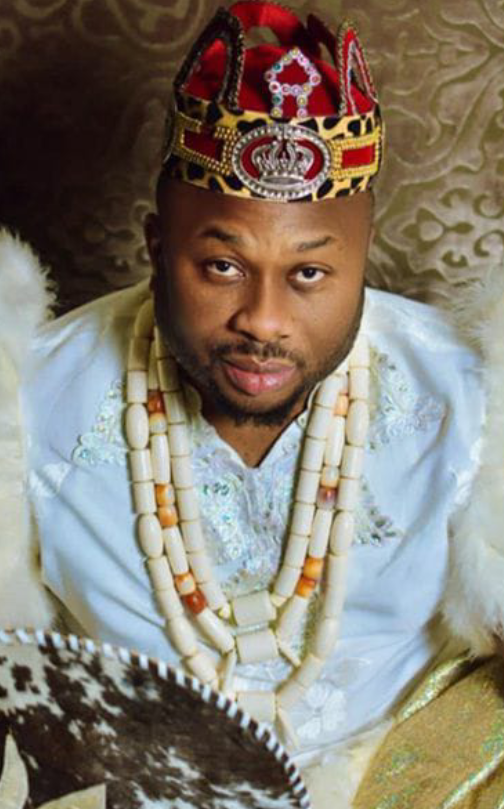
Businessman and philanthropist Olakunle Churchill has found himself at the center of a heated social media storm after a seemingly reflective post about “true confession” ignited intense reactions from Nigerians online, many of whom interpreted it as a subtle jab at his ex-wife, Nollywood actress Tonto Dikeh, whose emotional testimony video had gone viral just days earlier. What might have passed as a harmless inspirational message quickly snowballed into a full-blown digital controversy, drawing sharp criticism, divided opinions, and renewed scrutiny of a relationship that has long fascinated and polarized the public.
Churchill’s post, shared on his social media page, read: “True confession lightens the soul, makes life easier, and gives room for peace, healing, and renewal.” On the surface, the message appeared to echo familiar religious and motivational sentiments often shared online. However, the timing of the post proved to be its most contentious element. It came shortly after Tonto Dikeh’s widely circulated church testimony, where the actress spoke passionately about pain, healing, faith, and personal transformation, a moment many viewers described as raw, vulnerable, and deeply spiritual.
Almost immediately, Churchill’s comment section was flooded with reactions, with many followers accusing him of indirectly mocking or trivializing Dikeh’s testimony. Some commenters did not mince words, urging him to take his own advice. One user bluntly wrote, “Go and confess yours. You are surely not without sin,” a sentiment echoed by dozens of others who felt the businessman had no moral ground to stand on given the history between the former couple.
Supporters of Tonto Dikeh were particularly vocal, defending her character and faith while condemning what they perceived as opportunism. “She’s a good woman and a woman of God,” one commenter insisted, while another added, “How dare you take advantage of situations and mock her. She is stronger; you are the one still pretending and hiding.” For these users, Churchill’s post was not merely poorly timed but deliberately provocative, reopening old wounds and attempting to reclaim relevance through controversy.
The backlash also revived long-standing accusations and unresolved narratives surrounding the collapse of Churchill and Dikeh’s marriage, which ended years ago amid allegations of infidelity, emotional abuse, and irreconcilable differences. One particularly scathing comment read, “How did you end up cheating on her and marrying your sister? Confess yours so that you can be delivered and liberated.” Though such claims remain part of the public rumor mill rather than proven facts, their resurfacing highlights how quickly social media can resurrect past controversies when emotions are already running high.
Not all reactions were condemnatory, however. Some users dismissed the outrage as unnecessary overinterpretation, arguing that Churchill’s words were generic and not explicitly directed at anyone. “Nheme, you just want to start controversy where there’s none,” one commenter wrote, reflecting a faction of followers who believe the internet is too eager to read hidden meanings into every celebrity post. Another simply labeled the backlash as attention-seeking behavior, suggesting that critics were projecting their own biases onto an otherwise neutral statement.
Still, in the court of public opinion, perception often matters more than intent. In an era where celebrities’ personal lives are dissected in real time, the line between coincidence and commentary can be dangerously thin. For many Nigerians, especially those emotionally invested in Tonto Dikeh’s journey, the post felt less like spiritual reflection and more like a calculated move that lacked empathy.
Tonto Dikeh herself did not directly respond to Churchill’s post, maintaining silence as debates raged online. Her decision not to engage only amplified public interest, with supporters praising her restraint and critics interpreting the silence in various ways. In recent years, Dikeh has spoken openly about personal growth, motherhood, and faith, often positioning herself as someone focused on healing rather than public feuds. This narrative has resonated strongly with fans, making any perceived slight against her particularly sensitive.
The episode underscores a recurring pattern in Nigerian celebrity culture, where past relationships continue to shape present reputations. Even years after separation, former partners remain linked in public consciousness, with one person’s actions often interpreted through the lens of shared history. For Churchill, whose public image blends business success with philanthropy and occasional controversy, the incident is a reminder of how quickly goodwill can be eroded by a single post.
It also raises broader questions about responsibility and timing in the digital age. While public figures are entitled to express their thoughts, the context in which those thoughts are shared can dramatically alter their reception. A message about confession and healing, posted at a different time, might have attracted praise instead of backlash. Shared when emotions are raw and narratives are unresolved, it becomes fuel for suspicion and outrage.
As the dust settles, the controversy shows no clear winners. Churchill has not issued a clarification or apology, and the comments under his post remain a digital battleground of faith, blame, loyalty, and lingering resentment. Tonto Dikeh continues with her life and career, buoyed by a strong base of supporters who see her as a symbol of resilience. Meanwhile, the online community remains divided, debating whether the uproar reflects genuine moral concern or simply the internet’s appetite for drama.

In the end, the incident serves as yet another example of how words, even when carefully phrased, can take on lives of their own once released into the public sphere. For celebrities navigating fame, faith, and fractured pasts, silence or sensitivity can sometimes speak louder than inspirational quotes. And for the public watching closely, every post becomes a potential statement, every timing a possible message, and every controversy a mirror reflecting deeper social emotions that refuse to stay buried.
Popular Posts

“I Owe You Loyalty Forever”: IVD’s Emotional Tribute to Blessing CEO After Release From Prison Custody
16 Dec, 2025
Nigeria Back in the 2026 World Cup Race as FIFA Probes DR Congo Eligibility, Analyst Reveals
16 Dec, 2025
“The Bouquet Is the Message”: Odumodublvck’s Dollar Demand Sparks a New Debate on Love, Clout, and the Cost of Romance in Nigeria
16 Dec, 2025Scroll to Top