news
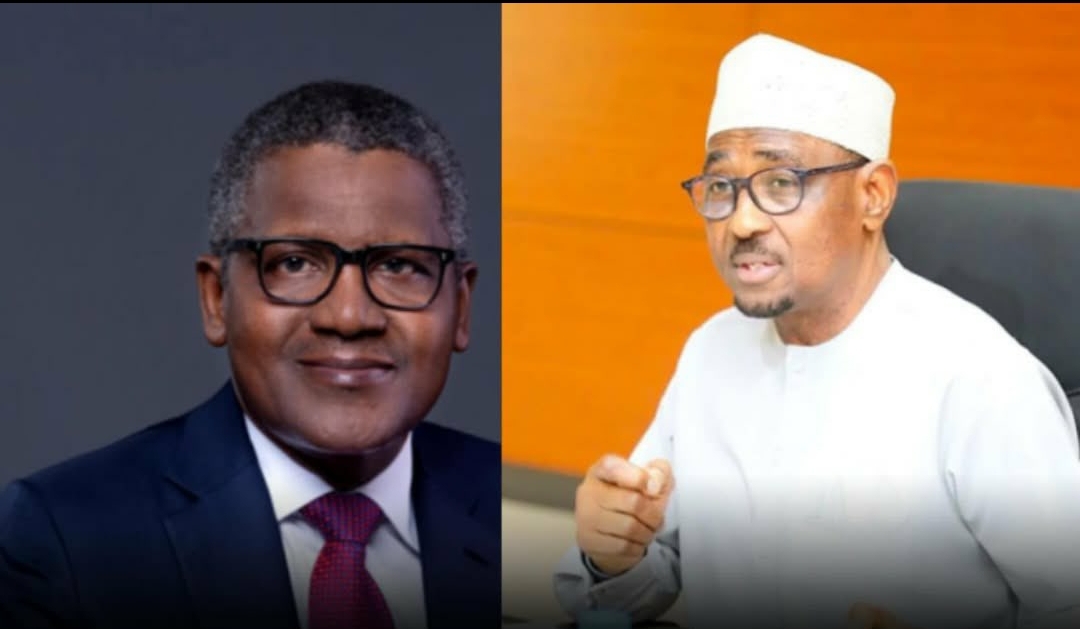
Dangote Calls Out NMDPRA Boss Farouk Ahmed Over Alleged $5 Million Swiss School Fees, Slams “Corruption Killing Nigeria’s Oil Sector”
Africa’s richest man, Aliko Dangote, has ignited a fresh national controversy after openly criticizing the Chief Executive of the Nigerian Midstream and Downstream Petroleum Regulatory Authority (NMDPRA), Farouk Ahmed, over what he described as excessive and suspicious spending on his children’s education abroad, alongside what he sees as deep-rooted failures in Nigeria’s oil and refining sector.
Speaking with rare bluntness, Dangote lamented what he called the deliberate destruction of Nigeria’s petroleum industry by corrupt officials who, according to him, profit personally while sabotaging national progress. He argued that Nigeria, by every natural and structural advantage, should already be the refining hub not just for West Africa but for the entire sub-Saharan African region.
“Nigeria is supposed to be the refining hub of not even West Africa, but of the sub-Saharan Africa region,” Dangote said. “We have the crude and we have the refineries. If our own continues to work, we have the NNPC refineries. A million tons can feed the entire West Africa and Central Africa. And I don’t know why we should continue to allow some corrupt government officials to try and destroy the whole sector of the economy.”
However, it was Dangote’s pointed comments about Farouk Ahmed’s family expenses that quickly became the center of public attention. According to the billionaire industrialist, he had received multiple complaints about a regulator whose personal lifestyle raises serious questions about integrity and accountability.
“I’ve actually had people making complaints about a regulator who put his children in secondary school and that secondary school education, which is six years for four of them, cost Nigeria five million dollars,” Dangote said. He emphasized that even with his immense personal wealth, he never spent such sums on his own children’s secondary education. “Even my own children, they didn’t go to those schools; my children went to Nigerian secondary school.”
Dangote went further, directly naming the official involved. “Today, as we speak, the authority’s chief executive, Mallam Farouk, has four children that he educated in Switzerland at the cost of five million dollars for their secondary school education alone, not university,” he stated. The remark immediately triggered outrage and intense debate across social media and political circles, with many Nigerians questioning how a public servant’s income could support such spending.
In one of his most damning statements, Dangote openly challenged the legitimacy of the funds allegedly used. “His income does not match paying this kind of fees,” he said. “At least, even if it was me paying five million dollars for six years for my four children, the tax man has to look at my taxes. We won’t allow this kind of thing to continue. People who have done something wrong must be prosecuted.”
The billionaire’s comments struck a nerve in a country where millions of families struggle to afford basic education. Dangote drew a stark comparison between elite privilege and the reality faced by ordinary Nigerians. “Some children from Sokoto are struggling to pay 100,000 naira as school fees for secondary school,” he said. “The man must come out and explain to Nigerians how he paid five million dollars for six years for his children’s education. We can’t allow this to continue.”
Beyond the education controversy, Dangote framed the issue as symbolic of a wider national problem — regulators entrusted with protecting Nigeria’s oil and gas sector allegedly undermining it through incompetence, corruption, or personal interest. His comments come at a sensitive time, as Nigeria battles declining refining capacity, fuel import dependence, and persistent allegations of regulatory capture within the petroleum industry.
Public reaction has been swift and polarized. Many Nigerians praised Dangote for “saying what others are afraid to say,” hailing his intervention as a rare moment of elite accountability. Others have called for immediate investigations by anti-graft agencies, insisting that if the claims are false, Farouk Ahmed should publicly clear his name, and if true, face prosecution.
Some critics, however, argue that allegations of this magnitude must be handled carefully, warning against trial by public opinion. Still, even among skeptics, there is a growing consensus that transparency is unavoidable, especially given the scale of the figures mentioned and the public office involved.
As of the time of filing this report, Farouk Ahmed and the NMDPRA have not issued an official response addressing Dangote’s allegations. The silence has only intensified speculation and pressure, with Nigerians demanding explanations, financial disclosures, and decisive action.
What is clear is that Dangote’s remarks have reopened a long-simmering debate about governance, accountability, and moral authority in Nigeria’s public service. In a country grappling with economic hardship, rising living costs, and declining trust in institutions, the idea that a regulator could allegedly spend millions of dollars on foreign secondary education has become a lightning rod for public anger.
Whether this moment leads to formal investigations or fades into another unresolved controversy may ultimately test the Nigerian government’s willingness to confront corruption at the highest levels. For now, Dangote’s words continue to echo loudly: a challenge not just to one official, but to a system many Nigerians believe has operated without consequence for far too long.
Popular Posts

“A Ticking Time Bomb”: Dotun’s Blunt Warning Sparks Fresh Debate After Peller’s Car Crash Drama
15 Dec, 2025
FRSC Warns Celebrities as TikToker Peller Faces Prosecution Over Road Crash
15 Dec, 2025
19-Year-Old Girl Allegedly Stabs Boyfriend to Death During Infidelity Fight in Ogun State
15 Dec, 2025Scroll to Top