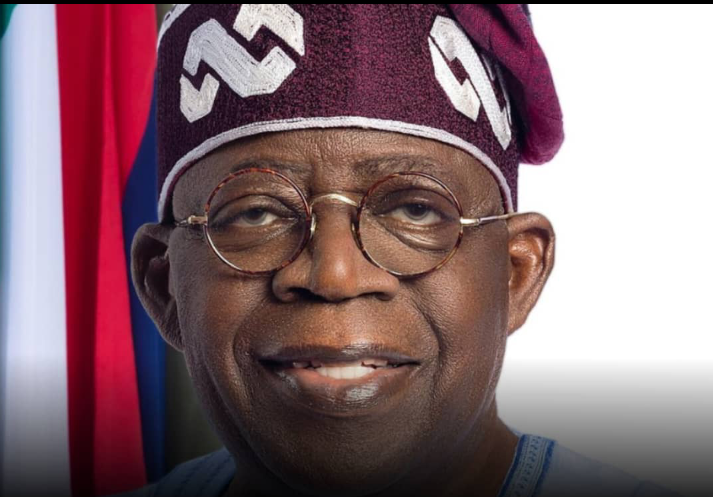
The Federal Government has revealed that it is seeking support from Turkey as part of renewed efforts to confront Nigeria’s deepening insecurity challenges, a move that underscores both the urgency of the situation and the administration’s willingness to explore broader international partnerships in restoring peace across the country. President Bola Tinubu made the disclosure on Friday during a meeting with a delegation of the Christian Association of Nigeria, CAN, led by its President, Archbishop Daniel Okoh, at his residence in Lagos, where discussions focused on national unity, security, and the role of faith-based organizations in stabilizing the nation.
The meeting, confirmed in a statement issued by the President’s Special Adviser on Information and Strategy, Bayo Onanuga, offered rare insight into the government’s thinking on security and the constraints facing Nigeria’s armed forces. Tinubu acknowledged the widespread anxiety among citizens over persistent violence, kidnappings, and attacks in several parts of the country, particularly in areas described as “ungoverned spaces,” where state presence remains weak. While assuring Nigerians that the overall mood of the nation remains peaceful, the President conceded that the security challenge is real and complex, requiring patience, cooperation, and sustained action.
Addressing the CAN delegation, Tinubu urged religious leaders to work closely with his administration in pursuing the country’s collective aspirations, stressing that security is a shared responsibility. He emphasized that some of the measures already implemented by the government would take time before producing visible results, a statement that appeared aimed at tempering public expectations amid growing pressure on the administration to deliver quick solutions. According to the President, Nigeria’s deeply religious character should serve as a unifying force rather than a source of division, calling on faith leaders to maintain focus, vigilance, and cooperation in supporting peace-building efforts.
A key point of Tinubu’s remarks was the confirmation that the long-debated establishment of Community Police and State Police structures remains on the agenda, pending the completion of legislative processes at the National Assembly. The President expressed confidence that these reforms would eventually become a reality, suggesting that decentralizing policing could help address local security challenges more effectively. The idea of state policing has gained renewed traction in recent years, especially as centralized security arrangements struggle to respond swiftly to localized threats across Nigeria’s vast territory.
Tinubu also shed light on the practical difficulties confronting the military, particularly in the area of equipment and logistics. He explained that replacing military hardware has become increasingly challenging due to high costs and limited availability on the global market. According to him, Nigeria’s orders for four attack helicopters from the United States are still pending and will take time to arrive, a delay that has forced the government to look elsewhere for support. It was in this context that the President disclosed that Nigeria has approached Turkey for assistance, signaling a diversification of security partnerships beyond traditional allies.
The reference to Turkey is significant, given the country’s growing profile as a defense and security partner for several African nations. Turkey has, in recent years, expanded its military exports, including drones, helicopters, and other defense equipment, while also engaging in training and intelligence cooperation with partner countries. For Nigeria, seeking Turkey’s support may represent a strategic attempt to bridge capability gaps while navigating the constraints imposed by cost, availability, and geopolitical considerations in the global arms market.
The disclosure comes at a time of renewed security cooperation between Nigeria and the United States, following confirmation of a joint military operation in the country’s North-West. On Thursday, U.S. President Donald Trump announced via his Truth Social platform that American forces had carried out airstrikes in the region, claiming that several terrorists were killed in the operation. The announcement sparked widespread debate and concern within Nigeria, prompting the Federal Government to later confirm that the strikes were conducted as part of a joint effort between Nigerian and U.S. forces.
While the government described the operation as a coordinated action against terrorist targets, reactions to the revelation have been mixed. Supporters argue that international military cooperation is necessary to tackle transnational threats and well-armed groups operating across porous borders. Critics, however, have raised questions about sovereignty, transparency, and the long-term implications of foreign military involvement on Nigerian soil.
Among the prominent voices cautioning against such cooperation is Islamic cleric Sheikh Abubakar Gumi, who publicly called on the Federal Government to halt military collaboration with the United States. Gumi warned that foreign intervention could worsen insecurity rather than resolve it, arguing that external forces may not fully understand the local dynamics driving conflict in Nigeria. He urged the government to seek assistance instead from what he described as “neutral” countries, specifically mentioning China, Turkey, and Pakistan as alternatives.
Gumi’s comments have added another layer to the national conversation on security strategy, highlighting deep divisions over the best approach to ending violence in the country. His call aligns, at least in part, with Tinubu’s disclosure about approaching Turkey, suggesting that the government may already be exploring options beyond its traditional Western partners. However, critics of Gumi’s position argue that neutrality is relative and that any foreign involvement must be carefully managed to align with Nigeria’s national interests.
For many Nigerians, the announcement that the government is seeking Turkey’s support reflects both hope and concern. Hope, because it signals that the administration is actively searching for solutions and willing to adapt its strategy in the face of evolving threats. Concern, because it underscores the severity of the insecurity problem and the limitations of domestic capacity to address it swiftly. From banditry in the North-West to insurgency in the North-East and communal violence in other regions, insecurity remains one of the most pressing challenges confronting Tinubu’s government.
The President’s engagement with CAN also highlights the political and social dimensions of the security crisis. By reaching out to religious leaders, the administration appears to be emphasizing the importance of moral authority, community influence, and grassroots cooperation in restoring peace. Religious organizations wield significant influence across Nigeria, and their involvement could play a role in promoting dialogue, countering extremism, and supporting reconciliation efforts in conflict-affected communities.
As the government awaits the arrival of military hardware ordered from the United States and explores assistance from Turkey, attention will remain focused on how these partnerships translate into concrete improvements on the ground. Analysts note that equipment and foreign support alone will not resolve Nigeria’s insecurity without complementary reforms, including intelligence sharing, economic development, justice sector reforms, and addressing the root causes of violence such as poverty, unemployment, and social exclusion.
For now, Tinubu’s remarks mark a notable moment in Nigeria’s evolving security narrative, revealing both the scale of the challenge and the administration’s multi-pronged approach to tackling it. Whether Turkey’s involvement, alongside existing partnerships, will help turn the tide remains to be seen. What is clear is that Nigerians are watching closely, hopeful that renewed strategies and international support will finally bring lasting relief from years of fear and instability.
Popular Posts

Married Without Knowing: Social Media Erupts After Man Abroad Discovers He Has a Wife
28 Dec, 2025
Nollywood Actress and Producer Allwell Ademola Dies at 43 After Sudden Heart Attack
27 Dec, 2025
Stay Away From the Smoke: Sokoto Government Warns Residents of Hidden Dangers at Airstrike Blast Sites
27 Dec, 2025Scroll to Top