Entertainment
“Gone Are the Days of Shame”: Iyabo Ojo Declares Herself President-General of Single Mothers, Sparks Nationwide Conversation
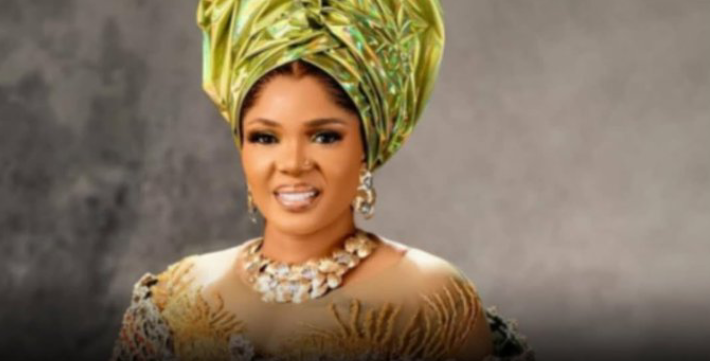
Nollywood actress and outspoken public figure Iyabo Ojo has once again set social media and public discourse ablaze after boldly declaring herself the “president-general of single mothers,” a statement that has resonated deeply with many Nigerians and reignited conversations around womanhood, parenting, resilience, and changing societal values. In a society where single motherhood was once whispered about in hushed tones and treated as a mark of failure or moral weakness, Ojo’s declaration landed like a cultural statement rather than mere personal branding.
Speaking with confidence and characteristic bluntness, the actress asserted that the era when single mothers were stigmatized, pitied, or publicly shamed is over. According to her, women who are raising children on their own deserve respect, recognition, and celebration, not ridicule. Her words quickly went viral, drawing praise from supporters who see her as a voice for women who have long endured silent judgment, as well as criticism from those who believe her statement promotes what they describe as a breakdown of traditional family values.
Iyabo Ojo is no stranger to controversy or strong opinions. Over the years, she has built a reputation as one of Nollywood’s most fearless personalities, never shying away from speaking her truth, whether on issues of marriage, motherhood, politics, or social justice. As a single mother herself who raised her two children largely on her own while navigating the demanding world of entertainment, her declaration felt deeply personal and authentic to many who listened.
For decades in Nigeria and many parts of Africa, single motherhood carried heavy social consequences. Women who found themselves raising children alone due to divorce, separation, abandonment, or widowhood were often labeled as irresponsible or unlucky, regardless of the circumstances that led to their situation. In contrast, men in similar positions were rarely subjected to the same level of scrutiny. Ojo’s statement directly challenges this imbalance, calling attention to the strength it takes to nurture, provide for, and emotionally support children without a partner.
Her choice of words, particularly the symbolic title “president-general,” struck a chord. To some, it was humorous and empowering, a playful yet powerful way of claiming space and visibility for millions of women who often feel unseen. To others, it was provocative, deliberately designed to force society to confront its biases. Either way, it succeeded in putting single motherhood at the center of national conversation.
Supporters across social media applauded the actress for using her platform to normalize an experience shared by countless women. Many single mothers recounted their own struggles in the comments, describing years of judgment from relatives, neighbors, and even religious institutions. For them, Ojo’s statement felt like validation, a reminder that their worth is not defined by marital status but by character, effort, and love for their children.
Critics, however, argued that while single mothers deserve respect, glorifying the status could send the wrong message to younger generations. Some expressed concern that such declarations might downplay the importance of stable two-parent households. Others accused the actress of oversimplifying a complex issue, noting that while stigma should be addressed, the emotional and economic challenges of single parenting should not be romanticized.
Yet Ojo’s message, as many supporters pointed out, was not about encouraging single parenthood but about dismantling shame. She emphasized dignity, self-worth, and acceptance rather than promoting any particular family structure. In her view, no woman should be made to feel less than because life did not follow a traditional script.
The timing of her declaration also reflects a broader shift in Nigerian society. Urbanization, economic pressures, increased education among women, and changing attitudes toward marriage have all contributed to evolving family dynamics. Divorce and separation, once considered taboo topics, are now more openly discussed, and women are increasingly vocal about leaving unhealthy or abusive relationships. In this context, Iyabo Ojo’s statement feels less like an isolated outburst and more like a reflection of changing realities.
As a public figure, Ojo’s life has often been scrutinized, from her career choices to her parenting style. Her children, now grown, are frequently cited by fans as evidence of her success as a mother. For many, this reinforces her credibility when speaking about single motherhood. They see her not just as an actress making headlines, but as a woman who lived the experience and emerged confident and unapologetic.
Religious and cultural leaders have also weighed in, offering mixed reactions. While some acknowledged the need to show compassion and support for single mothers, others cautioned against language they felt could undermine cultural norms. This clash of perspectives highlights the tension between tradition and modernity that continues to shape Nigerian public life.
Despite the criticism, Iyabo Ojo has remained firm in her stance, making it clear that she has no intention of retreating or softening her message. To her, the conversation itself is proof that progress is being made. The fact that single motherhood can now be openly discussed, debated, and defended in mainstream spaces signals a shift from silence to visibility.
Ultimately, her declaration as “president-general of single mothers” may not be an official title, but its impact is undeniably real. It has given language to experiences many women have long carried quietly and forced society to confront its attitudes toward motherhood, marriage, and female autonomy. Whether celebrated or condemned, Iyabo Ojo’s words have ensured that single mothers are no longer confined to the margins of conversation.
As Nigeria continues to grapple with changing social norms, one thing is clear: voices like Iyabo Ojo’s are reshaping the narrative. Gone, indeed, are the days when single motherhood existed only as a stigma whispered behind closed doors. In its place is a louder, more complex conversation about choice, resilience, and the many forms that family can take.
Popular Posts

“I Be Old Man O”: Don Jazzy’s 2026 ‘Baby’ Ban Sparks Laughter, Debate and Online Reactions
20 Dec, 2025
“Gym Goals or Hidden Cost?” Baddie’s Comment on Cristiano Ronaldo’s Physique Ignites Online Debate
20 Dec, 2025
Terror at a Transit Hub: Taipei Stabbing Shocks City and Rekindles Fears Over Urban Safety
20 Dec, 2025Scroll to Top