news
“He’s the One in Charge”: Ex-Minister’s Explosive Claims Reignite Debate Over Deji Adeleke’s Grip on Osun Politics
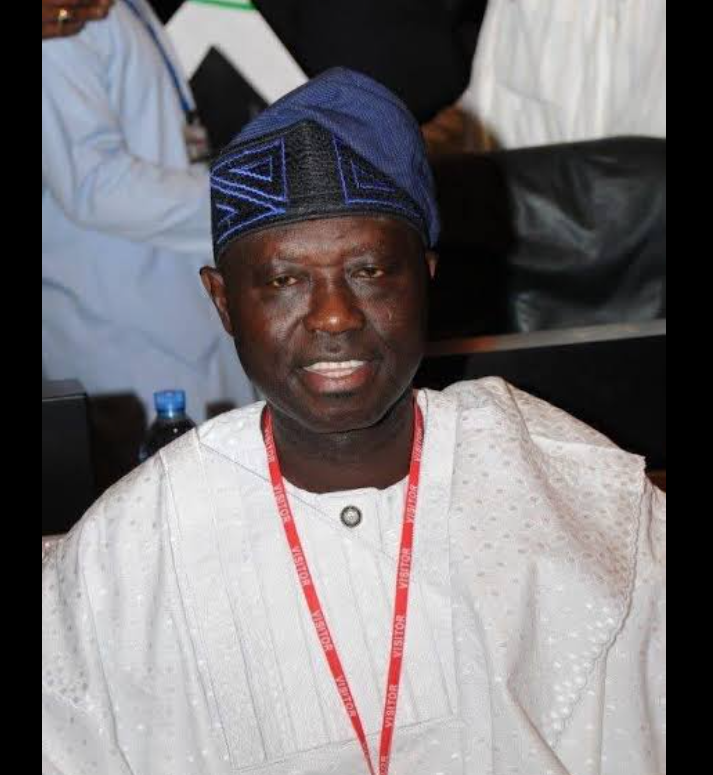
Fresh controversy has been stirred in Osun State’s political space following blunt and revealing comments by former Minister of Police Affairs, Jelili Adesiyan, who has described billionaire businessman Deji Adeleke as a dominant force in the state’s power structure, wielding influence that extends far beyond public office. Speaking during a recent interview, Adesiyan painted a picture of a political landscape where formal titles matter less than real power, insisting that Adeleke has long been at the centre of decision-making in Osun, even during periods when his brother held elected office.
Adesiyan, a seasoned politician who has served at both state and federal levels, did not mince words as he reflected on his personal experience working within government during the Adeleke family’s rise. According to him, Deji Adeleke’s authority was so entrenched that it shaped governance behind the scenes, regardless of who officially occupied the governor’s seat. “You know it yourself, he’s the governor. Even when his brother was in government, I served under him. I knew the influence he wielded on his senior brother,” Adesiyan said, a statement that has since sparked intense debate across political circles and social media platforms.
The remarks have reignited long-standing conversations about the role of powerful individuals who operate outside formal political offices yet exert enormous control over governance. In Osun, Deji Adeleke’s name has often been mentioned in hushed tones as a political kingmaker, a businessman whose financial muscle and strategic networks allow him to shape outcomes from behind the curtain. Adesiyan’s comments, however, have brought these perceptions into the open, lending insider credibility to what many had previously regarded as speculation.
Beyond political influence, Adesiyan also highlighted Adeleke’s background as a shrewd businessman, framing his political involvement as an extension of his capitalist instincts. “You know Deji is a businessman and a capitalist to the core. He has to protect his interests. But today his interest is more than the people of Osun State,” he said. This assertion suggests a complex intersection between private wealth and public power, raising questions about whose interests ultimately drive political decisions in the state.
Deji Adeleke, a billionaire industrialist with investments spanning energy, education, and logistics, has long been a prominent figure in Nigeria’s business landscape. As the founder of Adeleke University and a major player in the power sector, his economic footprint in Osun and beyond is undeniable. Supporters often credit him with creating jobs, funding infrastructure, and using his resources to uplift communities. Critics, however, argue that such influence can blur the line between philanthropy and political dominance, especially when business interests intersect with state policy.
Adesiyan’s most striking comment came when he questioned the very idea of Adeleke seeking formal political office, suggesting that such a move would be unnecessary given his current level of control. “Who’s Adeleke? Can that one become a governor? He knows I’m saying this to you and when he hears it he’ll say that man again. He’s the one in charge,” Adesiyan said, half-dismissively, half-emphatically. The remark underscores a belief that real power does not always require an electoral mandate, a notion that resonates strongly in Nigeria’s political reality where influence often operates informally.
The comments have drawn mixed reactions from political observers in Osun State. Some see Adesiyan’s statements as a candid reflection of the truth, arguing that wealthy individuals have always played decisive roles in Nigerian politics, funding campaigns, shaping alliances, and influencing policy directions. Others view the remarks as an exaggeration or even a personal vendetta, questioning Adesiyan’s motives and suggesting that his words may be driven by political rivalry or past disagreements.
For many residents of Osun State, however, the conversation goes beyond personalities and touches on deeper concerns about accountability and democracy. If influential figures can effectively “run” a state without holding office, critics ask, who do citizens hold responsible for governance outcomes? Who answers to the people when decisions are made behind closed doors by unelected power brokers?
Adesiyan’s claim that Adeleke’s interests have grown “more than the people of Osun State” has also fueled debate about the balance between private ambition and public good. While business leaders often play positive roles in development, their involvement in politics can become problematic if profit considerations overshadow the welfare of citizens. In a state grappling with economic challenges, unemployment, and demands for better infrastructure, such concerns resonate strongly.
At the same time, supporters of the Adeleke family argue that influence should not automatically be viewed as negative. They point out that Deji Adeleke’s resources have been instrumental in political mobilization and governance support, particularly during election campaigns and periods of transition. From this perspective, his involvement is seen as stabilizing rather than domineering, providing financial and strategic backing in a system where politics is expensive and often chaotic.
The Adeleke political dynasty itself has been a subject of fascination and controversy in Osun. The family’s prominence, blending wealth, celebrity, and political ambition, has made them both admired and criticized. Adesiyan’s comments add a new layer to this narrative, framing Deji Adeleke not just as a supportive figure but as the central authority around which power revolves.
So far, Deji Adeleke has not publicly responded to Adesiyan’s remarks. His silence has only intensified speculation, with analysts debating whether a response would legitimize the claims or whether ignoring them is a strategic choice. In Nigerian politics, silence can be as powerful as speech, often interpreted as confidence or calculated restraint.
As Osun State continues to navigate its political future, Adesiyan’s statements have ensured that the conversation around power, influence, and accountability will not fade quickly. Whether one views his comments as bold truth-telling or provocative exaggeration, they highlight a reality that many Nigerians recognize: that governance is often shaped as much by unseen hands as by elected officials.
In the end, the debate sparked by Jelili Adesiyan’s words goes beyond Deji Adeleke as an individual. It forces a broader reckoning with how power operates in Nigeria’s democracy, who truly governs, and how citizens can ensure that influence, whether wielded openly or behind the scenes, ultimately serves the public interest rather than private gain.
Popular Posts
“They Are Part of Us”: Sheikh Gumi’s Call for Coexistence Rekindles Nigeria’s Herdsmen Debate
27 Dec, 2025
Night of Fear in Kwara: Gunmen Raid Adanla Community, Abduct Residents and Deepen Security Concerns
27 Dec, 2025
“He’s the One in Charge”: Ex-Minister’s Explosive Claims Reignite Debate Over Deji Adeleke’s Grip on Osun Politics
27 Dec, 2025Scroll to Top