Entertainment
“I’m Not Dead, Please!” — Social Media Erupts After Influencer Issues Hilarious Disclaimer Over a Dove Emoji Mishap
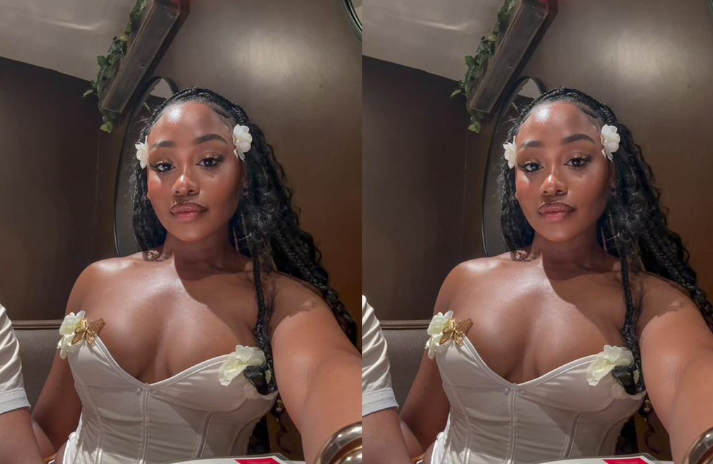
In a digital world where a single emoji can mean everything and nothing at the same time, one creator has found herself at the center of the internet’s latest comedic misunderstanding. Popular content creator @jowaunaa sent social media into a frenzy after casually tweeting a message decorated with a dove emoji — only for followers to interpret it as a sign that she had passed away. Within minutes, rumors began flying, confusion spread like wildfire, and the influencer was forced to publicly clarify that she is very much alive. Her short but dramatic disclaimer — “y’all pls I’m not dead, I just thought the dove emoji was cute…” — has since become the internet’s newest inside joke.
What started as a simple tweet unexpectedly grew into a chaotic spectacle that perfectly captures how quickly assumptions can escalate online. The dove emoji, often associated with memorial posts or RIP messages, is widely used by Nigerians on social media as a subtle signal of loss. So when @jowaunaa posted hers, many followers took it literally, sparking a flood of condolence-style comments, DMs, reposts, and panicked reactions. In a matter of minutes, the timeline had essentially begun organizing a digital wake for someone who was sitting comfortably with her phone in hand.
Instead of the emotional tribute she unintentionally inspired, what followed was a wave of laughter as the influencer rushed back online to stop the misinformation spiral. Her disclaimer — equal parts dramatic and hilarious — was all it took to turn the moment into a viral comedy. The tone of her message, filled with emojis and disbelief, amplified the humor. She sounded less like someone trying to manage a PR crisis and more like a confused friend wondering how a cute accent to her post suddenly turned into an obituary. The internet quickly latched onto her reaction, and the phrase “I’m not dead” began trending in comment sections as users retold the story with jokes, memes, and playful exaggerations.
For many young people online, this incident struck a familiar chord. Social media platforms have evolved into languages of their own, where emojis carry meanings beyond their innocent icons. A dove can mean peace to one person and a memorial post to another. A broken heart emoji may be heartbreak for one user and just a pretty symbol for someone else. Context is everything, yet it is also the first thing the internet tends to ignore. In cases like this, the lack of context is exactly what makes the moment so hilarious.
The virality of @jowaunaa’s situation highlights one of the internet’s favorite pastimes: overreacting with speed and confidence. There’s almost a cultural script to it now — someone posts something ambiguous, the timeline misreads it dramatically, a rumor forms, and within minutes a full narrative unfolds with imaginary details added by strangers. It’s as though social media users are subconsciously rehearsing for the role of global emergency responders. They leap into sensation before verification, and before long, a misunderstanding becomes a shared experience. And when the truth turns out to be harmless, the relief turns into laughter.
But beyond the humor, there’s a deeper commentary on how creators often feel watched so intensely that even their emojis are scrutinized. Influencers, regardless of their size, live under the digital microscope. A simple punctuation mark can be interpreted as a cry for help, an announcement, a breakup hint, shade at an ex, or in this case — a sign of their own death. It’s an unintended burden that comes with visibility. While many creators enjoy the engagement and attention that accompany online popularity, there are moments when the pressure becomes absurd. @jowaunaa’s experience is a perfect example of that absurdity. A cute emoji instantly became a public statement she had no intention of making.
Still, she handled it with admirable humor and transparency, leaning fully into the comedy of the situation instead of being annoyed by it. Her response helped shift the energy from confusion to collective amusement. Followers began joking that Nigerian social media is “too jumpy,” with some saying they now think twice before using certain emojis for fear of sparking false alarms. Others turned the incident into memes, suggesting a full “Emoji Meaning Guide for Nigerians” to prevent future digital misinterpretations. The conversation showcased the internet’s unique ability to blend comedy with chaos.
What makes this moment particularly memorable is how relatable it felt. Almost everyone online has experienced being misunderstood in a comment section, a text message, or a tweet. Tone does not exist in typed communication, and emojis often serve as replacements. But even those substitutes come with risks, especially within cultures that attach deeper emotional meaning to specific symbols. So the Dove-Emoji Drama, as some users are now calling it, has become a kind of unintentional case study in internet communication.
People were quick to recount their own experiences with emojis gone wrong. Some shared stories of using the candle emoji — another favorite symbol in memorial posts — without realizing its implication. Others confessed they once posted a black heart emoji for aesthetic reasons only for friends to think they were going through heartbreak or mourning. The conversation turned into a hilarious reminder that meaning is not always universal, especially in the very expressive world of African social media.
Even more amusing was how casually the misunderstanding spiraled. No official source announced anything, no friend or family member made any statements — just a single dove emoji was enough to set the timeline ablaze. The speed of misinformation online has been a long-discussed phenomenon, but rarely does it play out in such a comedic and harmless way. If anything, it offered a lighthearted example of how quickly things can go left simply because people care enough to react before confirming what’s true.
By the time the dust settled, @jowaunaa had not only cleared her name — or rather, her survival — but also secured a moment of virality that many creators can only dream of. Her tweet was shared across platforms, reactions poured in from users who had never encountered her content before, and her follower count reportedly surged as people joined in on the joke. What began as a misunderstanding ended as a visibility booster, proving once again that on the internet, chaos is sometimes the best PR.
In the days that followed, the dove emoji became a running joke in her comment sections. Followers teased her about “coming back to life,” joked about planning imaginary memorial services, and created playful edits referencing the incident. It became a shared comedic bond between her and her audience — the kind of moment that solidifies a creator’s presence in online culture.

Ultimately, this humorous episode is a reminder that social media remains a place where meaning is fluid, interpretation is wild, and nothing is ever as simple as it seems. One emoji can transform into a rumor, a rumor can turn into a spectacle, and a spectacle can turn into a moment of pure entertainment. And sometimes, as in @jowaunaa’s case, all it takes is a dove emoji for the internet to lose its collective mind — and then laugh about it together.
Popular Posts
“Stick to Makeup, Sis”: Daniel Regha’s Fiery Clapback at Tacha Sparks Heated Debate Online
12 Dec, 2025
Kuje Nights Begin: Abuja Court Orders Former Labour Minister Chris Ngige Remanded Over Alleged ₦2.2bn Contract Fraud
12 Dec, 2025
“Even the Privileged Are Tired”: Kiddwaya’s Viral Lament Sparks Nationwide Reactions
12 Dec, 2025Scroll to Top