news
Imo on the Brink: Explosive Allegations Against Top Government Aide and Police Inspector Shake the State
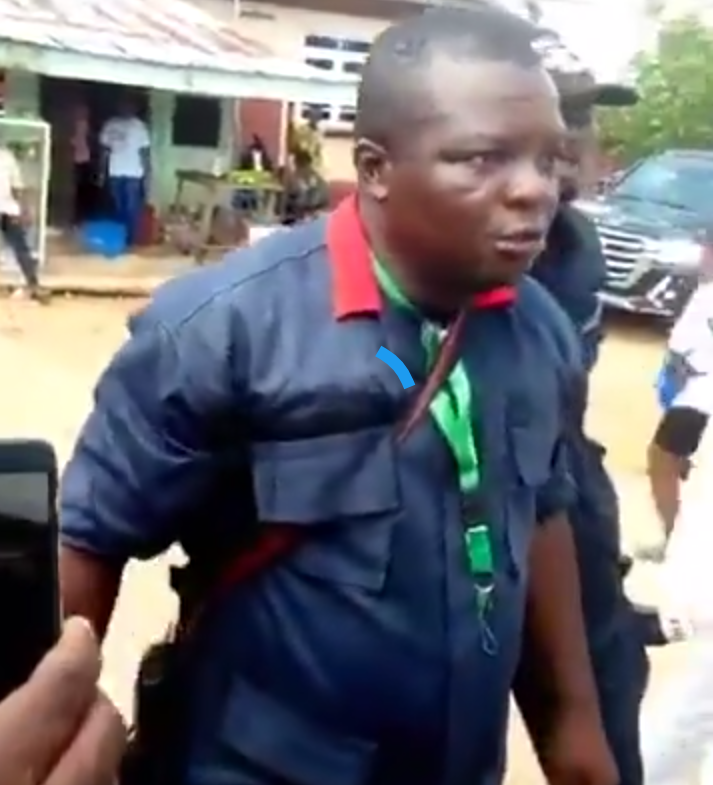
Imo State has been thrust into the national spotlight once again as a startling allegation made by a Civil Defence officer has ignited widespread tension, public outrage, and urgent calls for accountability. The officer, whose identity is being kept confidential for security reasons, has accused Chinasa Nwaneri, a senior aide to Governor Hope Uzodinma, and the notorious Inspector Okebata—popularly known across Owerri’s Tiger Base as “Kill and Bury”—of masterminding persistent violence, intimidation, and destruction in parts of the state. The claim has sent shockwaves through political circles, sparking fears that Imo’s fragile security landscape may be far more compromised than previously imagined.
According to the officer, the alleged activities were not isolated incidents but part of a widening culture of fear that has been quietly growing beneath the surface for years. The statement paints a deeply troubling picture: a powerful government aide and a feared police operative working hand-in-hand to exert force, silence opposition, and create chaos in areas where dissent thrives. For many residents of Owerri and surrounding communities, the claims feel like a public confirmation of long-circulated rumours—stories whispered behind closed doors, traded in barbershops, and debated on street corners but never boldly declared with an identifiable witness attached.
Chinasa Nwaneri, a key figure in Governor Uzodinma’s inner circle, is no stranger to controversy. Over the past few years, his name has appeared in connection with various political disputes, usually painted by opponents as the administration’s enforcer. His influence has sparked speculation about the extent of his power, especially regarding security operations. Now, with this new allegation, critics argue that the long-simmering concerns about his role have reached a breaking point. Supporters, however, claim the entire story is another attempt by political rivals to destabilize the government ahead of crucial political seasons.
On the other hand is Inspector Okebata, a figure whose nickname alone—“Kill and Bury”—has instilled fear in countless residents. He is widely associated with the Tiger Base, a police formation in Owerri that has faced years of scrutiny over reports of brutality, unlawful detentions, and disappearances. Tiger Base has long carried a reputation that oscillates between being a place of law enforcement efficiency and a dreaded structure of extrajudicial actions, depending on whom you ask. The officer’s allegation that Okebata has been directly involved in fueling violence only deepens the already dark image surrounding the unit.
The Civil Defence officer described situations where political disagreements allegedly escalated into orchestrated violence rather than lawful conflict resolution. It is claimed that individuals who opposed certain political agendas or dared to question powerful actors were targeted through covert intimidation and surveillance. In some instances, the officer alleged that properties were destroyed as a show of force, with victims left too terrified to speak out. These revelations come at a time when Imo State has battled waves of insecurity linked to unknown gunmen, politically motivated attacks, banditry, and clashes between state forces and armed groups. Many residents argue that the environment of fear has grown thicker while transparency and accountability have weakened.
News of the allegation has quickly spread across social media, fueling heated discussions among residents and diaspora communities. Videos, voice notes, and personal accounts have begun circulating, with some claiming they, too, have experienced harassment connected to political disagreements. For many, the officer’s courage has opened the floodgates for others to share long-suppressed stories. Activists say this moment could mark a turning point in the state’s security trajectory—if authorities choose to address the matter rather than suppress it.
While official reactions from the Imo State Government and the Nigerian Police Force remain measured, the pressure is mounting. Human rights groups, including several based in the Southeast, are calling for an independent investigation. They argue that the allegations are too serious to be brushed aside, especially given the reputations of those involved. Some insist that the state’s security structure has been hijacked by political actors who use force as a tool of governance. Others are urging Governor Uzodinma to publicly distance himself from the individuals named, pending investigation, to restore public trust.
Political analysts observing the unfolding drama warn that the state risks descending deeper into instability if the claims are left unaddressed. Imo’s political climate has been tense for years, with power tussles, accusations of election irregularities, and escalating violence shaping its narrative. Analysts say the latest development could either expose a deeply entrenched system of intimidation or reveal the extent to which political rivals are willing to go to undermine the current administration. In either case, the need for clarity has never been more urgent.
Residents of Imo who have watched insecurity tighten its grip on the state are demanding answers. Markets that once bustled with activity now shut early. Families living in rural communities speak of hearing gunshots at night but being too frightened to report. Many businesses have relocated or scaled down operations as crime and political tension weigh heavily on the economy. For these citizens, the allegations do not feel sensational—they feel like the missing piece of a puzzle they have been trying to understand for months.
In the midst of the uproar, the Civil Defence officer’s safety has become a major concern. Advocacy groups have asked that he be placed under full protection. The officer’s bravery in stepping forward has been praised by civil society organizations, who insist that the government must guarantee his security to prevent further intimidation or harm. They argue that whistleblowers play a crucial role in exposing abuses of power, and their protection is essential to any functioning democracy.
Imo State now stands at a crossroads. The allegations against Chinasa Nwaneri and Inspector Okebata could lead to an unprecedented reckoning for the state’s political and security establishments—or they could be buried under familiar layers of silence and denial. The coming days will reveal whether authorities are willing to confront the issue head-on or retreat behind official statements and political calculation.
For now, the atmosphere in Imo remains tense. Residents are watching closely, activists are mobilizing, and national attention is steadily shifting toward the unfolding story. With the state already battling insecurity, economic strain, and political divisions, the allegations could be the spark that forces a deeper conversation about power, policing, and justice in Imo State. Whether this moment leads to reform or further chaos will depend on how those in authority respond to one officer’s bold decision to break the silence that has lingered for far too long.
A Civil Defence officer has accused Chinasa Nwaneri, aide to Governor Hope Uzodinma, and Inspector Okebata, popularly known as ‘Kill and Bury’ of Owerri’s Tiger Base, of fueling violence and destruction in Imo State. pic.twitter.com/EnKXBsQtoR
— Linda Ikeji Blog (@lindaikeji) December 5, 2025
Twitter Post
Visit websitePopular Posts

“A Ticking Time Bomb”: Dotun’s Blunt Warning Sparks Fresh Debate After Peller’s Car Crash Drama
15 Dec, 2025
FRSC Warns Celebrities as TikToker Peller Faces Prosecution Over Road Crash
15 Dec, 2025
19-Year-Old Girl Allegedly Stabs Boyfriend to Death During Infidelity Fight in Ogun State
15 Dec, 2025Scroll to Top