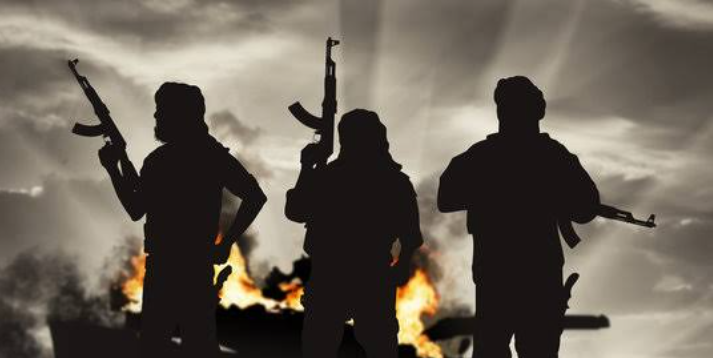
Islamist militant groups operating in Northern Nigeria are reportedly relocating their fighters and abandoning long-used hideouts across Sokoto State and surrounding areas in the wake of recent United States-led airstrikes, community leaders and security sources say, amid fears of further aerial attacks by the US military.
Across the sprawling and often inaccessible forest corridors of Sokoto State’s Tangaza, Gudu and Illela local government areas, residents and local chiefs have observed unusual movement by armed groups in recent days, with suspected militants dispersing from dense camps and moving toward remote border areas or deeper into heavily vegetated tracks. According to community leaders speaking to Punch newspaper, these movements began almost immediately after a US airstrike operation carried out on Christmas Day, which targeted suspected Islamic State of Iraq and Syria (ISIS)-linked militant positions.
The airstrike, confirmed by both the Nigerian government and the United States, struck two ISIS-linked camps in the Bauni Forest area of Sokoto State. The operation was carried out with precision munitions from US military assets and supported by intelligence shared with Abuja, with officials declaring the aim was to disrupt terror cells believed to be planning large-scale attacks. No civilian casualties were officially reported, though debris from the strikes was said to have landed in nearby communities, sparking fear among civilians.
Local community leaders say that the air raid served as a stark warning to Islamist militants in the region, prompting them to abandon familiar camps and transit routes and disperse in smaller groups in the hope of evading further strikes. Some of these groups are reportedly heading into thick forest corridors or attempting to cross into neighbouring border communities to avoid detection by aerial and ground surveillance teams.
Residents of villages such as Jabo in Tambuwal local government area described the night of the strike as frightening, with loud explosions and flashes lighting up the sky, evidence of the destructive capacity now being brought to bear against insurgent positions. Many villagers in Sokoto, historically peaceful agricultural communities with little history of extremist activity, were startled by the sudden military engagement in their area, prompting confusion and concern about security and the risks of being caught in the crossfire of wider counterterrorism operations.
The relocation and dispersal of militants comes amid heightened cooperation between Nigeria and the United States in counterterrorism efforts, even as the involvement of foreign military forces on Nigerian soil has sparked debate at home. Nigerian authorities maintain that the operations have been conducted with full respect for Nigeria’s sovereignty and in direct coordination with the federal government, with intelligence sharing and strategic planning central to the execution of strikes.
However, the presence of foreign strikes within Nigeria’s borders is not without controversy. Some commentators and religious leaders have criticized US involvement, arguing that counterterrorism operations should be led solely by Nigerian forces and cautioning against the risk of foreign military action fuelling further unrest or being misperceived as external interference. These critics contend that long-term peace must be secured through sustained domestic military efforts and community engagement, rather than predominantly external firepower.
The recent airstrikes were welcomed by some Nigerian lawmakers, who see enhanced cooperation with the United States as a necessary step in combating ISIS West Africa Province (ISWAP) and other terror networks that have for years wreaked havoc across parts of the North. Former Senate leader Ali Ndume, for example, has urged that air operations be extended to the North-East, where Boko Haram and ISWAP maintain entrenched strongholds in areas such as the Lake Chad basin, the Mandara Mountains, and the Sambisa Forest. Critics of limited engagement warn that without broader operations, pockets of militant strength will remain intact and free to regroup.
The strategy of using airpower to target terrorist infrastructure is part of a broader shift in how authorities, both Nigerian and international, have chosen to confront insurgent groups. In recent months, aerial surveillance and precision strikes, guided by detailed intelligence, have increasingly supplemented traditional ground operations by the Nigerian military, which itself continues a long-running counterinsurgency campaign across the region.
Yet while aerial campaigns can disrupt and degrade militant capabilities, analysts warn that displacement and dispersal of fighters does not necessarily equate to the end of their threat. Militants who scatter into new territories may establish fresh hideouts, complicating tracking efforts and potentially bringing violence closer to previously unaffected communities. The fluid nature of such groups means that military pressure can force adaptation, with fighters exploiting remote terrain and porous borders to evade capture.
For civilians in Northern Nigeria, an area long plagued by violence from Boko Haram, ISWAP, and other armed groups, the recent developments have brought a complex mix of hope and anxiety. The perception of decisive action against extremists by international partners offers a sense of renewed resolve, but the reality of relocating fighters and the unpredictability that accompanies aerial warfare raises legitimate fears about future escalations. In villages like Jabo, residents continue to grapple with the psychological reverberations of the strikes, even as formal assurances from officials attempt to calm nerves.
The evolving dynamics of militant displacement following the US-backed airstrikes paint a vivid picture of a conflict at a crossroads. As insurgent groups scatter and shift tactics, authorities face the dual challenge of sustaining pressure on extremists while ensuring the protection and stability of vulnerable communities caught in the shadow of war. Whether this new phase of cooperation and aerial intervention will deliver lasting security in Nigeria’s troubled North remains a key question for policymakers, soldiers, and civilians alike.
Popular Posts

“Keep That Nonsense Away from Our Football”: Ayo Shonaiya Slams Primate Ayodele as Ademola Lookman Silences AFCON Prophecies
28 Dec, 2025
“Single Forever”: Kai Cenat’s Viral Declaration Sparks Global Reactions, Memes, and a New Chapter for the Streaming Superstar
28 Dec, 2025
Faith, Fame and a Final Choice: Media Personality Aunty Esther Dies After Cancer Battle
28 Dec, 2025Scroll to Top