news
Millions, Mismanagement, and a Movement Shaken: BLM Oklahoma City Executive Director Indicted in Federal Fraud Case
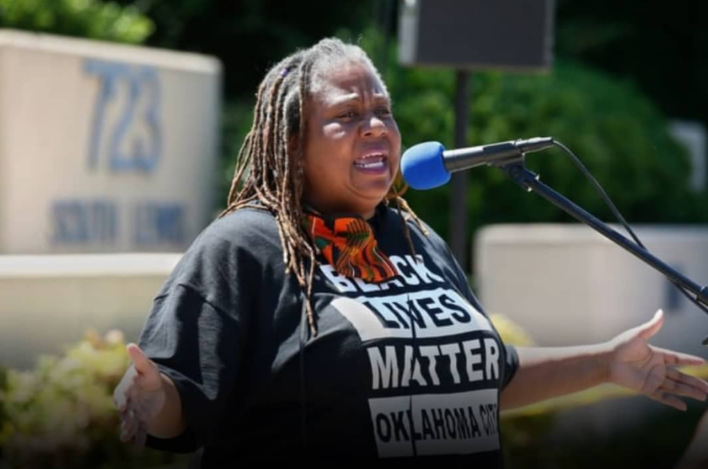
The Black Lives Matter movement, a global force that reshaped conversations on race, policing, and justice, is once again in the headlines—this time for a scandal swirling around one of its local leaders. Tashella Sheri Amore Dickerson, the 52-year-old Executive Director of Black Lives Matter Oklahoma City (BLMOKC), is facing federal charges that threaten to cast a long shadow over years of activism, fundraising, and community trust. According to U.S. Attorney Robert J. Troester, a federal grand jury has indicted Dickerson on multiple counts of wire fraud and money laundering, igniting a storm of questions about the use and oversight of millions of dollars raised during one of the most turbulent eras in American history.
Dickerson, who took the helm of BLMOKC back in 2016, reportedly wielded broad access to the organization’s financial channels—including its bank accounts as well as its PayPal and Cash App platforms. This access, prosecutors allege, opened the door for unauthorized withdrawals, questionable transactions, and a financial trail that raised enough red flags to draw the attention of federal investigators. Despite operating as a visible and vocal community group, BLMOKC was not registered as a 501(c)(3) nonprofit. Instead, it relied on the Alliance for Global Justice (AFGJ) as a fiscal sponsor, a structure often used by grassroots organizations to receive tax-deductible donations without building full nonprofit infrastructure. But with that arrangement came strict requirements: detailed reports on spending, transparency in how contributions were used, and, critically, a prohibition on using donations for real estate purchases without explicit approval.
Federal prosecutors say those rules may have been ignored. And the timing of the alleged misconduct is especially troubling. After the killing of George Floyd in May 2020, protests swept the nation, igniting one of the largest civil rights mobilizations in modern history. In the midst of that national outcry, BLMOKC reportedly raised more than $5.6 million—an influx driven by individual donations, community support, and significant grants from national bail funds. Those grants were earmarked for a very specific purpose: to secure the release of protesters arrested during demonstrations and, once bail was refunded, to help establish a revolving bail fund or support the group’s broader mission.
But now investigators are trying to determine whether that money was diverted instead of being used for the causes donors believed they were supporting. The indictment paints a picture of transactions that did not align with the stated mission of BLMOKC or the conditions placed on the funding. Prosecutors argue that Dickerson exploited both her position and the urgency of the moment for personal gain, using organizational accounts in ways that violated federal law. The charges, if proven, could result in significant prison time, fines, and long-term repercussions for community activists who had placed their trust—and their hopes—into the organization’s leadership.
The case is already stirring intense reactions across Oklahoma City and beyond. Supporters of the movement fear that allegations of financial misconduct may be weaponized by critics to discredit years of work, protests, and policy advocacy. Detractors, meanwhile, are seizing the moment to question the accountability of decentralized movements that rely on disparate local chapters, volunteer leaders, and loosely structured financial systems. For many observers, the indictment underscores a longstanding debate about the challenges that arise when social justice movements grow rapidly in scale without developing a parallel infrastructure for transparency and oversight.
The Alliance for Global Justice, the fiscal sponsor linked to BLMOKC, has remained a focal point of the investigation as well. Their sponsorship agreements require detailed reporting from partner organizations—a process designed to ensure that donations are used exactly as intended. While AFGJ has not been accused of wrongdoing, questions are being raised about what oversight mechanisms were in place and whether they were sufficient to detect irregularities sooner. In moments of national crisis, when donations pour in quickly and organizations scramble to respond on the ground, the risk of mismanagement grows, even with good intentions. But prosecutors argue that the actions outlined in the indictment were far from accidental lapses.
For the Oklahoma City community, the allegations hit especially hard. BLMOKC became a central hub during the 2020 protests, coordinating marches, bail assistance, legal support, and community education. Many remember the nights when volunteers stayed awake until dawn tracking detainees, raising funds, and ensuring protesters had rides, food, and support. To hear now that millions associated with that moment may have been mishandled is, for some, a betrayal that cuts deeply. For others, it is a painful reminder of the need for stronger internal accountability within activist circles to protect both the mission and the people who rely on it.
Federal cases like this often take months—or even years—to move through the court system. Dickerson, like any defendant, is presumed innocent until proven guilty. Her legal team will likely argue that the financial records, transactions, and organizational structure of BLMOKC paint a more complicated picture than the government suggests. They may point to the chaotic environment of 2020, the massive influx of donations, or the blurred lines that sometimes exist in grassroots organizations that rely heavily on volunteer labor and informal procedures. But prosecutors appear confident that the evidence gathered—from banking records to digital payment histories—will support their case.
Beyond the courtroom, this indictment signals a broader moment of reckoning. The Black Lives Matter movement remains powerful, influential, and necessary, but it also continues to grapple with public scrutiny around finances. This latest case adds fuel to that conversation, reminding activists and organizations nationwide that financial transparency is not just a bureaucratic requirement—it is essential to maintaining credibility, community trust, and long-term impact.
In the coming weeks, Oklahoma City residents, activists across the country, and federal authorities will be watching closely as the case unfolds. Whether the indictment leads to a conviction, a settlement, or a full trial, one thing is clear: the consequences will extend beyond one leader and one chapter. They will touch the movement as a whole, influencing how organizations structure themselves, how donors give, and how communities hold leaders accountable.
For now, the indictment of Tashella Sheri Amore Dickerson stands as a stark reminder of the complex intersection between activism, money, and accountability. It marks a sobering moment for a movement built on justice, transparency, and trust—and a test of how it confronts internal challenges while continuing to push for change in a nation still wrestling with the issues that gave rise to it.
Popular Posts

“Stick to Makeup, Sis”: Daniel Regha’s Fiery Clapback at Tacha Sparks Heated Debate Online
12 Dec, 2025
Kuje Nights Begin: Abuja Court Orders Former Labour Minister Chris Ngige Remanded Over Alleged ₦2.2bn Contract Fraud
12 Dec, 2025
“Even the Privileged Are Tired”: Kiddwaya’s Viral Lament Sparks Nationwide Reactions
12 Dec, 2025Scroll to Top