Entertainment
“Na Broke, Fake and Homeless People Dey Shout Oblee” — Cubana Chief Priest Sparks Fresh Debate as He Flaunts Owerri Mansion
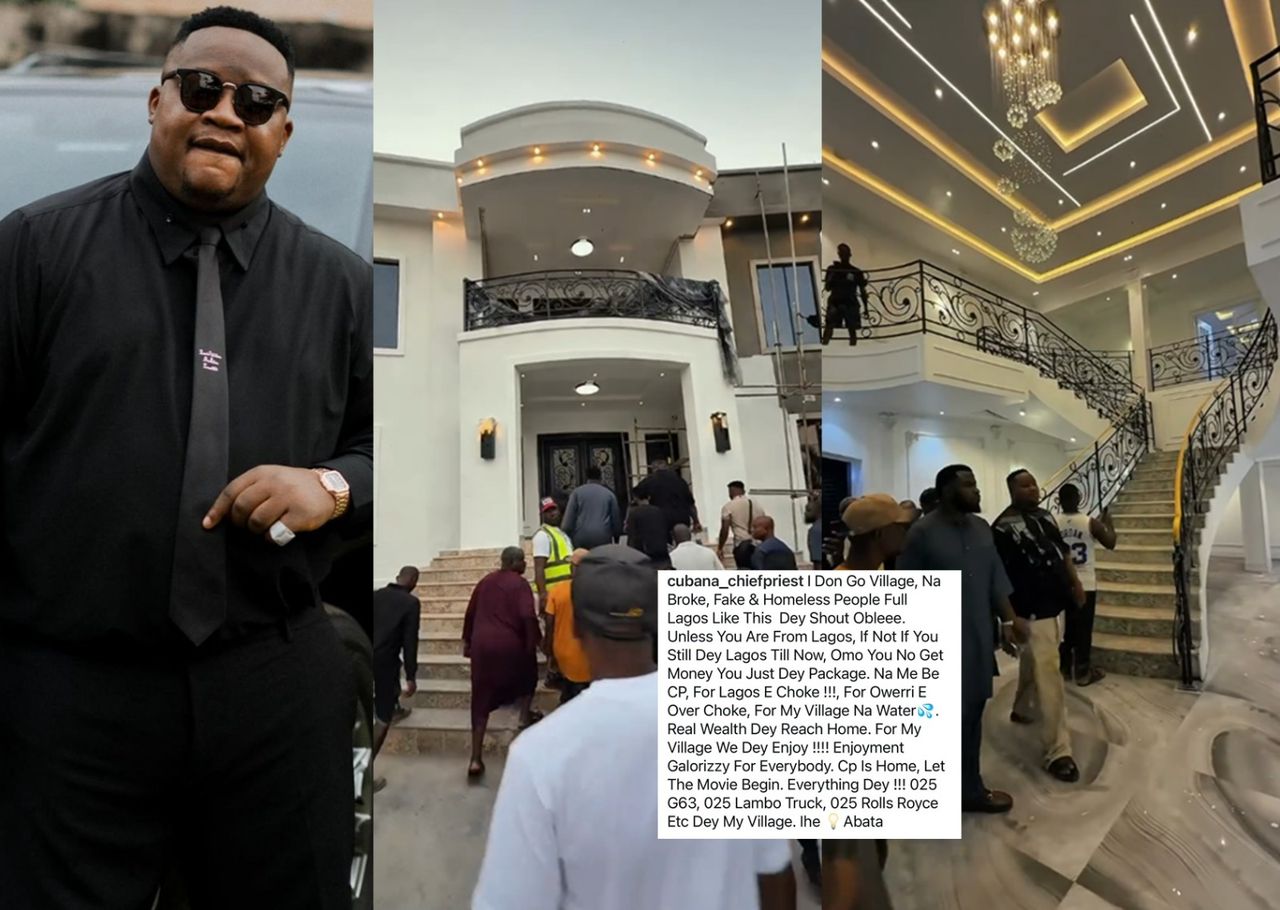
Popular Nigerian socialite and nightlife kingmaker Cubana Chief Priest has once again ignited conversations across social media after sharing a video of his sprawling mansion in Owerri, Imo State, accompanied by a blunt, controversial remark that quickly went viral. “Na broke, fake and homeless people full Lagos like this dey shout oblee,” he wrote, a statement that has since dominated timelines, group chats, and comment sections, drawing both applause and heavy criticism in equal measure.
The celebrity barman, whose real name is Pascal Chibuike Okechukwu, is no stranger to online theatrics, wealth displays, or outspoken commentary. Known for his flamboyant lifestyle and close association with Nigerian music stars like Davido, Cubana Chief Priest has built a brand that thrives on luxury, confidence, and constant visibility. This latest post, however, struck a particularly sensitive nerve in a country where conversations around wealth, survival, class, and location remain deeply emotional.
In the video, Cubana Chief Priest proudly showcased his Owerri mansion, a massive property complete with modern architecture, expansive grounds, and a clear aura of opulence. The footage appeared carefully curated to send a message beyond mere celebration of personal success. To many viewers, it felt like a direct response to critics, doubters, or those who constantly question his source of wealth and lifestyle. By contrasting Owerri with Lagos, Nigeria’s commercial capital, he seemed to be challenging a long-held narrative that true success must be rooted in Lagos.
Lagos, often described as the city of dreams, hustle, and endless opportunities, has for decades attracted millions of Nigerians searching for economic breakthroughs. But it has also become a symbol of extreme contrasts, where luxury estates exist side by side with overcrowded slums, and where ambition frequently clashes with harsh economic realities. Cubana Chief Priest’s comment appeared to poke at this contradiction, implying that many who project loud confidence and trends online are, in reality, struggling behind the scenes.
Supporters of the socialite quickly rallied around him, interpreting his words as a call for realism and self-awareness. Some argued that social media has created a culture where appearances often overshadow substance, with people living beyond their means to maintain online relevance. To them, Cubana Chief Priest was simply stating an uncomfortable truth about fake lifestyles and performative wealth, particularly in a city known for its fast-paced, pressure-filled social scene.
Others praised him for investing heavily in his home state rather than following the popular route of establishing his biggest assets in Lagos or abroad. Owerri, while known for its vibrant nightlife and hospitality culture, is rarely spotlighted as a hub for luxury real estate or celebrity mansions. His choice to build such a property there was seen by admirers as a statement of regional pride and a reminder that wealth can flourish outside Nigeria’s most crowded cities.
However, the backlash was just as loud. Critics accused Cubana Chief Priest of classism and insensitivity, pointing out that economic hardship in Lagos is not a moral failure but a reflection of broader national challenges. With inflation, unemployment, and rising living costs squeezing millions of Nigerians, many felt his comment unfairly mocked people who are simply trying to survive. Some social media users argued that wealth should inspire empathy, not ridicule, especially from someone who publicly celebrates his own rise from modest beginnings.
The phrase “shout oblee,” a slang expression often used to describe loud excitement or hype, became a focal point of the debate. Critics noted that Lagos thrives on energy, creativity, and noise, elements that fuel its entertainment, fashion, and tech industries. To them, dismissing that vibrancy as the behavior of “broke and fake” people ignored the city’s role in shaping Nigerian pop culture and providing opportunities that have benefited countless success stories, including Cubana Chief Priest himself.
The controversy also reopened discussions about wealth signaling and social media culture in Nigeria. In an era where likes, views, and viral moments often translate to influence and income, many Nigerians feel pressured to project success even when struggling privately. Cubana Chief Priest’s comment, whether intentional or not, highlighted the psychological toll of this pressure and the fragile line between motivation and mockery.
For Cubana Chief Priest, controversy is rarely damaging. His brand thrives on boldness, luxury, and an unapologetic attitude that resonates with fans who see him as a symbol of confidence and self-made success. Over the years, he has turned criticism into currency, using viral moments to stay relevant in a fast-moving digital landscape. This incident appears no different, as the attention surrounding the post has only amplified his visibility.
Beyond the individual drama, the episode reflects a deeper national conversation about identity, success, and belonging. As more Nigerians question the sustainability of life in mega cities like Lagos, conversations about decentralization, regional development, and returning home have grown louder. The idea that one can build wealth, comfort, and prestige outside Lagos is no longer radical, and Cubana Chief Priest’s Owerri mansion became a visual symbol of that shift, regardless of the controversy attached to it.
Yet, many observers argue that the message could have been delivered without disparaging others. They believe celebrating personal success should not require diminishing the struggles of millions navigating one of Africa’s most complex urban environments. In a country where hope is often fragile, words from influential figures carry weight far beyond entertainment.
As reactions continue to pour in, Cubana Chief Priest has not issued any clarification or apology, choosing instead to let the conversation run its course. Whether seen as a bold truth-teller or an out-of-touch millionaire, his statement has once again proven his ability to dominate Nigeria’s online space with a single post.
In the end, the Owerri mansion is more than just a luxury property. It has become a symbol, a provocation, and a mirror reflecting Nigeria’s ongoing struggle with image, reality, and the meaning of success in an age where everyone is watching, judging, and shouting “oblee.”
Popular Posts
FG Eyes N150bn Windfall as Nigeria Moves to Formalise Vehicle Recycling Industry
22 Dec, 2025
“Rotting Our Brains?” Elon Musk Sounds the Alarm on Short-Form Videos and the Cost of Constant Scrolling
22 Dec, 2025
“We Will Not Be Silenced”: Why Nicki Minaj Says She Spoke Out on Alleged Persecution of Christians in Nigeria
22 Dec, 2025Scroll to Top