news
Royal Drums and Rising Profiles: Seyi Tinubu and Wife Layal Honoured With New Chieftaincy Titles in Lagos
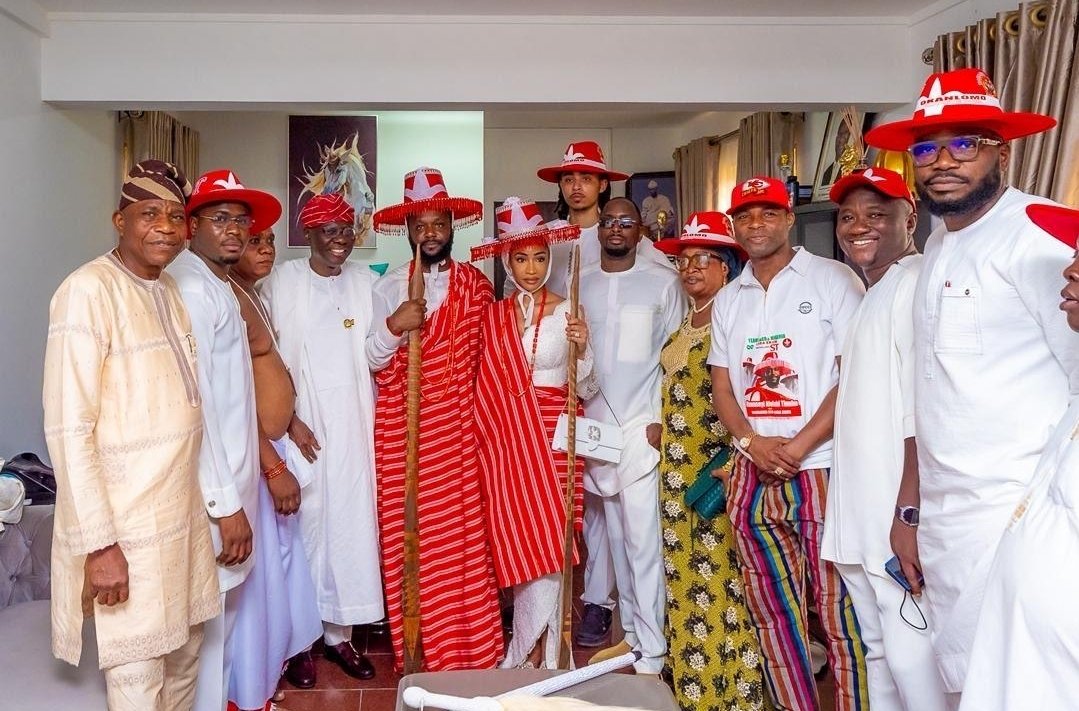
Lagos witnessed a colourful blend of tradition, culture and quiet political symbolism as Seyi Tinubu, son of President Bola Ahmed Tinubu, and his wife, Layal Tinubu, were conferred with fresh chieftaincy titles in a ceremony that drew dignitaries, cultural custodians and community members from across the state. The event, steeped in Yoruba heritage and pageantry, added another layer to the growing public profile of the couple and sparked conversations about legacy, leadership and cultural continuity in modern Nigeria.
Seyi Tinubu was installed as the Okanlòmo of Eyọ Ọba Alakẹtẹ Pupa, Laba Ẹkun, a title rich in cultural meaning and historical relevance within the traditional structure of Lagos. His wife, Layal, received a complementary chieftaincy title alongside him, underscoring the communal nature of the honour and the symbolic recognition of family within Yoruba tradition. The ceremony took place in Lagos amid music, chants, drumming and the unmistakable energy that accompanies significant traditional rites in the state.
From the early hours of the day, the venue buzzed with activity as cultural troupes prepared for performances and elders took their places to officiate the rites. Attendees described an atmosphere that balanced festivity with reverence, reflecting the seriousness of the titles being bestowed and the cultural responsibility they represent. Traditional regalia, symbolic artefacts and ritual gestures marked key moments of the installation, reminding onlookers that chieftaincy titles, while honorary, carry expectations of service, loyalty and representation.
The title of Okanlòmo is traditionally associated with bravery, resilience and commitment to community values. Within the context of Eyọ Ọba Alakẹtẹ Pupa and Laba Ẹkun, it reflects a bond between the titleholder and the cultural custodians of the land. For Seyi Tinubu, the installation was widely interpreted as recognition of his engagement with youth initiatives, social projects and behind-the-scenes involvement in public advocacy, particularly in Lagos and beyond.
Layal Tinubu’s complementary title also drew attention, highlighting the evolving role of women in traditional recognitions. Her installation was greeted with applause from attendees, many of whom noted that such honours increasingly reflect not just lineage or marriage but active participation in social causes and community engagement. In recent years, traditional institutions across southwestern Nigeria have become more inclusive, recognising the contributions of women alongside their spouses, a shift that was evident during the ceremony.
The presence of dignitaries, community leaders and cultural figures added weight to the event. While the gathering maintained a largely traditional tone, its wider implications were not lost on observers. As the son of a sitting president, Seyi Tinubu’s public appearances often attract heightened attention, and this chieftaincy installation was no exception. Social media quickly picked up images and clips from the ceremony, sparking discussions that ranged from admiration of cultural preservation to debates about influence and visibility.
Supporters of the honour argued that chieftaincy titles remain an essential way of recognising individuals who align with community values and contribute to societal development. They pointed out that such titles are not limited to political figures and their families but are regularly bestowed on business leaders, philanthropists and professionals deemed worthy by traditional authorities. From this perspective, the installation was seen as part of a long-standing cultural practice rather than a departure from it.
Others viewed the event through a more political lens, noting that traditional titles often serve as bridges between modern governance and ancestral institutions. In a state like Lagos, where tradition and modernity constantly intersect, such ceremonies carry layered meanings. They reinforce the relevance of traditional rulers and cultural groups while also acknowledging contemporary figures who operate within Nigeria’s evolving socio-political landscape.
Throughout the ceremony, elders emphasised the responsibilities attached to the titles, reminding the couple that honour comes with obligation. In Yoruba culture, a chieftaincy title is not merely ceremonial; it is a call to service, integrity and continuous engagement with the community. Those present noted that the speeches delivered were heavy on advice and cultural instruction, urging humility, generosity and respect for tradition.
The timing of the installation also drew interest, coming at a period when public attention remains focused on governance, leadership and national direction. While the event itself was non-political, it inevitably fed into broader conversations about the Tinubu family’s prominence and the intersection of power, tradition and public perception in Nigeria. For many Lagos residents, however, the day was simply a celebration of culture, colour and continuity.
As drums echoed and dancers moved in rhythm, the ceremony served as a reminder that despite rapid urbanisation and global influences, traditional institutions in Lagos remain vibrant and influential. Events like this continue to attract younger generations, blending heritage with contemporary relevance and ensuring that cultural identities are not lost in the pace of modern life.
By the end of the ceremony, Seyi and Layal Tinubu stood adorned in traditional attire, their new titles formally proclaimed before the gathered crowd. The applause that followed was as much for the spectacle as it was for the enduring power of tradition in shaping identity and honour in Nigerian society. Whether viewed as a cultural milestone, a personal honour or a moment of symbolic significance, the installation marked another chapter in the public journey of the couple.
In Lagos, where history and ambition often walk side by side, the conferring of these chieftaincy titles added a fresh note to an ongoing story. It reaffirmed the role of tradition as both a custodian of the past and a participant in the present, offering a moment of reflection on how heritage continues to shape recognition, leadership and community life in Nigeria’s most dynamic city.
Popular Posts

From Child Star to Christmas Hospital Bed: The Troubling Turn in Tylor Chase’s Life
26 Dec, 2025
“I Don Stop”: 2Baba’s Playful Confession Leaves Fans Laughing, Rumours Deflated, and ‘Baddies’ Heartbroken
26 Dec, 2025
Precision from the Skies: Nigerian Military Hails U.S. Support as ISIS-Linked Terror Cells Are Hit in the Northwest
26 Dec, 2025Scroll to Top