news
Silent Skies, Shaken Ground: Sokoto Residents Recount Mysterious Drone Strikes That Left Craters but Spared Lives
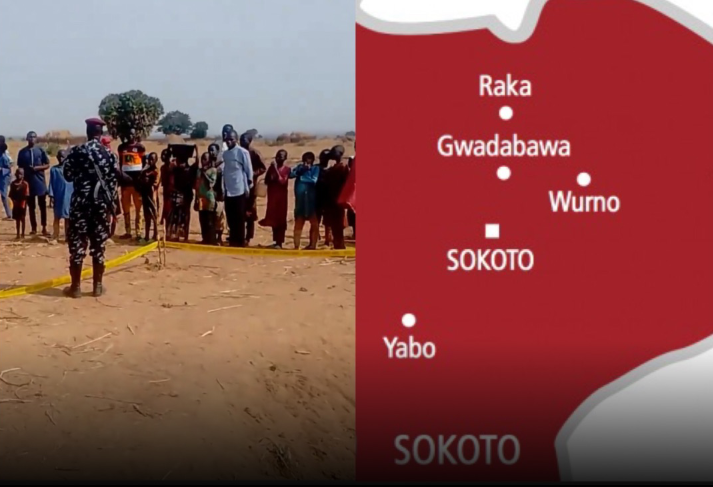
Residents of parts of Sokoto State were thrown into fear and confusion after confirming separate drone attacks in Tangaza and Tambuwal Local Government Areas, incidents they allege were carried out by the United States military, even as no lives were lost and no residential property was damaged. The unusual development, which unfolded quietly but left behind visible scars on the ground, has sparked intense conversations across the state about security operations, foreign involvement, and the growing use of aerial technology in counterterrorism efforts.
Investigations revealed that one of the incidents occurred in Jabo District of Tambuwal Local Government Area, a community that locals insist had never previously experienced direct insecurity. According to residents, the sudden appearance of an object resembling a small aircraft hovering overhead triggered panic, as many people initially struggled to understand what they were witnessing. Eyewitnesses said the object descended rapidly before striking the ground with a loud impact, leaving behind a large crater. When residents cautiously approached the site later, fire was still burning, further heightening anxiety and speculation about the nature of the strike.
Despite the fear it generated, locals were quick to note that the device did not land on any residential buildings and that no injuries or casualties were recorded. This fact brought relief to many families who had rushed indoors or fled open spaces at the time of the incident. Several residents described the sound as unlike anything they had heard before, different from gunfire or explosions associated with past security operations in other parts of the North-West. Some compared it to a sharp thunderclap, followed by a brief but intense tremor that shook nearby homes.
In Tangaza Local Government Area, residents also confirmed a similar incident, though details remained sketchy as fear initially prevented people from approaching the affected location. Community members said the presence of drones in the sky has become increasingly noticeable in recent times, but this was the first instance where one appeared to strike the ground in their area. The lack of casualties did little to calm nerves, as many questioned why their communities had suddenly become targets of such operations.
Local leaders and elders said they were not informed ahead of time about any planned military activity in their areas, a situation that contributed to widespread panic. Some residents recounted how parents grabbed their children and ran, fearing that more strikes could follow. Others spoke of elderly villagers collapsing in shock as rumors spread rapidly that the village was under attack. In the hours that followed, speculation grew that the drones were part of a foreign-led counterterrorism operation, particularly after residents alleged that the technology and flight patterns resembled those associated with U.S. military drones.
While no official confirmation was immediately available from Nigerian or U.S. authorities regarding the specific incidents in Tangaza and Tambuwal, the allegations come amid heightened security operations in the North-West, where armed banditry and extremist-linked activities have posed serious challenges. In recent months, there have been reports of increased intelligence sharing and cooperation between Nigeria and its international partners, especially in tracking and neutralizing terror-linked elements believed to be operating across porous borders.
Security analysts say the reported drone strikes highlight a shift toward more technology-driven warfare, where aerial surveillance and precision strikes are increasingly favored over ground operations. However, they also warn that such operations, when carried out without clear communication to local communities, can undermine trust and fuel fear, even when no casualties occur. The Sokoto incidents, they argue, underscore the delicate balance between combating security threats and protecting civilian confidence.
Residents of Jabo District said the crater left behind by the strike remains visible, serving as a stark reminder of how close the community came to potential disaster. Some villagers expressed gratitude that the device landed in an open area, while others questioned whether the outcome could have been far worse if the strike had been miscalculated. Many called on authorities to provide clarity about what happened and to reassure communities that their safety remains a priority.
Human rights advocates have also weighed in, emphasizing the need for transparency and accountability whenever foreign military involvement is alleged. They argue that even in the absence of casualties, unexplained strikes can traumatize communities and violate residents’ sense of security. Calls have grown louder for the federal government to engage directly with affected communities, explain the nature of the operations, and outline measures to prevent future panic.
For many in Sokoto, the incidents have shattered the illusion that some areas remain untouched by the region’s security challenges. Residents of Tambuwal, in particular, said they had long believed their district was insulated from the violence experienced elsewhere. The sudden appearance of drones and the resulting explosions have forced a reckoning, raising questions about how threats are identified and addressed, and who ultimately bears the psychological cost.
As night fell after the incidents, fear lingered in the air. Residents reported hearing rumors of additional strikes, though none materialized. Markets reopened cautiously the next day, and daily activities slowly resumed, but conversations were dominated by speculation about the drones, their operators, and the broader implications for the state.
For now, the absence of casualties has been a source of relief, but uncertainty remains. The people of Tangaza and Tambuwal are left with unanswered questions about why their communities were targeted and what the future holds as Nigeria and its partners intensify efforts to tackle insecurity. Until authorities provide clear explanations, the silent skies over Sokoto will continue to feel uneasy, with residents looking upward, alert to the possibility that the next sound they hear may once again come from above.
Popular Posts

From Child Star to Christmas Hospital Bed: The Troubling Turn in Tylor Chase’s Life
26 Dec, 2025
“I Don Stop”: 2Baba’s Playful Confession Leaves Fans Laughing, Rumours Deflated, and ‘Baddies’ Heartbroken
26 Dec, 2025
Precision from the Skies: Nigerian Military Hails U.S. Support as ISIS-Linked Terror Cells Are Hit in the Northwest
26 Dec, 2025Scroll to Top