Entertainment
Six Years for a Crime He Didn’t Commit: Ayomide of Ibadan’s Emotional Cry Rekindles Debate on Justice in Nigeria
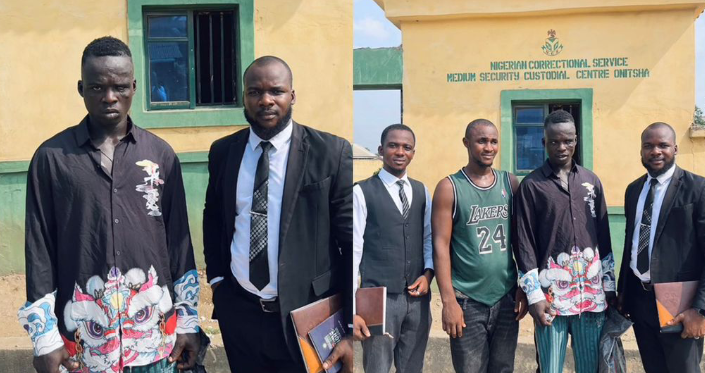
A deeply emotional story shared online by popular social media personality Ayomide of Ibadan, known as @Yourfavboy495, has once again thrown the spotlight on Nigeria’s fragile justice system, sparking widespread reactions, debates, and painful questions about wrongful imprisonment. In a brief but powerful post, Ayomide revealed that his brother, Ejibo, has finally regained his freedom after spending six years and three months behind bars for an offence he insists Ejibo never committed. The revelation has resonated across social media, touching a nerve in a country where tales of prolonged detention, delayed trials, and questionable convictions are all too familiar.
According to Ayomide, Ejibo was released from the Nigerian Correctional Service’s Medium Security Custodial Centre in Onitsha, Anambra State, after over six years of incarceration. The statement was not accompanied by elaborate details of the alleged crime, the trial process, or the circumstances that led to Ejibo’s conviction. Yet, the rawness of the claim — that a young man lost over half a decade of his life to a crime he did not commit — was enough to ignite public outrage and sympathy in equal measure.
As the post gained traction, reactions poured in swiftly. Many users expressed heartbreak, anger, and frustration, offering prayers and solidarity to the family. Others shared similar stories of relatives or friends who had been caught in the slow, grinding wheels of the criminal justice system. For these commenters, Ejibo’s experience was not an isolated incident but part of a wider, systemic failure that has continued to plague Nigeria for decades.
However, not all reactions were purely sympathetic. A response from another user, identified as @Yemihazan, captured a skepticism that often accompanies such narratives. “Omo, are you sure he is innocent?” the user asked, bluntly. That single question encapsulated a broader public dilemma: how to reconcile empathy for alleged victims of injustice with the reality that prisons do hold people convicted of serious crimes. The comment triggered further debate, with some defending Ayomide’s claim passionately, while others argued that innocence claims are frequently made but rarely substantiated with evidence.
The exchange highlights a troubling paradox in Nigeria’s justice system. On one hand, there is a long history of people being detained for years without trial, held on flimsy evidence, or convicted due to poor legal representation. On the other hand, public trust in the system has eroded so deeply that even genuine claims of wrongful imprisonment are often met with doubt. In a country where confessions are sometimes allegedly obtained under duress and case files go missing, the line between guilt and innocence can become dangerously blurred.
Legal experts have long warned that prolonged incarceration without proper adjudication violates both Nigerian law and international human rights standards. Nigeria’s Constitution guarantees the right to a fair hearing within a reasonable time, yet correctional facilities across the country are filled with inmates awaiting trial for periods longer than the maximum sentences for their alleged offences. While Ayomide’s brother was reportedly convicted and served time, the length of his incarceration still raises pressing questions about how the case was handled and whether justice was truly served.
The Nigerian Correctional Service itself has, in recent years, acknowledged the challenges facing the system. Overcrowding, understaffing, and inadequate access to legal aid have been cited as major problems. Though reforms have been promised and some implemented, stories like Ejibo’s suggest that much more remains to be done. For families affected by such cases, the damage is not merely legal but deeply personal, emotional, and economic.
Ayomide’s post also sheds light on the silent suffering of families left behind when a loved one is imprisoned. Six years is not just a statistic; it represents birthdays missed, careers derailed, relationships strained, and mental health battles fought in isolation. For Ejibo, reintegrating into society after such a long absence will likely come with its own challenges, from stigma to lost opportunities. For his family, the relief of his release may be mixed with lingering anger and unanswered questions.
The skepticism expressed by some online users, while harsh, also reflects a broader demand for transparency and accountability. Nigerians want to know how such situations happen and what safeguards exist to prevent them. Was Ejibo provided with adequate legal representation? Were there opportunities for appeal? What evidence led to his conviction, and what ultimately secured his release? These are the questions that linger in the absence of official statements or detailed explanations.
In the age of social media, personal stories like this have become powerful tools for drawing attention to systemic issues. A single post can amplify voices that might otherwise go unheard, forcing uncomfortable conversations into the public sphere. Ayomide’s message has already done that, reigniting discussions about police investigations, prosecutorial conduct, and the urgent need for judicial reform.
Yet, beyond the online debates and viral reactions lies a sobering reality: for every story that makes it to social media, there may be dozens more that remain untold. Countless inmates sit in correctional facilities across Nigeria, their cases forgotten, their voices unheard. Whether Ejibo’s case was an outright miscarriage of justice or a more complex legal tragedy, it underscores the human cost of a system that often moves too slowly and listens too little.

As Ejibo steps back into the world after six years and three months behind bars, his story serves as both a celebration of regained freedom and a stark reminder of what can go wrong when justice falters. It challenges Nigerians to look beyond headlines and hashtags and to demand a system where innocence is protected, guilt is proven beyond doubt, and no one loses years of their life unjustly. Until then, stories like this will continue to surface, each one carrying the weight of lost time and the haunting question of what true justice really means in Nigeria.
Popular Posts

Security Incident at Elizade University Sparks Outrage After Alleged Assault on Visitor
15 Dec, 2025
Tragedy Strikes: Hollywood Director Rob Reiner and Wife Found Dead in Suspected Filicide at Their Los Angeles Home
15 Dec, 2025
Six Years for a Crime He Didn’t Commit: Ayomide of Ibadan’s Emotional Cry Rekindles Debate on Justice in Nigeria
15 Dec, 2025Scroll to Top